Pickleball, Kitty?

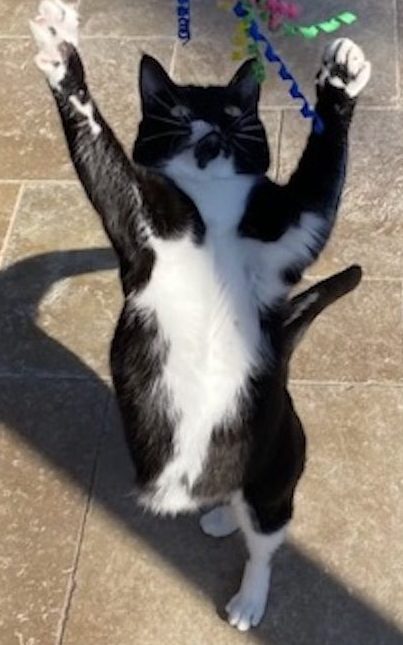
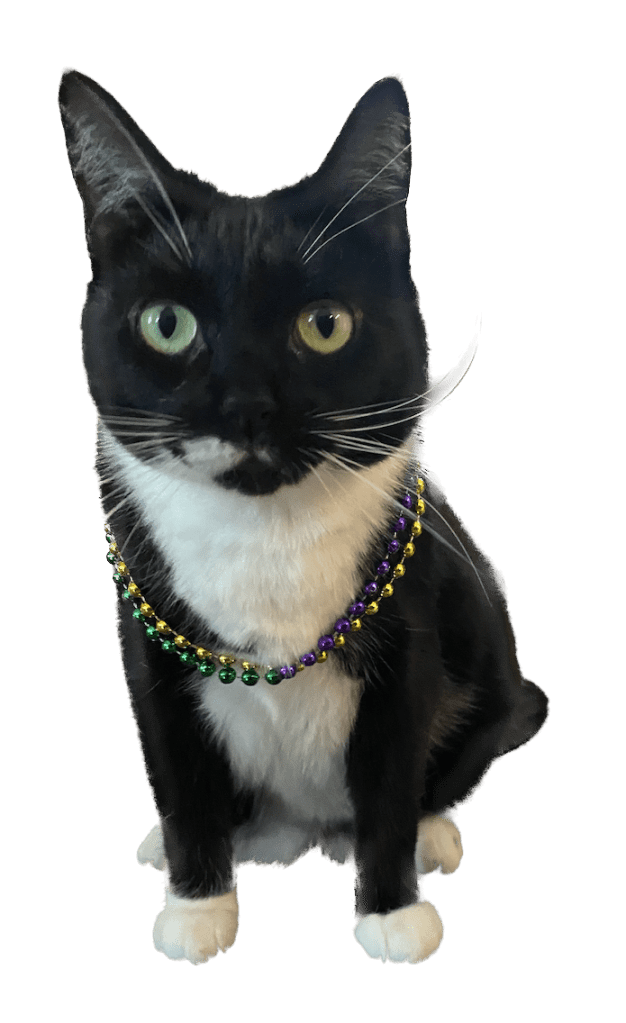
While Kitty’s housemates Tania and Nancy were out playing pickleball, they had no idea that their feline housemate was practicing her own game.

That is, until they came home early one afternoon to find Kitty reading Pickleball Fundamentals and practicing her serves.

“Who do you think you are?” Tania asked Kitty. “Pickles?”

She was referring to the dog who has been credited with the name behind one of the fastest-growing sports in the United States. But Kitty corrected her.

“The dog was named for the game,” she purred, “Not the other way around.”

It all began, Kitty chattered, in 1965 when necessity, the Mother of Invention, met Joel Pritchard, the Father of Pickleball. Although Joel had been an army sergeant in World War II, a congressman, a member of the Washington Senate and House of Representatives, and the state’s lieutenant governor, he is renowned for his response to a hot day, bored kids, a welter of equipment—and perhaps a dollop of guilt.

As the story goes, Joel and his friend Bill Bell returned from a golf outing to a buzzkill chorus from their kids of, “There’s nothing to do.”

Kitty could relate to that. She loves to be played with. That’s why she took up pickleball. “That’s why a lot of people play,” she said.

According to Joel’s son Frank, in a story posted on the Pickleball Hall of Fame blog, Joel suggested making up a game to relieve the boredom. After all, that’s what he did as a kid. So Frank, being a hot, bored kid, challenged him to do just that.

Although the property on Bainbridge Island, Washington, had a badminton court, there were no rackets or shuttlecocks. But Joel found some ping pong paddles and a wiffle ball.

Joel’s wife Joan lightheartedly named the game “Pickleball,” a deliberate reference to the thrown-together leftover non-starters in the “pickle boat” of crew races.

But Joel and Bill were not to be deterred. They made paddles out of plywood, tinkered with the height of the net, and eventually replaced the wiffle ball with an injection-molded one. Thrown together or not, this pickle of a game needed rules. Dads (especially if they’re legislators) like rules. So, Joel and Bill enlisted another dad, Barney McCullum, to devise the do’s and don’ts.

Kitty thinks that since they were inspired by a game named after a food, they came up with silly rules, like, stay out of the kitchen, i.e., the non-volley zone, and “dink” your opponent.

“You must consider the strategic aspect of the game,” Kitty explained. “It’s like chess. You need to out-think your opponent.”

What began as a hybrid of badminton, tennis, racquetball, and ping pong to appease some bored kids evolved into a competitive sport just a few years later.

In 1968, Pickle-ball, Inc. was created, “to develop the game … [and promote it] in a lawful manner.” By 1972, the company sold paddles, nets, and balls that were created specifically for the sport. The organization also helped transition the game into a legitimate sport. To wit, it was named the official state sport of Washington in 2022.

Between 1972 and 2022, the number of players skyrocketed, thanks to enthusiasts who brought their paddles with them from the Pacific Northwest to California, Arizona, Florida, and other Sun Belt regions. In Hawaii, the game became known as pukaball. Puka (meaning hole) referred to the game ball but eventually became the name of the game itself.

Over the last six years, the number of pickleball players has increased by 650%, according to USA Pickleball Association (USAPA), the sport’s official organization. Likewise, the Sports & Fitness Industry Association (SFIA) estimated that in 2017 there were 2.8 million pickleball players in the United States. Earlier this year, SFIA estimated 4.8 million players, making it the fastest-growing sport in the U.S.

Ironically, the sport that was created for bored children is synonymous with retirees. Yet USAPA reports that players over 55 make up only 30% of total players; 29% of players are in the 18–34 category; and remarkably, 6–17 year-olds make up 21% of all players.

Alas, pickleball injuries have also increased. The Journal of Emergency Medicine estimated 19,000 pickleball injuries in 2017, with 90 percent of them affecting people 50 and older. Noting that she and her housemates live in an active-adult community, Kitty reminded them that many of those injuries can be prevented by stretching, staying hydrated, and not backpedaling.

“It was a niche sport that started in the sixties,” Kitty demurred. “But now that baby boomers discovered it, it’s the rage.”

Nancy and Tania agreed. One proof of its popularity is the availability of specialized equipment and clothing that incorporates fabric technology with style. Another is the number of tournaments offered, and the increase in venues where the game is played. It can be found in virtually every municipal parks-and-recreation program across the country.

The Florida community where Tania, Nancy, and Kitty live recently increased the number of pickleball courts from 6 to 12. The courts are in constant use. That’s because most people play the sport for fun, fitness, and to reduce stress.

Just ask Kitty.            

“If life hands you a pickle,” she said as she practiced a dink shot. “Start playing pickleball.”

Photos by Tania Batdorf

Chick Stories

A memoir of adventures lived, laughter shared, and lessons learned with my girlfriends

Travesties, tragedies, and comical calamities abound
in a series of essays rich with historical and cultural context.

Learn More.

Buy Now.

Stalking the Shadow of Giants

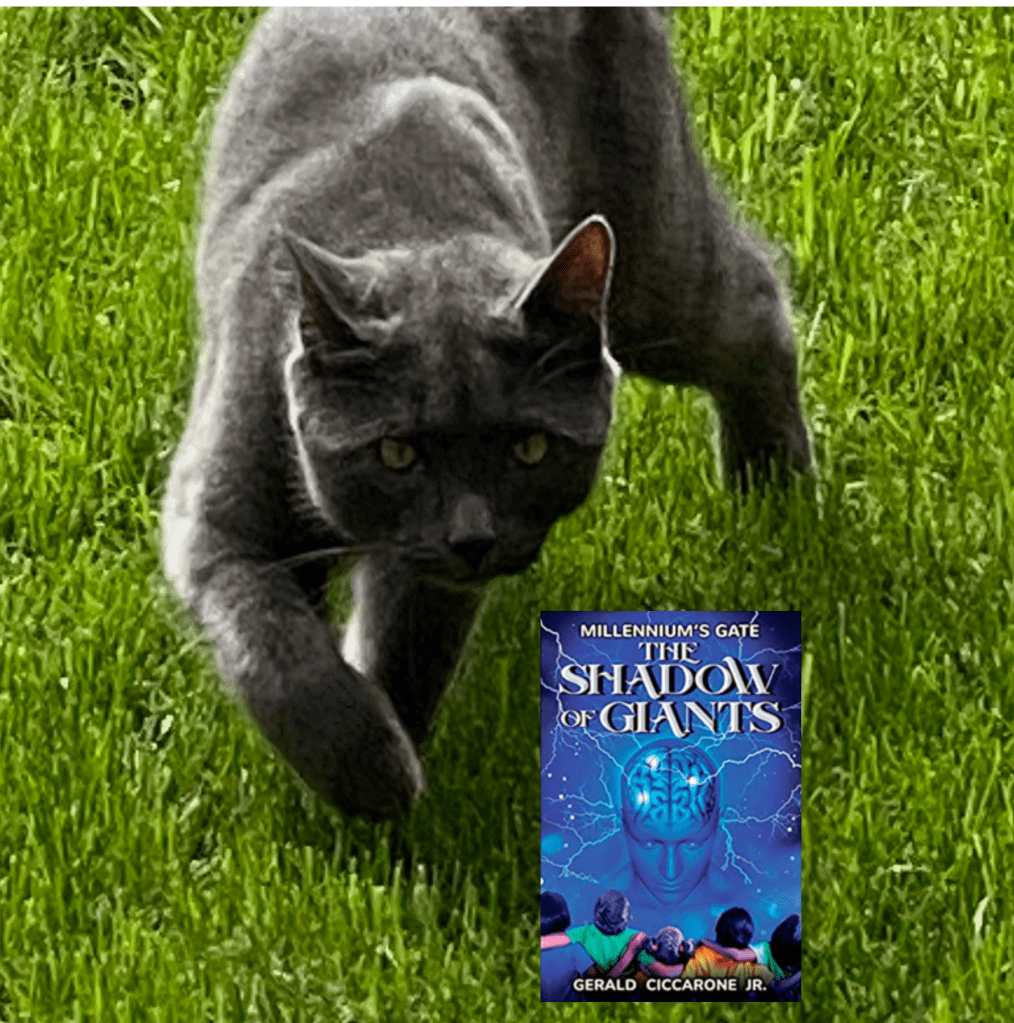
The last time I talked with my friend Sharyn Tufts, she told me that her feline housemate Louie was so enthralled with Gerald Ciccarone’s The Shadow of Giants that he insisted she share the premise of the book with our readers.

The Shadow of Giants is the first book in Ciccarone’s Millennium’s Gate trilogy, a collection of metaphysical and political thrillers that spans two hundred years. The protagonist, Ignatius “Iggy” Marcus, was raised to believe that a “proper philosophical operating system and motivation for living” was the only way mankind would thrive and survive in the future.

Iggy believes that an honest, genuine self-image can only come from individual achievement, and that self-image is the driving force behind man’s survival.

On the other hand, aberrant behavior emanates from a lack of information or mental acuity, deleterious self-aggrandizement, and immediate self-gratification. Such behavior is the driving force behind man’s destruction.

The Shadow of Giants opens with Iggy being struck by lightning, an incident the author refers to as a “bizarre accident by design.” Iggy awakens with heightened perceptions, expanded mental and physical powers, and a mission—to shepherd humanity away from aberrant behavior to redemption at Millennium’s Gate.

If he is successful, the world will be transformed and the old elitist power structure will be swept away and replaced by the power of the individual. If he fails, the parasites who have always run the world would unleash self-destruction on it through momentous tragedies and the consequences of corrupt schemes.

Of course, the powers that run the world must stop Iggy at all costs. The battle is epic and humanity’s survival hangs in the balance.

In conceptualizing Iggy, Ciccarone states that he wanted to create the epitome of integrity, bearing the standard for all honest men and women everywhere who abhor the destruction of America, which the author calls “man’s greatest political creation.”

According to Mick Tufts, Louie’s other housemate, the book is “phenomenal.” Writing in an Amazon review, Mick says The Shadow of Giants “puts a face on the demons we all know exist and flourish at our expense. The reader becomes immersed in a world we suspect exists behind the scenes, but are now shown how it operates, and why. The characters are brought to life in grand fashion. Anyone who reads this book will wish … that Iggy would step up and save our world. Make no mistake though, the world, as portrayed in this book, will ring genuine and frightening. It will remind [us] that we, and only we, as the citizens of that world, can save it. The scary thing is, Iggy and his actions, are the product of a genius imagination. The rest I’m afraid, is all too real.”

Louie, being a cat, likes to watch, more than he likes to read. Thus, he suggested watching this video clip of MILLENNIUM’S GATE: The Shadow of Giants on YouTube.

He also informed us that On the Shoulders of Giants, the second book of the Millennium’s Gate trilogy, was published July 15.

Chick Stories

A memoir of adventures lived, laughter shared, and lessons learned with my girlfriends

Travesties, tragedies, and comical calamities abound
in a series of essays rich with historical and cultural context.

Learn More.

Buy Now.

Newsletter:
Come to Think of It

Stories are meant to be shared. So are fleeting thoughts, poetic musings, humorous anecdotes, and existential questions.

Come to Think of It is a forum to engage, inspire, and challenge. To gather with friends. Come to Think of It.

Subscribe at PattiMWalsh.com/newsletter.
Succeeding at a Creative Challenge

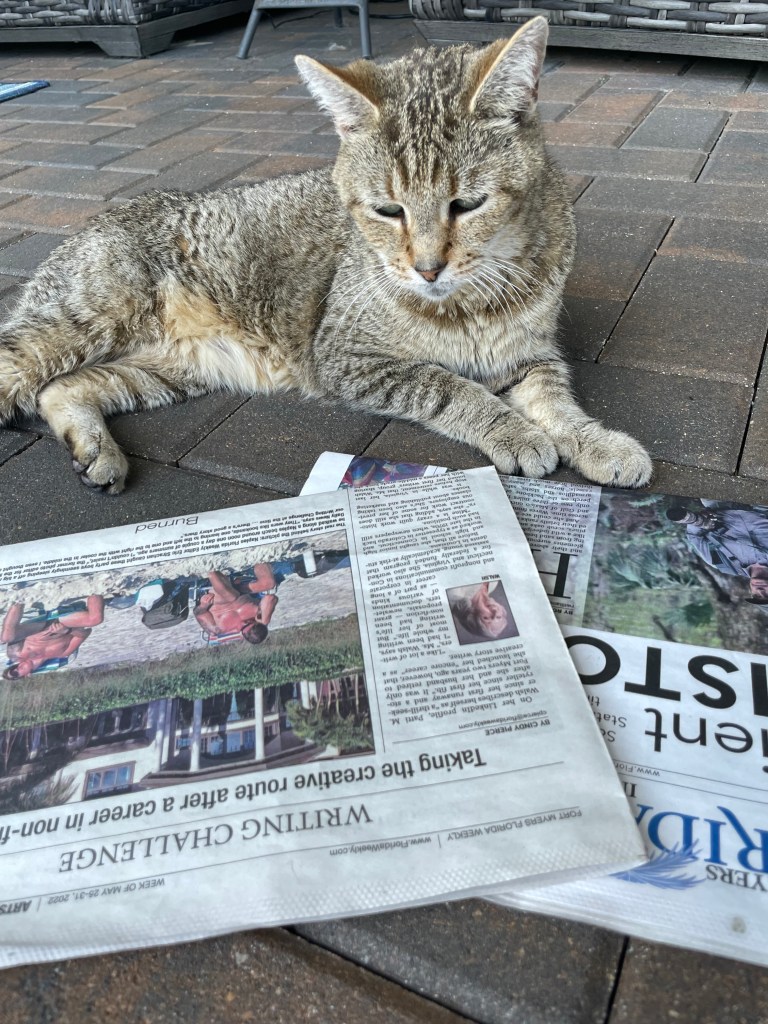
When I visited neighbors Nancy and Vince Baclawski recently to share my May 25 feature in the Florida Weekly, co-bloggers Rocky (top) and Beamer insisted on reading the newspaper before Nancy and Vince could get their hands on it.

Editor Cindy Pierce had interviewed me in conjunction with a story I had entered in last year’s Florida Weekly Writing Challenge, an annual contest in which readers craft short stories based on photo prompts.

Although “Burned” didn’t win, it placed Number 10 out of more than 600 entries—enough to earn a write-up as a means to introduce the 2022 competition. The prompt was a photo of two sunburned men asleep on a beach in front of a mansion.

To read the interview and the story, click here.

Complimentary Copy

“Burned” is one of a dozen pieces of short fiction in All That Remains. The collection features ordinary folks—and a few odd characters—overcoming adversity in a variety of settings: mysterious Southern swamps, vast Western mountaintops, and unexpected crevices in between. “Patti sweeps you in,” says author G. P. Whelan.

A digital book, All That Remains is available on Amazon for $1.99, or FREE if you sign up for my newsletter, Come to Think of It, at PattiMWalsh.com.

Coming Soon!

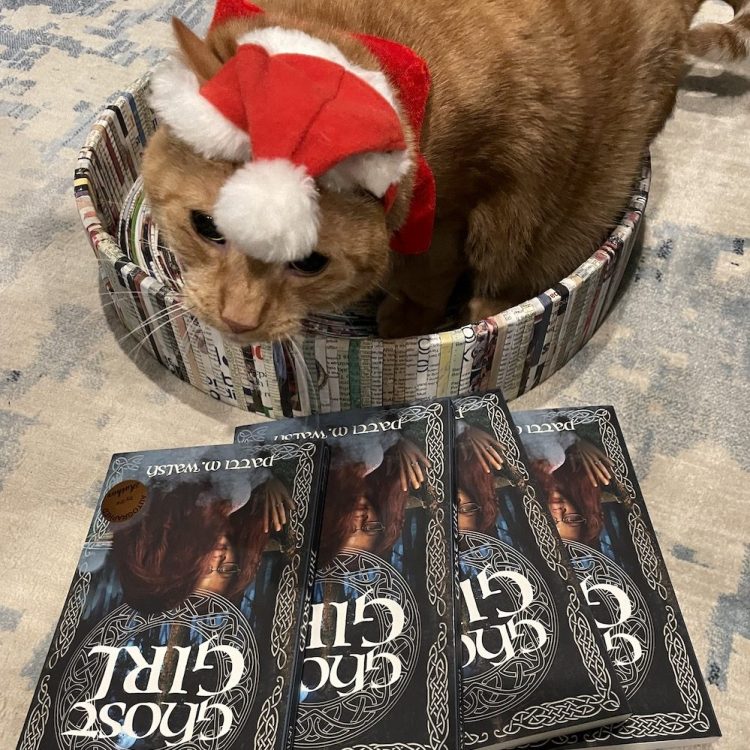
One girl, two worlds, and 17 ghosts: What if an alienated 12-year-old girl could restore her family’s past and then lead it into the future?

Ghost Girl, a contemporary middle-grade novel based on Celtic mythology, will be published this summer.

Learn more and sign up for notice of its release at PattiMWalsh.com

All That Remains Is to Read

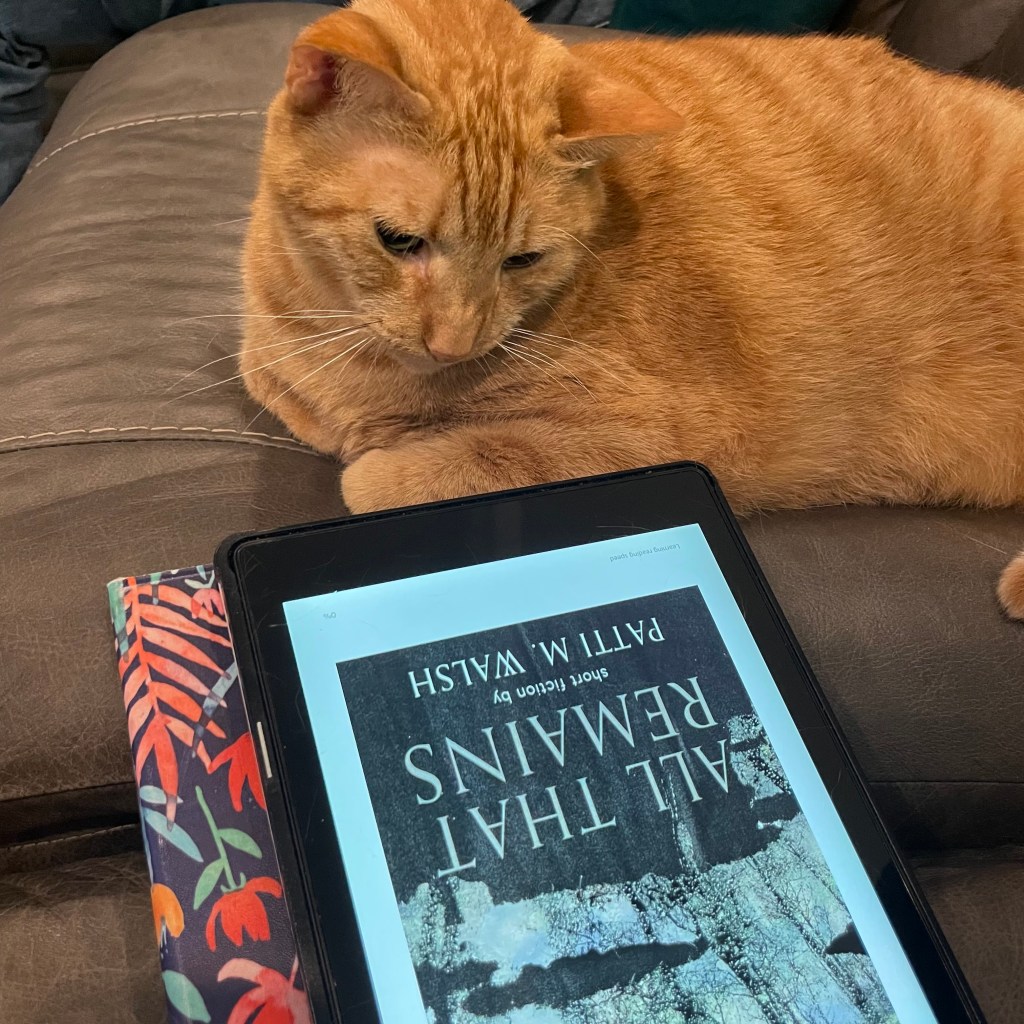
Mickey, who lives with Nancy and Rick Blanchett, is enjoying his copy of All That Remains, a collection of my short stories, now available on Amazon for $1.99.

But he got his copy free by visiting www.PattiMWalsh.com. That’s right. Free.

All That Remains is a book about ordinary—and some extraordinary—folks overcoming adversity. From the brokenhearted to the buoyant, they emerge from mysterious Southern swamps, vast Western mountaintops, and unexpected crevices in between. For example, there’s Penny, who is stuck in the swamp with the remains of her loved ones; Donna, who is trapped by a spider; and Stannum, who steadfastly loves Francesca.

Like Mickey, you can get a copy of All That Remains by visiting www.PattiMWalsh.com and subscribing to my newsletter, Come to Think of It.

Beginning June 1, 2022, Come to Think of It will invite you each month to grab a cup of coffee or a glass of wine for some musing, schmoozing, and amusing. To gather with friends. To come to think about things.

It will also include interesting facts about writing and publishing, coming events, and a link to What the Cats Are Reading. Yes, this blog will continue. For even though Ron and Nina are no longer with us, their spirit lives on through this blog. It serves to encourage adoption and promote Feline-Americans as family members whose antics, tranquility, and reading habits enrich our lives. So, keep sending pictures of your cats enjoying their favorite books.

And speaking of favorite books, get your complimentary copy of All That Remains by visiting www.PattiMWalsh.com and subscribing to Come to Think of It.

Bucketsful of Magic

Bucket lists. You know, the silly name for things to do before we kick the bucket.

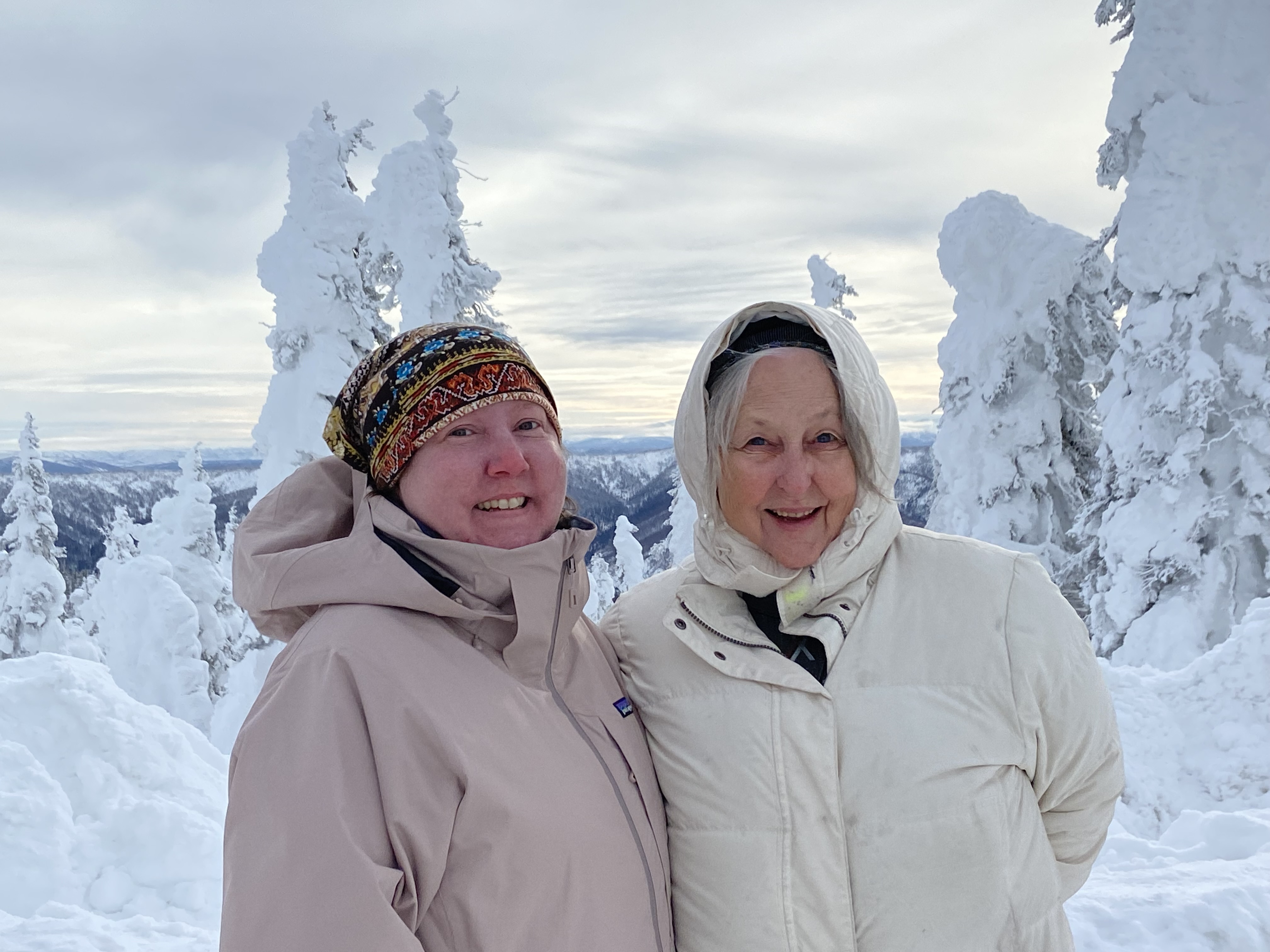
You can read about them, as my friend Kathleen’s cat Lollipop is doing; check them off a list, as Kathleen and I recently did on our adventures in Alaska; or count the blessings of accomplishing a goal. That’s where magic happens.

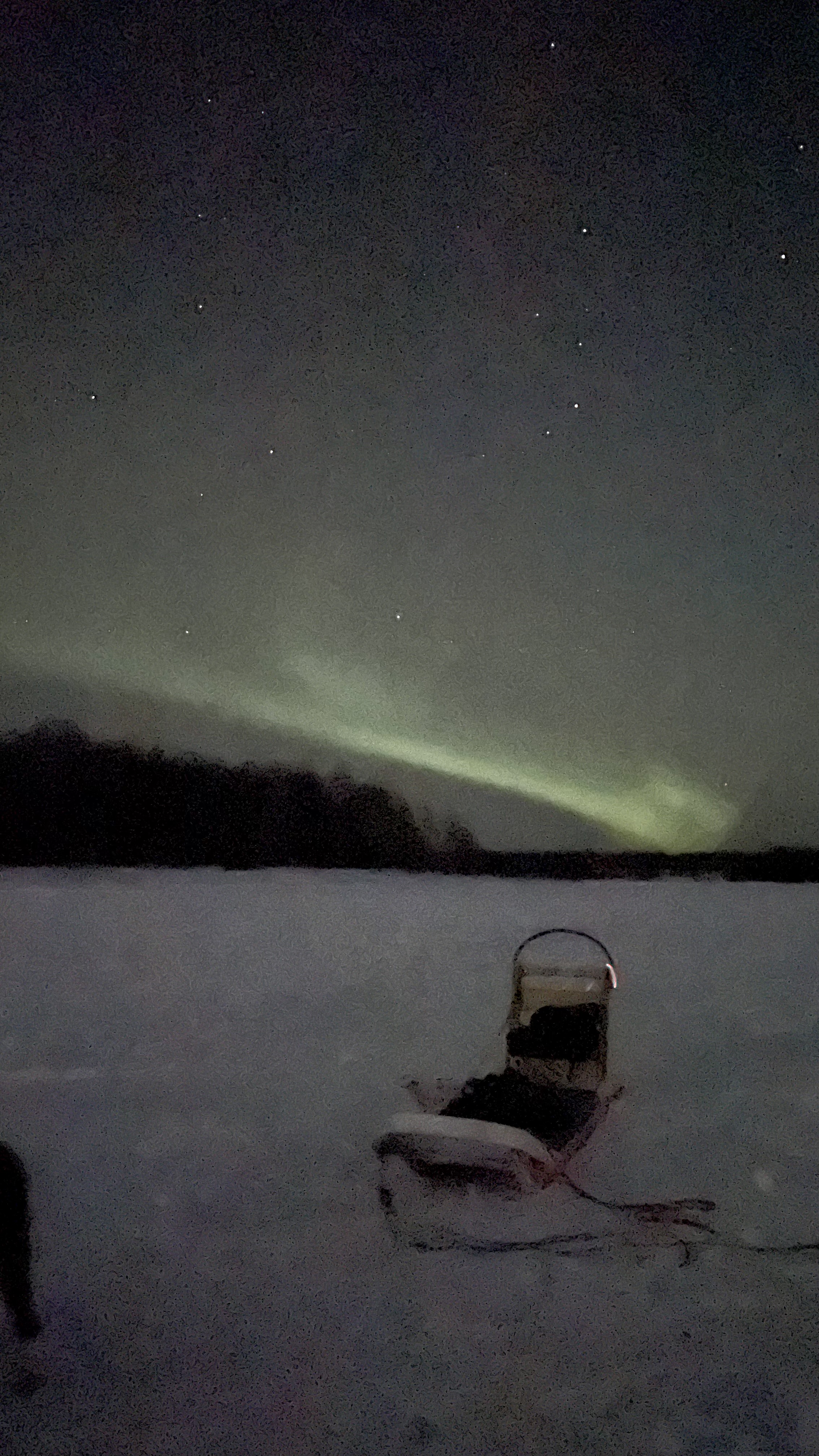
Yes, I danced with the goddess Aurora, trailing her borealis beneath a gazillion stars; mushed through a midnight forest aglitter with hoarfrost; and bathed in hot mineral waters that gushed from ice-bound rocks.

But I also met everyday people in and around Fairbanks, who were checking off their own bucket-list items. I began to notice that achievement is often a beginning, not an end. It triggers an honest smile and a humble confidence that can affect others’ lives.  

Take, for example, Michi Konno. Born and raised in Japan, he moved to Alaska in 1999 to mush dogs. After checking off his goal to compete in the grueling Iditarod, he now opens his home to aurora seekers to share with them the enchantment of the night sky when it comes to life.

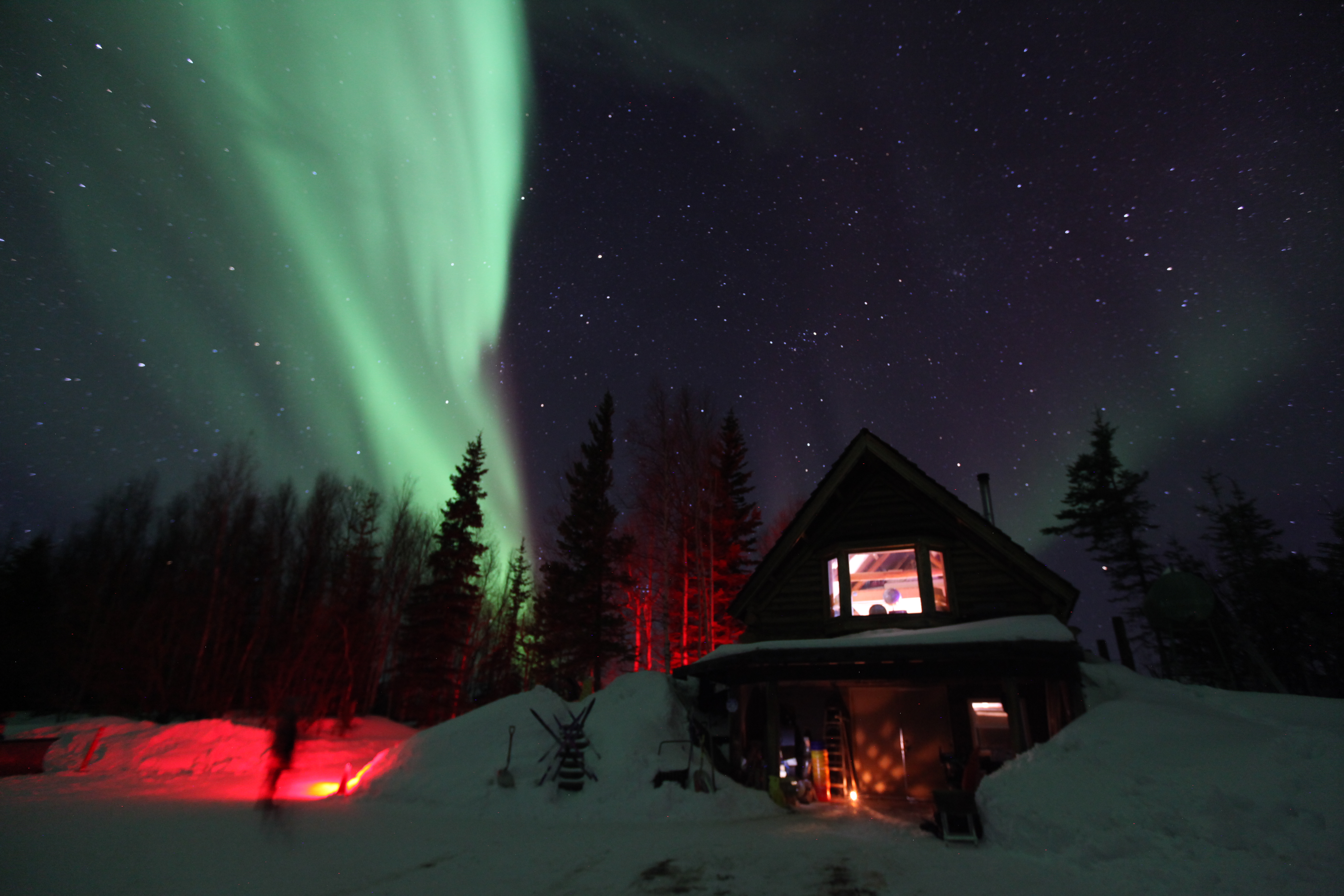
Kathleen and I met him when he fetched us—and 10 other seekers—at our downtown hotels at 9:30 p.m. and drove us 35 miles to his remote A-frame with a 360-degree view of the Alaska Mountain Range. At least that’s what he claimed. All I could see from the frigid deck of his warm abode was a moonless, obsidian sky generously sprinkled with countless stars.

“There,” a fellow trekker cried, jabbing a mittened finger northward. “Below the Big Dipper. Can’t you see it?” I couldn’t. “Use your phone. It can pick up what your eyes can’t.”

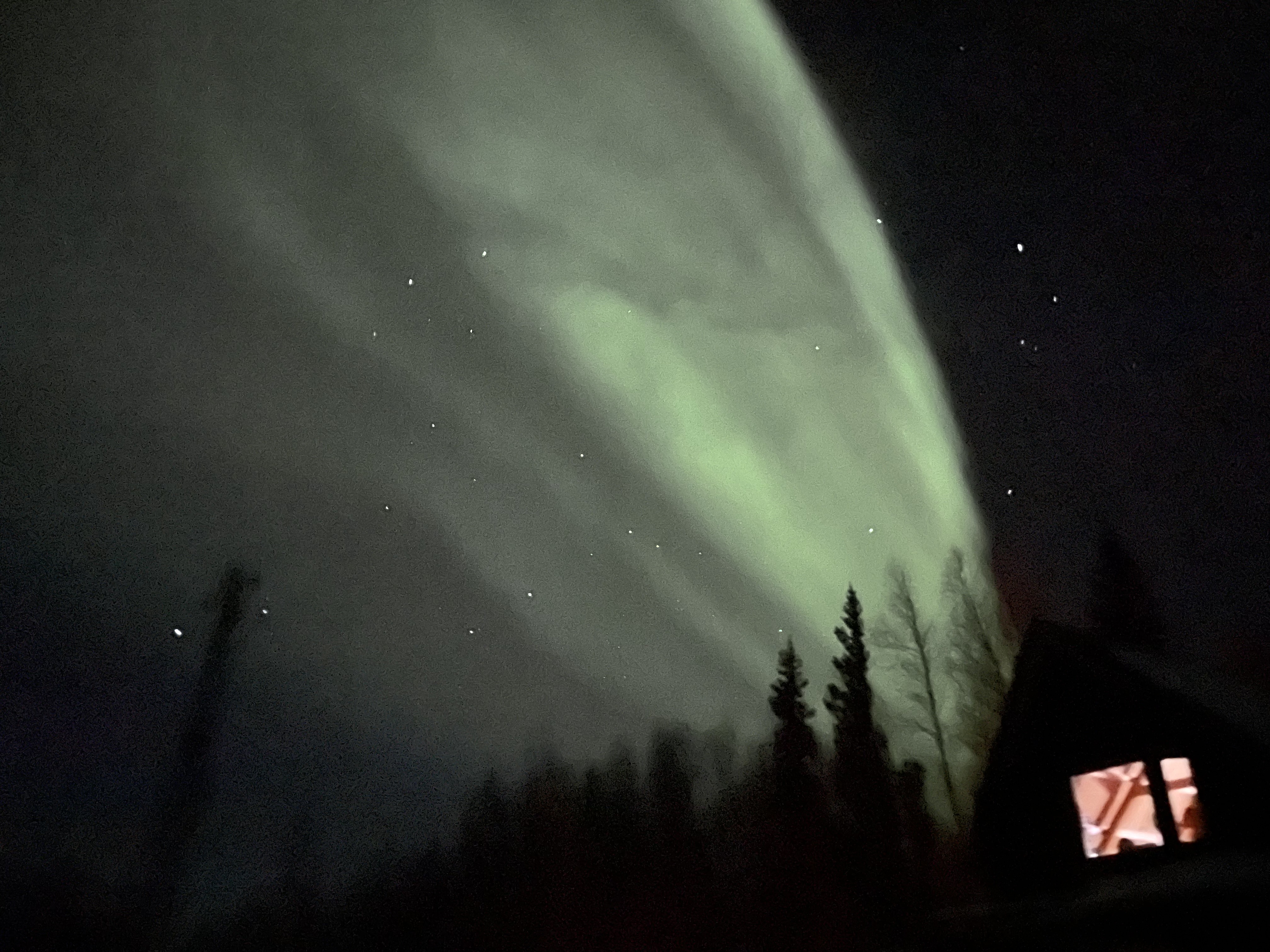
I wanted more than the illusion of light recorded through the lens of my phone’s camera, but I followed his advice. Sure enough, the phone captured a pale green streak over the horizon.

“Okay, God,” I prayed into the midnight grandeur. “If this is what I was meant to see, I am grateful. But an astral wisp was not what I had in mind.”

“Be patient,” God whispered through Michi’s soft voice.

Michi knows that patience is hard, especially when awaiting a bucket-list experience. So he offered his guests cocoa, cookies, and chocolate. Then, as if to illustrate that elusive yet discernible confidence that can transform lives, the former musher sat back and played a documentary on the Iditarod, which had just commenced in Anchorage, hundreds of miles to our south.  

I’d heard about the brutal thousand-mile, multi-day race that showcases the athleticism of Alaska sled dogs while commemorating the 1925 dash to transport lifesaving diphtheria drugs from Anchorage to Nome by dogsled.

All very interesting, I thought, as I paced between the warmth of Michi’s lodge and the frigid outdoor deck. But I wanted Aurora—the phenomenon that results when charged particles from the sun collide with Earth’s atmosphere, the magic that ancient cultures feared, my reason for being here.

Then, shortly after 1 a.m., Michi shattered the frozen ennui with a booming voice that sounded like a musher spurring his sled dogs into action.

“Now!” We jumped to our feet like sled dogs. “Everyone. Out back. Now. Now.”

Before our wonderous eyes, the lazy green streak began to pulsate, then dance. Like smoke breathing through the sky, Aurora swooshed then bloomed like a feathered plume up to the zenith. For nearly an hour, she consumed the boundless sky swaying and shifting this way and that.  

It’s one thing to understand the science, or to conjure the myths. It’s another to stand in wonder beneath a roiling green maelstrom tinged with purple, yet neither feeling nor hearing wind. I pocketed my camera and absorbed Aurora’s magnificence. Pictures, even videos, are inadequate. It was impossible to document.

So was dashing through the snow in an eight-dog-open sleigh, two nights later, again commencing at 9:30. (Magic, you know, happens mostly at night.) Our guide was another bucket lister. Like Michi, Ron came from elsewhere—Pittsburgh—to run the Iditarod.

Dog mushing, we learned, is not only Alaska’s official sport, but also its obsession. And race fever is contagious. Through osmosis, we learned the names of the top contenders, the scandals that plagued them, and their dogs’ lineage.

Who knew, for example, that Brent Sass would finally win after six losses? Or that he would beat Dallas Seavey by more than an hour, depriving the third-generation musher of a record-breaking sixth title? Or that Dallas’s father, Mitch, would poorly strategize his finish, coming in at a distant 16th? Behind Michelle Phillips, no less (the 52-year-old musher, not the 77-year-old singer), who placed 11th.

For our midnight run, Ron selected 8 of his 20 prized Alaskan huskies. Unlike the stereotypical sled dogs associated with fluffy fur, blue eyes, and curly tails, Alaskan huskies are pedigreed mutts, if you will, with lineages that include huskies, hounds, setters, spaniels, shepherds, retrievers, border collies, and, of course, wolves. They are well-conditioned athletes who can burn 10,000 high-quality calories a day; their training is overseen by specialized veterinarians; and they are bred for speed, tough feet, endurance, and an unbridled love to run.

In fact, when Ron hooked his team to their gang lines, they yelped and howled in excited anticipation. So, I joined in. At which point, they all abruptly stopped, as if to ask, “WTF?” After a moment of silence, they resumed, as did I. I’ve never seen such happy dogs.

Atticus and CiCi were the lead dogs that night. Leads must be intelligent to sense the trail, follow commands, and set the pace. Behind them, swing- or team- dogs maintain speed and help with corners. Wheel-dogs, generally the strongest, are positioned closest to the sled.

“Ready?” Ron asked us, as he flicked on a powerful lamp clamped to his head. We were. “Hike!” he commanded his team. And with that, we bolted into the arboreal forest aglitter with what looked like millions of diamonds spilling like fairy dust amidst branches of spruce and willow. A golden crescent moon waxed on the horizon.

And when he switched off his headlamp in search of the northern lights, we hurled through utter darkness at 10 m.p.h. in zero-degree air. Flying among the stars was pure magic.

Ron steered the gleeful dogs with Gee (right) and Haw (left). As they raced nonstop, they licked snowbanks to cool themselves off. Kathleen and I, on the other hand, were cold. Although we had layered our clothing appropriately and stuffed mittens and boots with warmers, the ride was bone-chilling.

So, when we arrived an hour later on Chena Lake, we rushed into a warm ice-fishing hut to crowd the fire and drink cocoa. Our companions, a family from Minnesota, were catching chinook salmon for their bucket-list adventure.

Once thawed, we all took turns watching and photographing Aurora as she brushed the horizon with delicate neon strokes.

After a couple of hours, Kathleen and I bundled ourselves back on the sled for another frigid ride. We slept like dogs that night, dreaming of our magical mystery tour.

Our third tour guide, Aaron, led 20 of us—polar pilgrims, if you will—on an 18-hour trek from Fairbanks to the Arctic Circle and back along the Dalton Highway. He also was a bucket-list achiever with an Iditarod story of his own.

A grad student at the University of Alaska studying rural economics, Aaron had been a photographer in Los Angeles when he gave it all up to live in a dry cabin (i.e., one with no water) to work with a kennel of sled dogs. He was, in fact, scheduled to photograph the Iditarod—another item on his own bucket list—when the opportunity fell through. But exuding the humility wrought by achievement, he was content to drive a tour bus.  

Along the Dalton Highway

It was really a diesel truck equipped with CB radio, satellite telephone, safety kit, and spare tires.

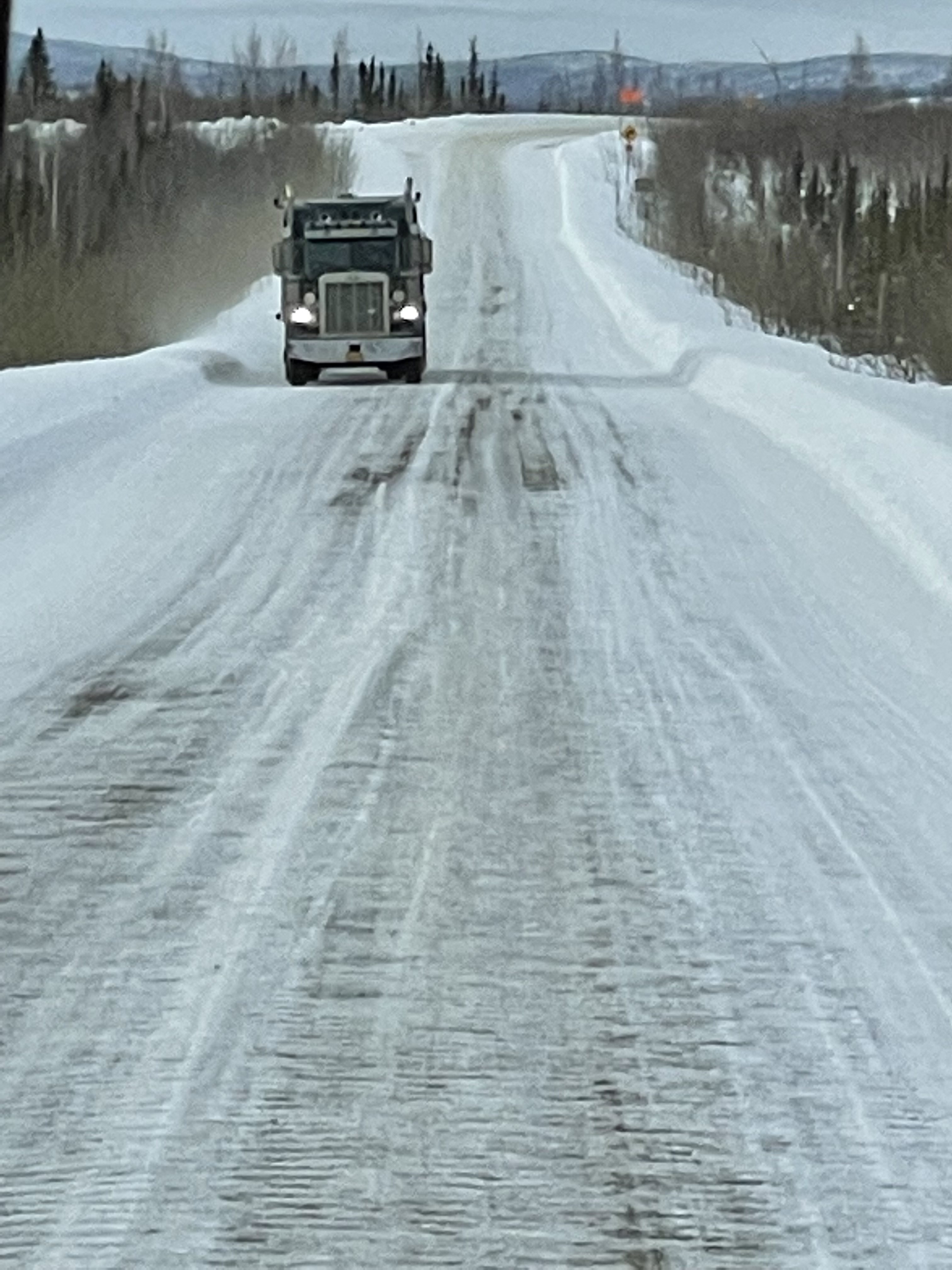
The Dalton Highway is the road that built and now services the upper half of the Trans-Alaska Pipeline. Many people are familiar with it from the History Channel series Ice Road Truckers. Not a road for the meek, it’s a 414-mile stretch of gravel and dirt with steep grades. It runs from north of Fairbanks through the wilderness of the Brooks Range to the Prudhoe Bay Oil Field on the shores of the Arctic Ocean.

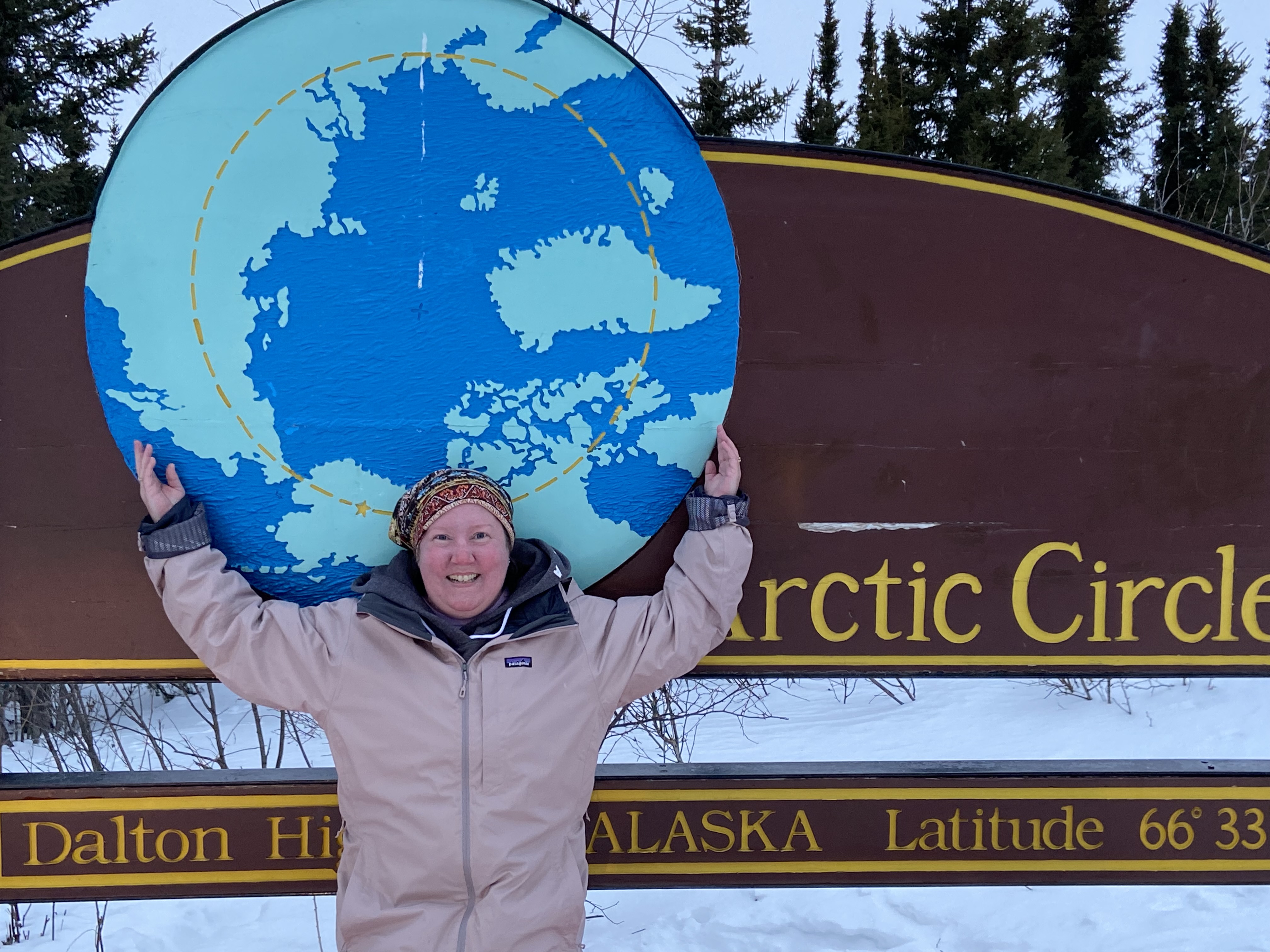
Our tour went as far as the Arctic Circle, which is about the halfway point on the highway. It marks the northernmost point at which the sun is visible on the December solstice and the southernmost point at which the midnight sun is visible on the June solstice. Crossing it was on Kathleen’s bucket list.

Aaron’s nearly non-stop narration was full of history (the 800-mile pipeline was built in two years); engineering (the pipeline supports accommodate 170-degree temperature variations as well as seismic vibrations from earthquakes); geography (the Yukon River is the fifth largest river in the world, based on water volume); botany (black spruce is one of only a few trees that can grow over permafrost); culture (some ancient myths say the aurora borealis is the gods playing ball with the head of a walrus—or walruses playing ball with the head of a human); and recipes (to cook moose, marinate it first in soy sauce, olive oil, Worcestershire sauce, lemon juice, and spices, then sauté in butter).

A segment of the Trans-Alaska Pipeline

We passed through Joy (population 2), which now serves as a rest station, complete with “dry” facilities, i.e., outhouses. We stopped for pictures at the Enchanted Forest, Yukon River, and the iconic Arctic Circle sign. One young man on our tour was a doctoral student who gathered some permafrost for his bucket. At the Yukon River Camp, I met a middle-aged woman who had driven from her home on the east coast of Florida to fulfill her own bucket-list dream to work in the Alaskan wilderness. On the way home, we searched for Aurora. But I think she may have been tired. We sure were.

Not all of our adventures were cold. Or involved stories of the Iditarod

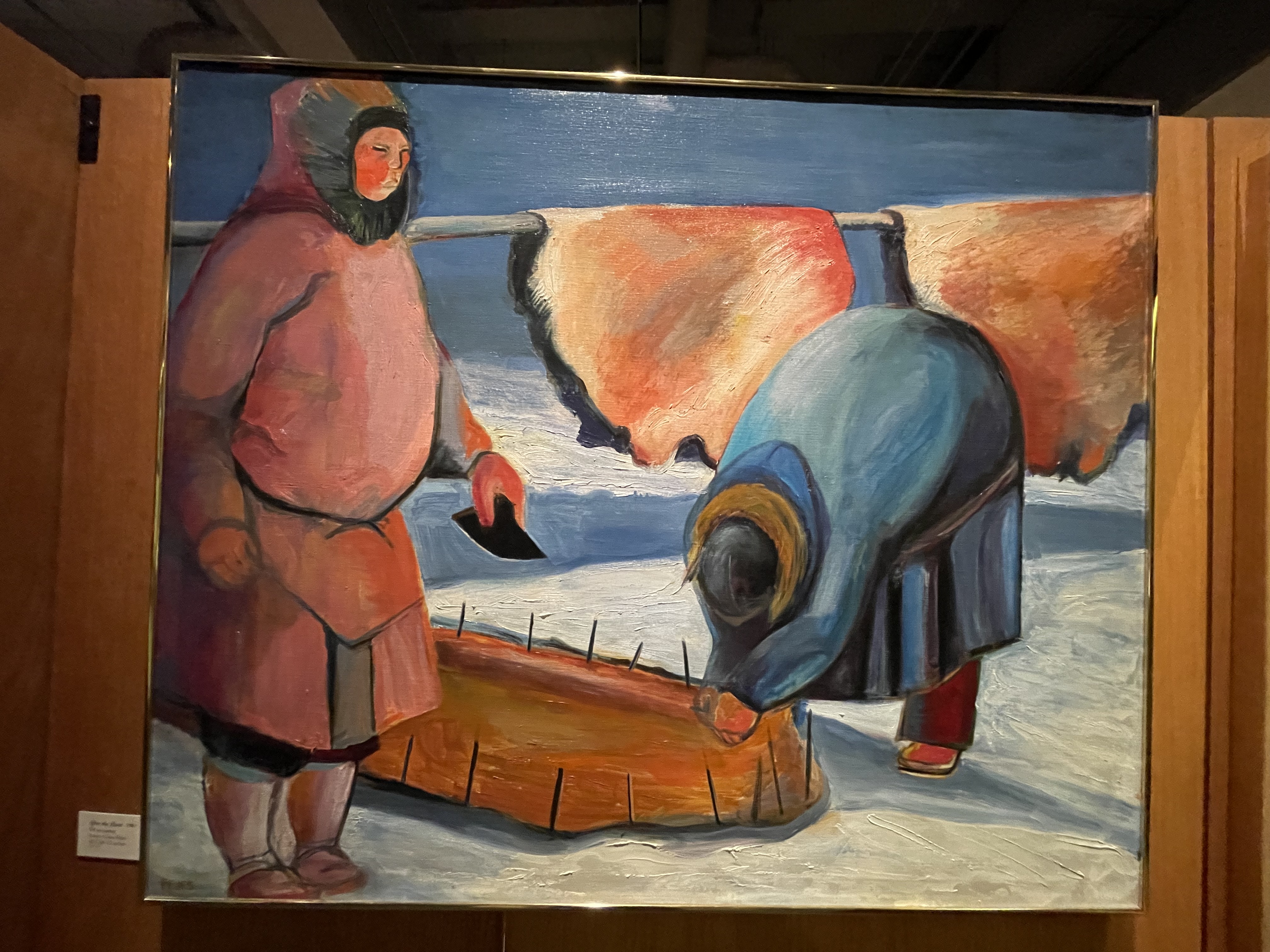
Two artists at the UA Museum of the North were bucket-listers who warmed my heart. Michio Hoshino (1952–1996), was a Japanese-born nature photographer who fell in love with Alaska as a high-school student on vacation. A renowned wildlife photographer, he was killed by a brown bear while on assignment. Claire Fejes (1920–1998) moved from the Bronx to Fairbanks in 1946 to paint self-portraits, neighbors, and landscapes. After a stint in an Inupiat whaling camp, she mounted a one-woman show back in New York.

Chena Hot Springs was hot. Like 150 degrees hot—the temperature of the water when it steams from snow-covered rocks—and cooled to an average of 106 degrees for bathing purposes.

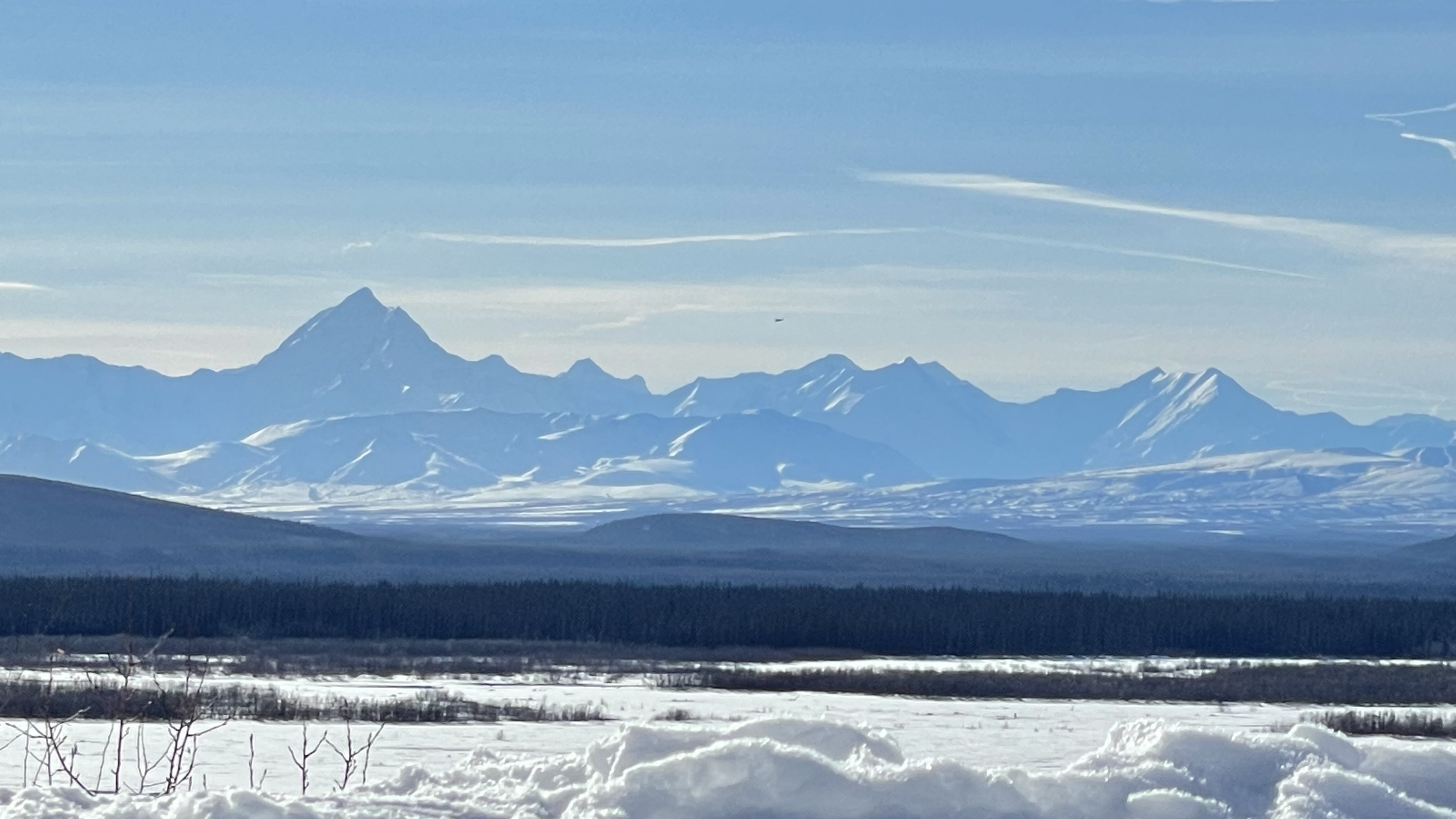
And far from hot, the Castner Glacier ice cave was definitely cool. So was getting there. It’s an easy 144-mile drive from Fairbanks on the Richardson Highway. The Alaska Range soared to the west, with Denali anchoring its southernmost reach and contrails spun like silk threads by Air Force pilots conducting training exercises.

The crystal-blue day attracted all kinds of day-hikers—families, dogwalkers, military troops—to the level, mile-long, hard-packed snow trail. Yet it wasn’t crowded. We greeted each other with smiles, like fellow travelers upon a mystical labyrinth. When I inadvertently stepped into a hip-deep snowdrift, a couple of young men hoisted me back onto the trail.

“I used to be an accomplished hiker,” I said, humility kicking in as I brushed snow off my leg.

“And I’m becoming one,” the one named Sean replied. He asked if he could walk with me.

“Ah, so you can help an old lady across the street,” I joked.

“No. Just across a glacier.”

A few hundred yards later, we arrived at a blue-ice cave of Castner Glacier. Its walls were like a giant uncut aquamarine—both Kathleen’s and my birthstone. Gold-like sediment threaded through its facets.

I have my photographs—and plenty of them. But the memory of that giant jewel is a souvenir I now wear close to my heart. It reminds me that in traveling from the top of the world to the depths of my soul, I had stumbled—quite literally—upon a humble confidence that holds transformative power.

I had learned to share the wonder of aspirations. And the joy of achieving them. They weren’t all things. Some were as simple as a smile, as complex as patience, or as practical as a helping hand.

That’s what makes bucket lists so magical.

Aurora Dreaming

It wasn’t enough that my friend Kathleen and I have been dreaming about our early-March bucket-list trip to Alaska. Lollipop (left), one of her feline housemates, recently got into the act.

I have wanted to experience aurora borealis (i.e., the northern lights) for at least 50 years. I never knew it was on my bucket list—or that I even had such a thing—until Kathleen suggested a trip to Norway to celebrate our birthdays. Although she had experienced the phenomenon in Iceland, she wanted to do it again, this time in a dogsled. But international covid precautions sent us in a different—and domestic—direction. Fairbanks, Alaska.

Located 196 miles south of the Arctic Circle, Fairbanks is frequently cited as the best place to see the northern lights in the U.S., and, according to some, in the world.

That’s because it sits a touch above the 65th parallel of north latitude. To get a sense of what that means, picture Earth. The Equator is at 0 degrees latitude; True North—and South—Poles are at 90 degrees north and south, respectively, of the Equator, making the North Pole, by definition, the northernmost point on the Earth.

The Arctic Circle (66°33′48.9″ north latitude) is the northernmost point at which the noon sun is visible on the winter solstice. To its north is the Arctic; to its south, the Northern Temperate Zone. Ironically, the city of North Pole, Alaska, lies 125 miles south of the Arctic Circle and 1,744.54 miles south of the True North Pole.

By comparison, Utqiaġvik (Barrow), is 504 miles north of Fairbanks, and 320 miles north of the Arctic Circle. At a latitude of 71 degrees north, it is the northernmost municipality in the U.S. (Sidenote: Bob and I experienced the Midnight Sun there in 2001 while staying at the Top of the World Hotel, with a beachfront view of the Arctic Ocean. Mid-summer temperatures hovered in the 30s.)

In Fairbanks, March is not only a transition month, but it is also high season. Temperatures moderate as skies brighten. Daily highs range from –2°F to 23°F, though they can plunge to –17°F and surge to 38°F. Compared to typical readings of –20°F to –40°F in December and January, March sounds downright balmy.

And bright. Sunrise on March 1 is 7:59 a.m., and sunset is 6:08 p.m., Alaska Standard Time (AST). During the month, total hours of sunlight range from 10 hours, 9 minutes, to 13 hours, 38 minutes. On the vernal equinox, Fairbanks receives 12 hours and 11 minutes of sunshine. On the summer solstice, it gets 21 hours, 50 minutes of daylight. Then it begins to darken again.

With clear to partly cloudy skies prevailing in early March and less than a 10% chance of precipitation, Fairbanks bills itself as an ideal canvas for the aurora borealis. That’s because most northern lights occur in a band known as the auroral oval, a swath that sweeps beneath the geomagnetic pole. The northern lights around the North Pole are the borealis; in the southern hemisphere, they are the australis.

Galileo, the 17th-century Italian scientist called the father of observational astronomy, named the phenomenon after the Roman goddess of dawn, Aurora, who raced her multi-colored chariot across the sky to usher in the dawn.

The earliest record of the northern lights, however, goes back much further. According to NASA scientists, a 30,000-year-old cave painting in France depicts unknown lights in the night sky. Assyrian cuneiform records, dating from 655 BC to 679 BC, and Babylonian texts, made by astronomers of King Nebuchadnezzar II in 567 BC describe unusual red glows in the night sky. The oldest official documentation is dated 2,600 BC in China. Fu-Pao, the mother of Shuan-Yuan, the Yellow Emperor, is said to have observed “strong lightning” that lit up the night sky.

Pre-historic lore is as colorful as the lights themselves. The Vikings believed that they reflected the Valkyries’ armor leading Odin’s warriors to Valhalla. To the Sámis, they were the souls of the dead, and to the Finnish, sparks flying from the tail of a racing firefox. Some Native Americans saw them as giant flames under huge cooking pots. Others as demons chasing lost souls, or as omens of pestilence and war.

In Alaska, some Inuit communities feared the lights as evil while others saw them as playful, or as the animals they had hunted. I like the legend that portrays them as torches borne by spirits to lead the souls of the dead across a narrow pathway to a better land, free of disease, pain, and hunger.

Although solar activity happens all the time, it shows up only against dark skies. It is the result of electrons and protons from the Sun slamming into the Earth’s atmosphere at about 45 million miles per hour. Because the Earth’s magnetic field is weaker at the poles, these particles invade Earth’s atmosphere and collide with gas particles, causing streams, arcs, rippling curtains, or shooting rays. The resulting colors range from red to violet, but most often appear as pale green and purple. The most common auroral color is a pale yellowish-green (like the cover of the book that Lolly is reading), which is produced by oxygen molecules. Nitrogen produces a blue or purplish-red aurora.

Astronomically, we have a good chance of seeing the lights. Skywatchers recommend three to four days in the arctic, synced with the dark skies that straddle a new moon. New moon is March 2. Since geomagnetic activity increases during the equinoxes, when the tilt of the Earth’s axis angles into the solar wind, early- to mid-March is highly recommended. And, according to the University of Alaska Geophysical Institute, the forecasted aurora oval for March 5–10 is high.

On this map of the forecasted aurora oval, degrees of latitude are noted on the left and right.
Fairbanks is about 65° north latitude.
The Arctic Circle is about 66°.
©2020 Geophysical Institute, University of Alaska Fairbanks

While in the interior of Alaska, we plan to go dog-mushing in North Pole—that’s on Kathleen’s bucket list—and swimming in the geothermally heated waters of Chena Hot Springs—that’s on both of ours. There are museums to explore, restaurants to sample, and retail stores to shop. We may take a guided tour to the Arctic Circle, hike to an ice cave in Castner Glacier, or sit around a toasty fire at the hotel. Who knows, maybe we’ll even try our hands at curling or ice fishing.

But the focal point is experiencing the auroras.

Experts say that the best way to see them is by dogsled, guided tour, or asking the front desk to wake you up if they appear. We plan to do all three. With temperatures that range from frigid to frozen, and adventures that range from fire to ice, we’re packing our bags with layers of clothes and arming ourselves with cameras, books, and bucket lists.

Fairbanks, here we come!

ABCs of Feline Life

Hi. I’m Yuki, the cat in the lower right, returning as a guest blogger with the ABCs—the alpha, beta, and chops—of feline life.

I live with Chairman Meow, seen in the upper left with the mouse he caught. He acts like Top Cat with that mouse, but let me explain. I’m the true alpha.

What, you may ask, is an alpha cat?

Some feline ethologists—behavioralists who study animal behavior—contend that the term “alpha” is most appropriately applied to pack animals with a highly defined social structure, like wolves, hyenas, and many primates. It usually depends on physical prowess, which may be determined by fights to the death; social alliances within the group; or parentage.

Since cats don’t live in the close pack structure that wolves, for example, do, they don’t form the same types of relationships. Although most multi-cat households have a pecking order, dominance may change from cat to cat, day to day, even time of day to time of day.

Jessica Char, who blogs on Feline Engineering, points out that the idea of an alpha cat comes from outdated research on wolves.

She explains that alpha is another word for dominant. It describes a cat that:

  • Doesn’t stop when told;
  • Continues unwanted behavior even when punished;
  • Chases or pursues other cats;
  • Behaves aggressively in some situations; or
  • Demands attention, food, or play on their own schedule.

Okay, guilty as charged.

But there is another way to look at the concept. Pammy, who blogs on The Way of Cats, calls a dominant cat the “mad scientist of the cat world.” I like that characterization.

It’s especially apt when you consider my relationship with Chairman Meow. He’s not necessarily a beta, although Franny Syufy, writing on The Spruce Pets, says the second-in-line cat is indeed the beta. While this doesn’t necessarily mean the beta aspires to be alpha, she says that the beta may try to establish secondary dominance, especially when the alpha cat is out of the room. Or, in this case, when he catches prey.

If I am the mad scientist, I see Chairman Meow as the philosopher. He reads life like it’s a mouse—the joy is in the pursuit. Recent construction in our building has created new and joyful opportunities for both of us.

That leads us to the C, chops.

We’re old. But we still have chops. I’m 14 and the vet says I’m fat. I’ve also been diagnosed with IBS, which means no more chicken treats. But I’m better off than Chairman Meow. He doesn’t get chicken treats anymore, either. He’s only 13 and has kidney disease and cardiomyopathy. Because his heart only works at 50 percent, he has bitter pills to swallow. Neither of us likes that. But bitter pills are the price we pay for longevity.

Although we are running down the last of our nine lives, we’re cool cats, pursuing life like a mad scientist and a philosopher. Life is, after all, a cat-and-mouse game.

What Other Cool Cats Are Perusing

When I shared with you last month that Nina had died, I was touched with many expressions of sympathy. Thank you.

One subscriber, Sherry, shared the news with her cat, Louie. She said he “let out a long meow and we communicated about how your cat family was now together in the one-cat soul. Further, he wanted me to let you know about a great movie we had watched together: The Electrical Life of Louis Wain.”

The movie tells the story of the late 19th– early 20th-century British artist Louis Wain (played by Benedict Cumberbatch), whose fanciful feline illustrations helped inspire the widespread adoption of cats as pets.

The film also stars Claire Foy (as Wain’s wife Emily), who says that cats are “ridiculous, silly, cuddly, frightened and brave, just like us,” and Toby Jones as an indulgent newspaper editor and cat lover.

According to Raquel Laneri, writing for The New York Post (November 4, 2021), the Victorian painter “was the cat’s meow.”

She noted that, “His cute kittens and cigar-chomping tabbies…threw snowballs at one another, played poker and drank brandy, and made all sorts of mischief.”

But Wain’s story was deeper and darker than his whimsical illustrations. Although considered an artistic success, Wain never copyrighted his work. In seeking to unlock what he calls the “electrical” mysteries of the world, he lost touch with reality. Broke, paranoid, and erratic, he was certified insane by his family. Even so, his work came to the attention of many influencers, including science-fiction writer H.G. Wells and English King George V.

“He made the cat his own,” Wells once said. “He invented a cat style, a cat society, a whole cat world.” Wells, portrayed by musician Nick Cave in the movie, says, “Cats that do not look like Louis Wain’s are ashamed of themselves.”

Perhaps it’s because Louie the Cat so admires his namesake’s unique portraits, or because of this blog’s emphasis on what cats are reading, that Louie asked Sherry to share with us his favorite painting, entitled A Good Read.

A Good Read, by Louis Wain (Public Domain)

Another reader, Mara, shared with us a picture of Smooch, who recommended The Writer’s Cats. Penned by French author Muriel Barbery, illustrated by Maria Guitart, and translated by Alison Anderson, the book pays tribute to everyday poetry, Japanese philosophy, and felines’ ingenuity and sardonic humor

By taking readers into her atelier and offering them a behind-the-scenes peek into her process, problems, joys, and disappointments, the best-selling author of The Elegance of the Hedgehog conveys the mysterious, confounding thing called being a writer.

She tells the tale from the perspective of her four Chartreux (i.e, silver-gray, amber-eyed) cats: the pretty, graceful, and charming Kirin, who may or may not be a reliable narrator; Ocha, the leader of the pride, a tough guy with a soft heart; his brother, the phlegmatic, refined, and flower-loving Petrus; and the bandy-legged, affectionate Mizu.

Released in November 2021, The Writer’s Cats is beautifully written, delightfully illustrated, and cat-egorically funny— at least according to Smooch.


Feline Rescues and Readers

Blogger Nina Cat died of acute respiratory failure on November 5, 2021, after 18-plus years with us.

Like Ron and her brother Nino, Nina was family. She was also the inspiration behind this blog. When I saw her snuggled up with So You Want to Live in Hawaii, by Toni Polancy, I knew she was onto something.

Long before that, however, our cats’ humble beginnings had put Bob and me onto something—feral cat rescues. As so often happens, you don’t get involved until a problem lands litter-ally in your own backyard.

Twenty years ago, our Lakeview neighborhood in New Orleans had an out-of-control feral cat problem. It still does. The Metairie Small Animal Hospital, which operates a clinic in Lakeview, defines ferals as unowned community cats that have never had close contact with humans. MSAH estimates their number as “staggering.” The Humane Society’s estimate for the United States is a little more precise—30 to 40 million.

According to the Feral Cat Project, 75% of feral kittens die or disappear by the time they are six months old. Although they keep the numbers of rodents and reptiles under control, they risk being hit by cars, injured by other cats, attacked by predators, or getting sick. While all these factors lead to an average lifespan of about three years, the population continues to grow, given that cats as young as five months old can procreate.

As we watched all that happening in our backyard, we learned that the most humane and effective way to control feral cat populations is through TNR (trap, neuter, and return) programs. In exchange for a promise to provide food and water to the dozens of ferals that we trapped and returned, local vets examined, vaccinated, and sterilized them.

Unlike wild adult cats, kittens who are rescued and socialized are adoptable as pets. Ron slipped indoors on a particularly cold (for New Orleans) January evening in 2003. Nine months later, Nino and Nina adopted us, too. The three of them quickly adapted to—and improved—our lives as well.

Together, we evacuated New Orleans in advance of Hurricane Katrina, landing first in Mandeville, about an hour to the north of New Orleans, then Houston, six hours west. After three weeks, we all settled into an apartment in Baton Rouge. Eight months later, we moved to Fairfax, Virginia. In 2020, in the midst of the onset of COVID, Ron and Nina flew with us when we moved to Southwest Florida. Nino had died 8 years earlier of cancer.

In his pre-Katrina days, Ron would wait for Bob on the doorstep. Post-Katrina, it was in the hallway. Nina, on the other hand,  preferred that we wait on her. And Nino, who waited for no one, sometimes deigned to let us pet him.

Following Nino’s death, we increased our healthy-cat visits. We caught Ron’s and Nina’s medical conditions early and managed them well. When you add these conditions to their feral births and multiple relocations, Ron and Nina far surpassed their legendary nine lives.

Nina had a rough time when Ron died 13 months ago. Perplexed by the absence of her lifelong companion, she would sniff around their favorite chair, hide in corners of rooms, and demand affection—odd behavior for a typically aloof feline. But she gradually assumed a regal role as the sole cat of the household.

Always feisty, she demanded treats and long brushing/combing sessions. In addition to her cardiomyopathy, congestive heart failure, advanced kidney disease, and hyperthyroidism, she had developed lesions on one lung. The vet cautioned us to look for labored breathing. When that happened, he said, she would likely die quickly. She did.

There’s a popular bumper sticker out there with a paw print that reads, “Who rescued who?” Although that sentence grates on the English teacher and editor in me (I always correct the second pronoun), the answer is simple. Ron, Nino, and Nina rescued us. They were anchors in our lives as winds blew us from Louisiana, to Virginia, to Florida. Nino entertained us with his antics. Nina and Ron inspired us with selections for What the Cats are Reading.

They still do. In their honor, this blog will continue, dedicated to feline readers everywhere.

Ron (2002-2020)
Nino (2003-2012)

Rising Weekly to a Writing Challenge

When the Florida Weekly comes out on Wednesdays, this household looks forward to reading it.

In addition to a cover story on a local trend that ranges from demographics and wildlife to ecosystems and the economy, the newspaper lists arts, music, and food events in South Florida.

Nina likes the crossword puzzle; Bob, the restaurant reviews; and I the Weekly Writing Challenge, an annual contest that runs from August through November. Each round invites writers to write a 750-word story based on one of two photographic prompts.

Since I like a good story, here’s what I wrote for Round 2, based on the photograph below.

The One

Born without a double in a family of twins, I am Oona. The One, Mother would coo. Little Lambkin, Daddy would drawl. Princess, two sets of sisters would scoff. Imbued with a special dispensation, I wore nothing twinish, like a matching dress or a distinguishing ribbon. Yet I always sensed a missing indulgence.

Until today.

Cleaning out my parents’ house fell on my shoulders. Daddy and three of my sisters—Agnes, Grace, and Annie—had already died. Elsie, the eldest and only remaining sibling, allegedly was helping me. Though physically strong, dementia was dissolving her brain. I resented only that Mother hadn’t moved years ago.

“Please,” I had begged. “Let’s find you a smaller place, where you can socialize, play cards, eat dinner with your old friends.”

“This is where I belong, where I raised my babies.” Obstinate if nothing else, she would kiss my forehead. “Every last Oona of them.”

Thomas and Mary had moved into this twentieth-century Victorian the day they married. Here they raised their two sets of twin girls and me. If anyone asked if he had wanted a son, Daddy would slowly grin.

“I want what I have.” He had me. And everyone knew I was his favorite.

“Mary had a little lamb,” he would sing as I trailed my mother far and wide. “And everywhere that Mary went, her lamb was sure to go.”

Last month, though, at 95, Mother stopped going anywhere.

Brushing away cobwebs, I redirected my attention to the attic, the last stop in my journey through my family’s belongings. Mother had neatly labeled everything as if to facilitate her life’s disassembly. That was so like her, placing everyone’s needs before her own.

But she hadn’t labeled the one thing I needed. And I didn’t even know what that was. Something unknown and untouchable stuck to the boundaries of my soul like soapsuds clinging to a basin.

“Lookie here!” Elsie squealed. Pointing to a small stack of colored boxes, she disrupted my reverie. “Christmas!”

Looking over the boxes, I noticed that each was labeled with names and dates of birth. Brushing away dust, I sat on a narrow window seat and patted the space next to me.

“Not Christmas, Elsie. It’s a birthday. Let’s look together.”

Inside each box were souvenirs related to children’s births. I smiled at Mother’s sentimentality. I wished I had found these before she died; I would have given them back to her.

“Here, Elsie.” I handed her a yellowed card. To Elsie and Agnes, it read. “Gramma sent this card when you were born.” It disintegrated when she ripped it open, prompting tears. I quickly pulled a sturdier one from the stack. “Be careful. These are very old. Like you!”

As Elsie pored over the collection, I skipped the box labeled Grace and Annie. I dug further to find the last one. Oona. I gasped. And Thomas. Thomas?

“You had a twin,” Elsie leaned in. She couldn’t remember my name, yet she knew what I didn’t. “A boy. You killed him. I heard Mother and Daddy talk.”

I killed him? I tore through the documents for answers. According to a certificate of stillbirth, Thomas died of umbilical cord asphyxia minutes after my birth. Beneath that was a letter written to Mother in Daddy’s unmistakably bold hand. Feeling every bit an interloper, I gingerly opened it.

“This bittersweet secret is a pledge,” he wrote. “Oona must never know that it was her cord that strangled Thomas. She is innocent.”

In a dankly empty attic, two sisters wept—Elsie for having destroyed a birth card, me for having discovered a death one. Wrapping an arm around my big sister, I pretended that she was my baby brother. If he had lived, would Thomas have been Daddy’s favorite? If I had died and he had lived, would he be disassembling his parents’ lives? Would he be consoling Elsie?

Although Mother often called Daddy Doubting Thomas, I realized that Daddy was, in fact, a believer.

“Hope and faith,” he always said, were opposing forces. “Hope is a dream. But with faith, there is only one outcome.” I had hoped to find what was missing in my life. But Daddy believed in what I found. He unburdened me of a truth I didn’t need to know. I was the innocent lamb; Thomas, the sacrificial one.

Inhaling Daddy’s faith, I assumed my birthright as The One. Then I dried our tears.