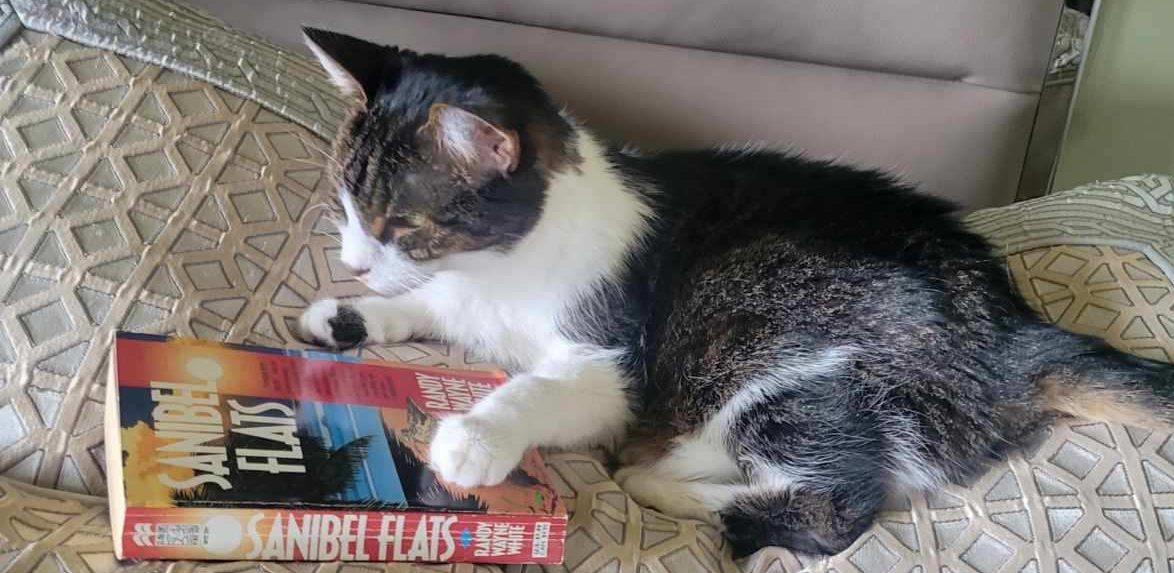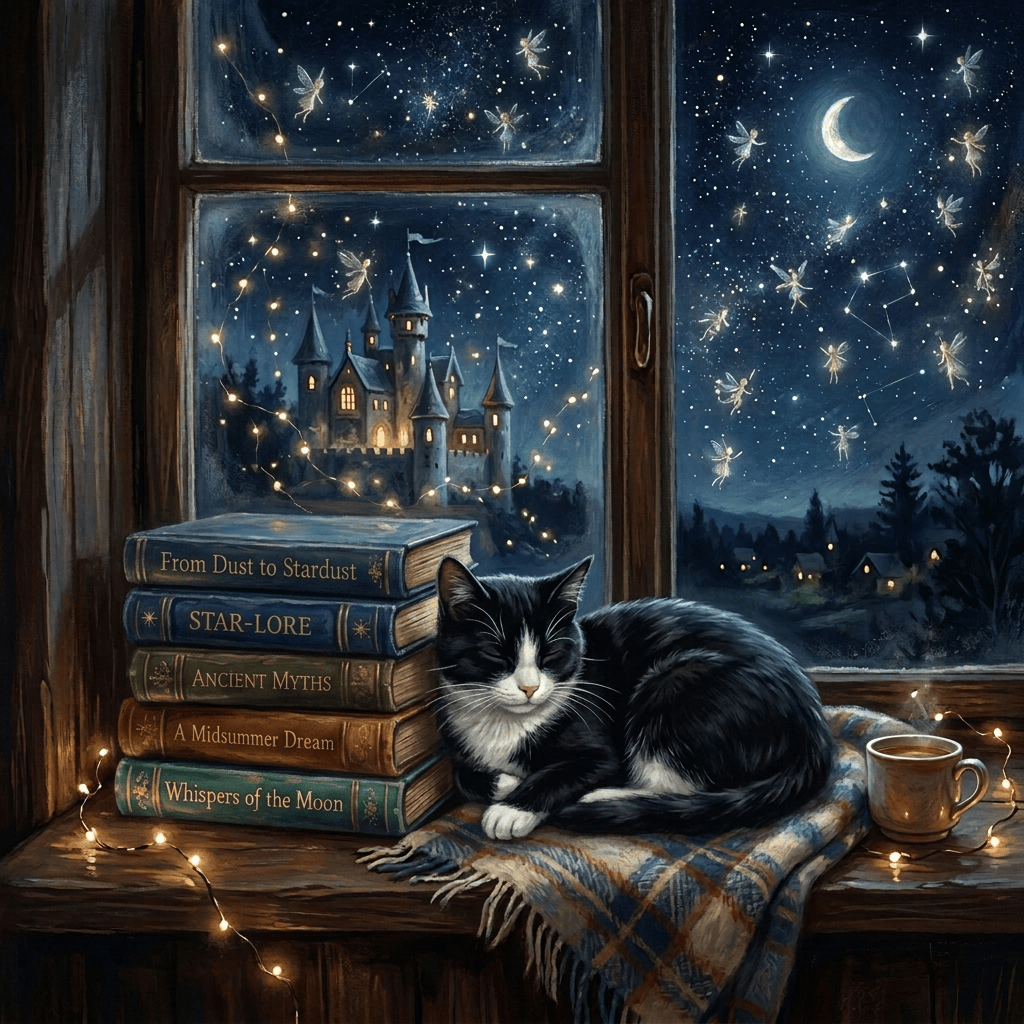
Fairy castles? Flappers? Feisty starlets?
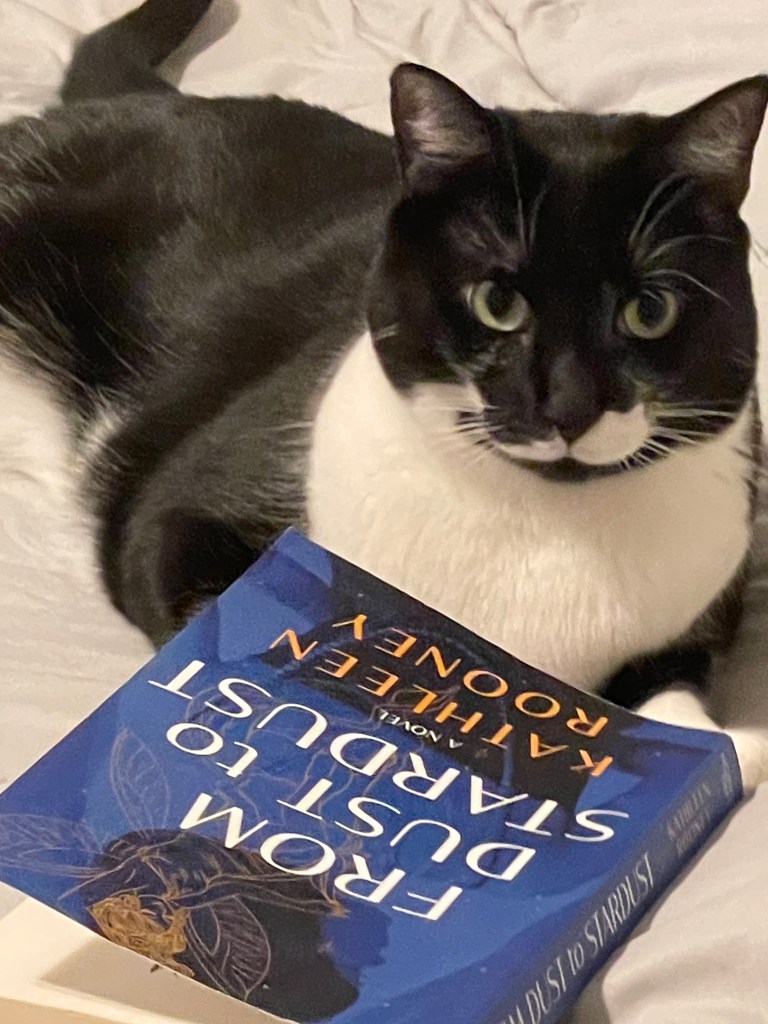
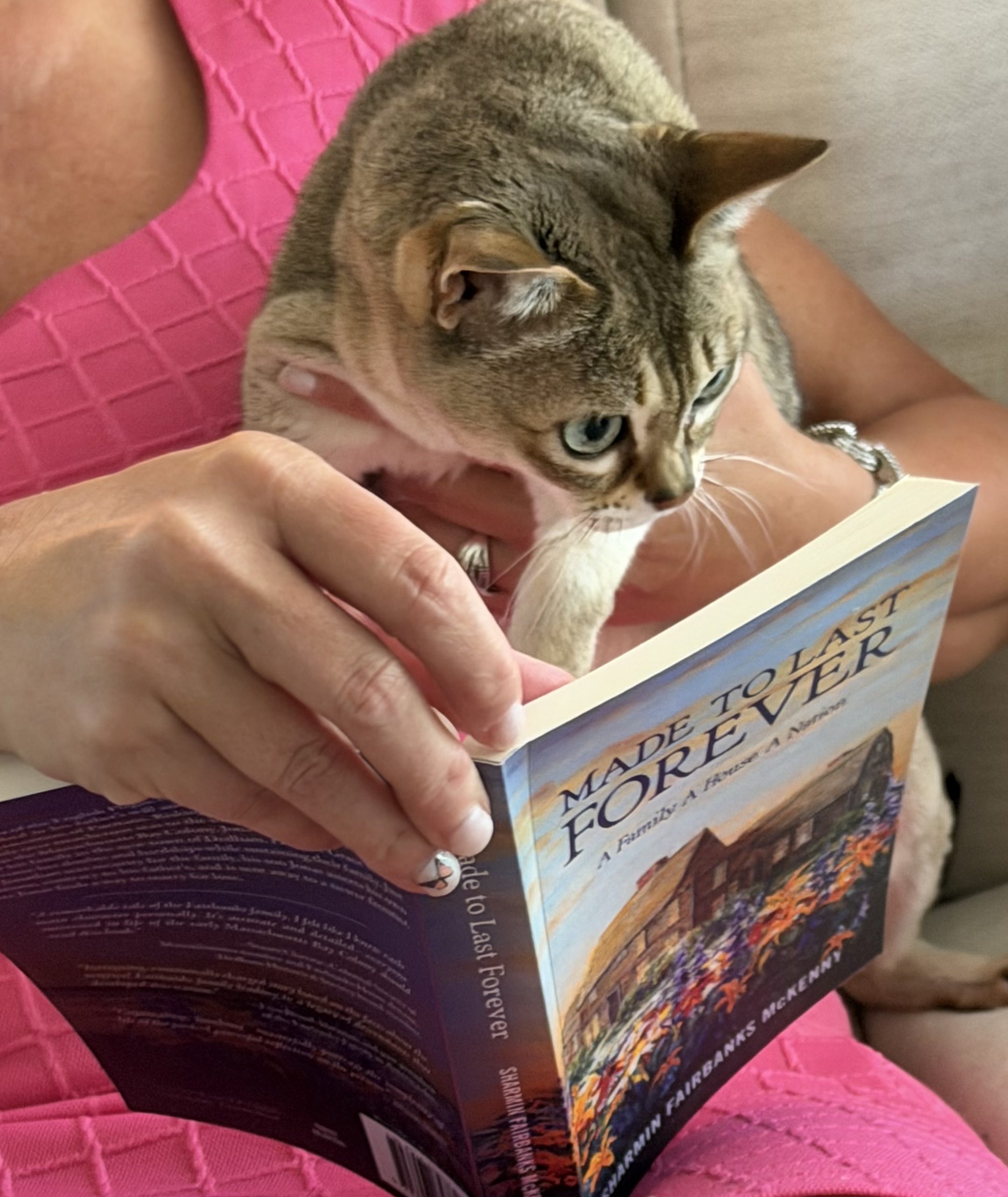
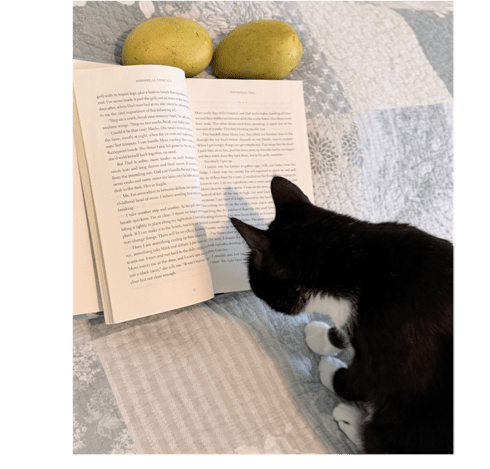
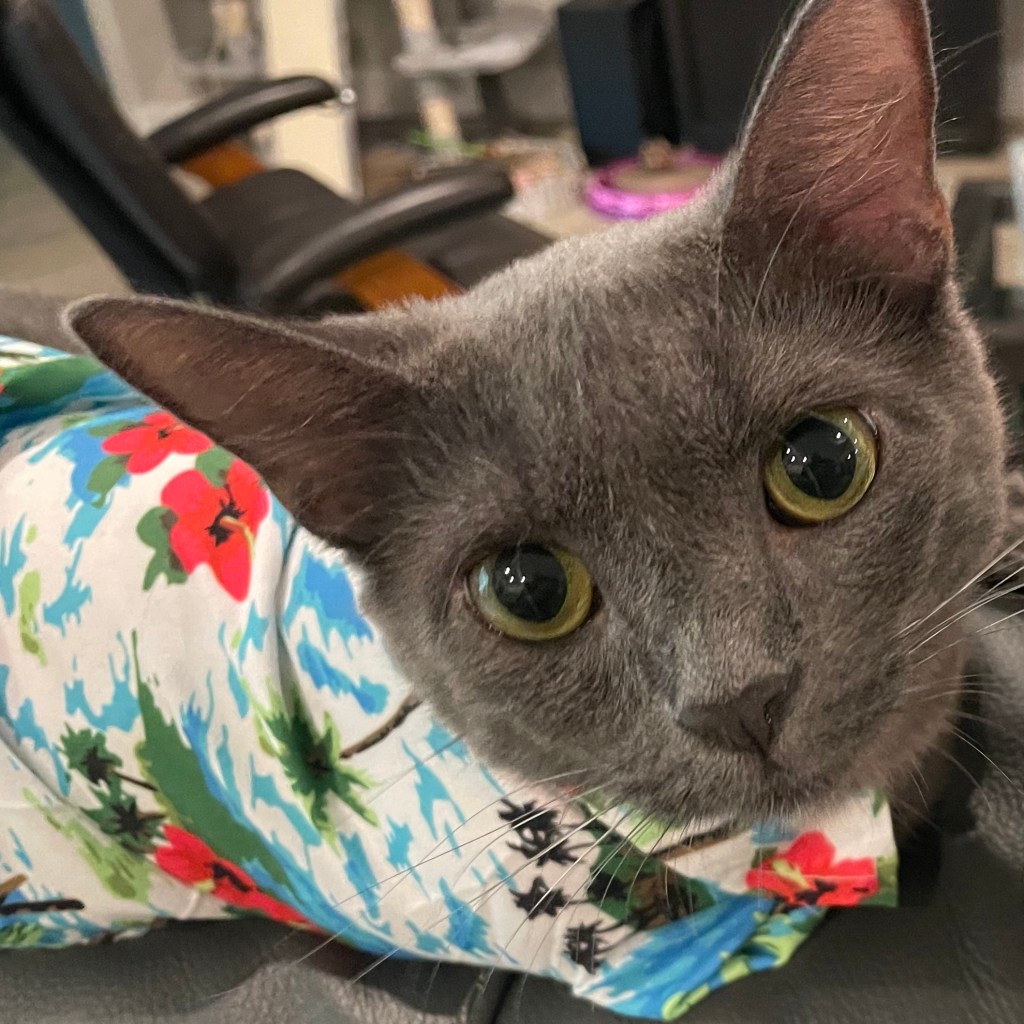
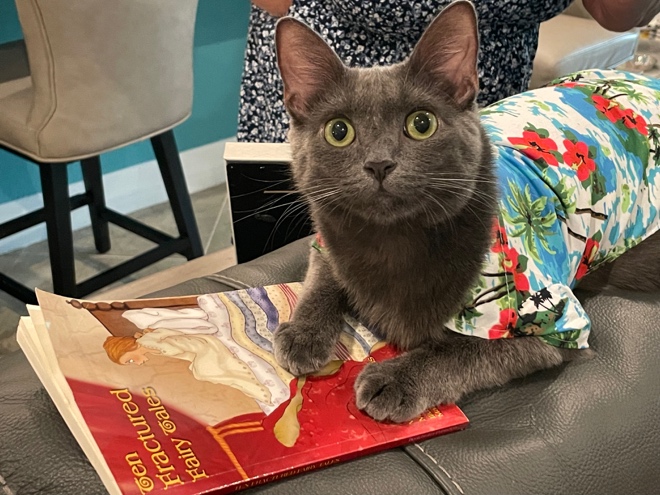
It takes a lot to get Mittens excited. But when she heard that the novel From Dust to Stardust had all that and more, the feline trilled. Channeling her inner flapper, she pawed through Kathleen Rooney’s historical fiction. It is a novelized account of actress and entrepreneur Colleen Moore, the highest-paid superstar of the Silent Film Era.
Rooney explicitly defines the book as a novel, not a biography. “The attitudes and opinions expressed by Doreen O’Dare are imagined,” she wrote.
That said, the protagonist, Doreen O’Dare, methodically mirrors Colleen Moore, as detailed in the star’s memoir and biographies. Both are from Irish Catholic immigrant families, with a strong Granny influence; both have heterochromia (one brown and one blue eye); both had uncles who arranged a screen test with director D. W. Griffith at the age of 15; and both changed fashion with a signature bobbed haircut.
Rooney even changes her Doreen’s birth name (Eileen) to reflect Colleen’s transformation from her birth name (Kathleen).
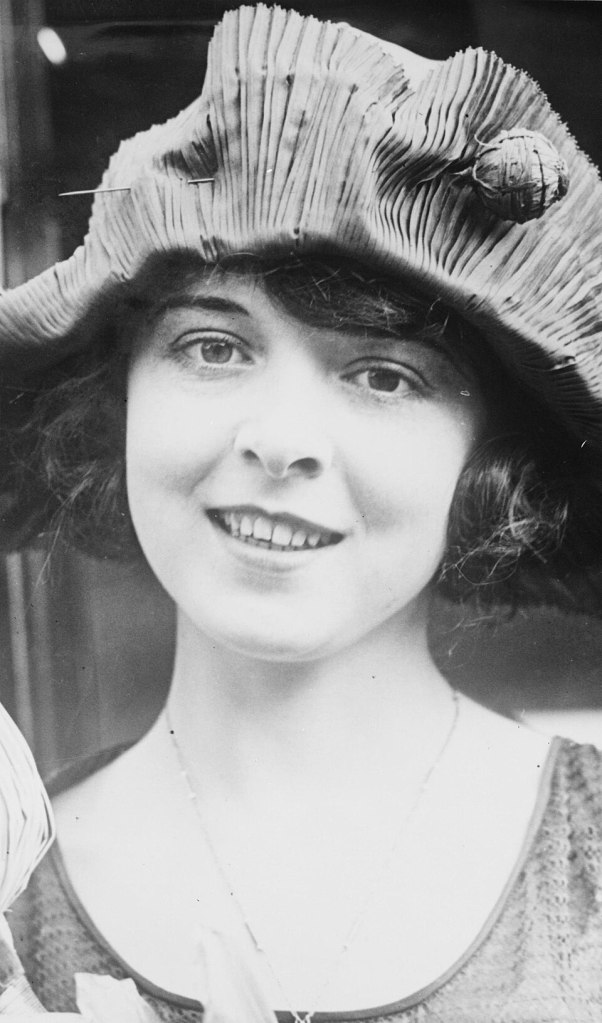
Professing that “everyone has their reasons for who they’ve come to be,” Rooney animates the fictionalized starlet’s life with the same rationale, routines, and routings that propelled the real-life one. Doreen befriends all the same Hollywood stars and influencers of that era: Mary Pickford, Lillian Gish, Clara Bow, Adela Rogers, John Barrymore, Gary Cooper, William Randolph Hearst, and many more.
Mittens blinked and winked at those names with silent envy. Who wouldn’t want to hang around with those luminaries in gilded estates and posh resorts?
Doreen also marries and divorces men with similar names and temperaments to Colleen’s husbands, prompting Mittens to hiss in sympathy.
***
While there is no direct evidence that Colleen Moore believed in fairies, she spent a lifetime creating an elaborate dollhouse, which she donated to the Museum of Science and Industry in Chicago in 1949.
That dollhouse—the Fairy Castle—structures Rooney’s novel, giving voice to the actress, who detailed its history and contents on audiotape when she donated it to the museum. It remains a part of the exhibit.
Doreen explicitly believed in fairies.
For that matter, so does Mittens. She keeps silent company with tiny, winged beings while her feline housemates do zoomies around the Blanchett house. As Mittens read the book, she stopped to read to the fairies an endearing story of Doreen (while she was still Eileen) watching a production of Peter Pan, starring the stage actress Maude Ada. Eileen so enthusiastically cried out, “I believe in fairies,” to save Tinker Bell that the actress stopped the show to applaud.
Mittens purred agreement with the grown-up Doreen O’Dare, who said that Peter Pan got it right. “Who would you rather be?” she asked. “Peter, running wild and free, or Wendy, the little mother stuck at home with nary a checkbook of her own?”
Through Doreen O’Dare, Mittens understood that Hollywood’s Silent Film Era was “run by a pack of children… who had not yet lost the capacity for wonder, who could dream during the daytime, who refused to draw a line between what was real and what was possible.”
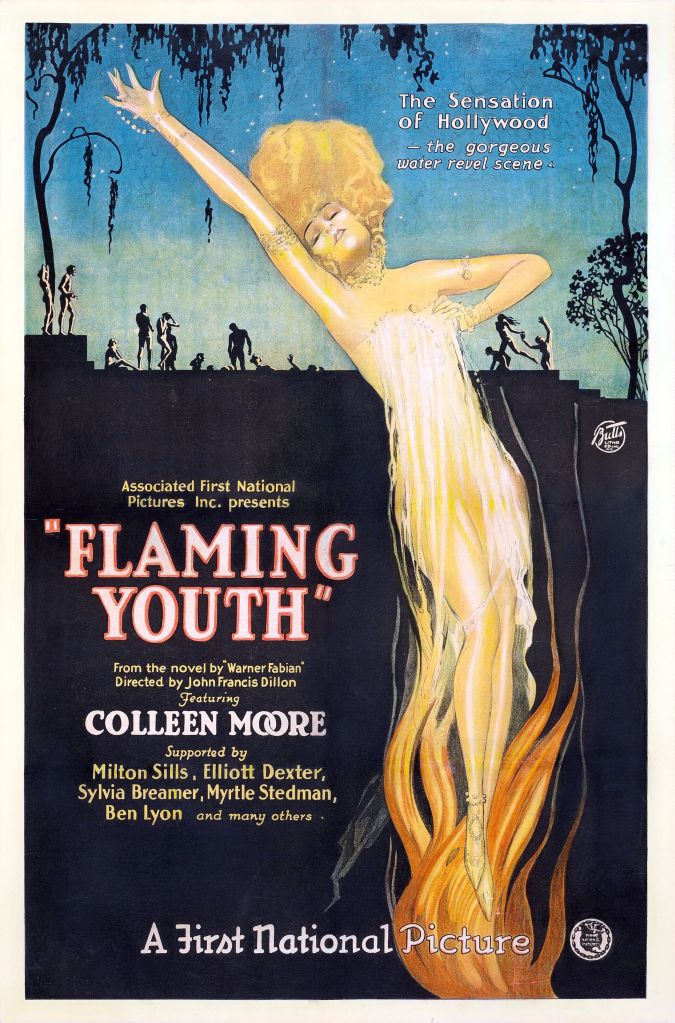
Like Colleen Moore, Doreen O’Dare made 64 films. Mittens was sad to learn that most of them were lost. Studios recycled them to recover the chemicals.
All that remains of her most celebrated film, Flaming Youth (1923), is one 11-minute reel.
What began as a childhood fascination became an obsession for both the successful movie star and her fictionalized counterpart. Architects designed the Fairy Castle, famous set designers built it, interior decorators embellished it, and some 100 professionals played supporting roles.
Measuring 9 feet square and 12 feet high, it weighs over a ton and glitters with approximately 150,000 exquisite miniatures tooled with precious metals, rare fabrics, and real gemstones. Many items were donated by the rich and famous, like inch-square books signed by F. Scott Fitzgerald, Pablo Picasso, Albert Einstein, Willa Cather, and Arthur Conan Doyle.
Mittens, who dislikes travel of any nature, suddenly wanted to go to Chicago, for no other reason than to see the castle.
“Stardust is still dust,” Doreen O’Dare says. “After a while, you want to brush it off.”
Believing that money does buy happiness, the actress saved her fortunes. As her star faded, she invested in the stock market. While married to her third husband, stockbroker Homer P. Hargrave, she rose to partner in Merrill Lynch. She wrote How Women Can Make Money in the Stock Market (Doubleday, 1969, out of print).
“When you’ve got a pile of cash in the bank, you worry less,” Doreen O’Dare says. “When it comes to emotional health, money’s like a vitamin.”
During the Great Depression, she used the Fairy Castle to infuse the country with that vitamin. Touring the country with it, she raised more than $650,000 for children’s charities. Rooney likens its influence to the moon shot of the 1960s, noting that both “created a kind of public wonder at an anxious time.”
***
As Mittens watched fairies flit around her cozy room, she thought about Granny’s guiding principles.
“What’s life … about if you can’t delight in your own magic,” the old woman had told Doreen in her quest for stardom.
“However dire the straits might be,” Doreen said of her Granny, “we can achieve a lot simply by knowing that one trusted person believes that we can.”
That reminded Mittens of her human companions, Nancy and Rick Blanchett, who have believed in more lost felines than Mittens could count. Purring, she chose instead to count fairies.

What is your cat reading?
Send book reviews, feline adventures, and cute pictures to Pat@PattiMWalsh.com

Best Children’s Fiction 2023
American Book Fest
Ghost Girl
“Young readers will find Ghost Girl a relevant and positive guide for their own lives. Older readers will find Ghost Girl an attractive introduction to the deep and profound mysteries and spiritual precepts of the Irish Celtic tradition.” –George C Gibson, PhD, Celtic Scholar
Gold Medal Winner
Florida Authors & Publishers Association
2025 Finalist
Florida Writers Association
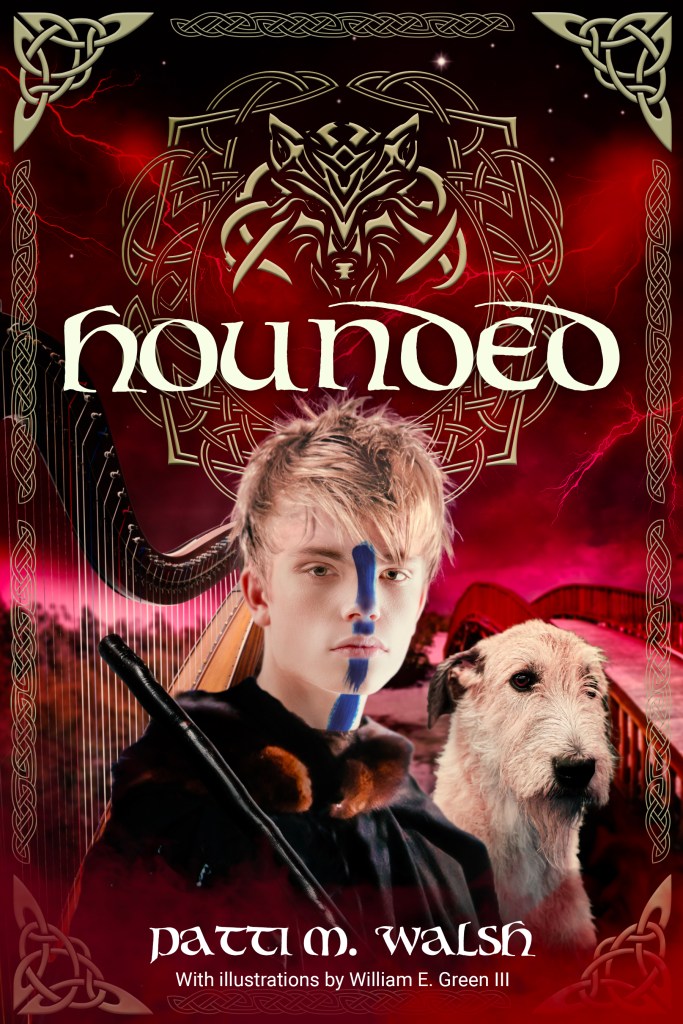
Hounded
Being a Celtic warrior involves more than learning to fight.
Illustrated by William E. Green, Hounded is a contemporary middle-grade novel based on Celtic mythology.
2026 Silver Medal, Memoir
Florida Authors & Publishers Assn.
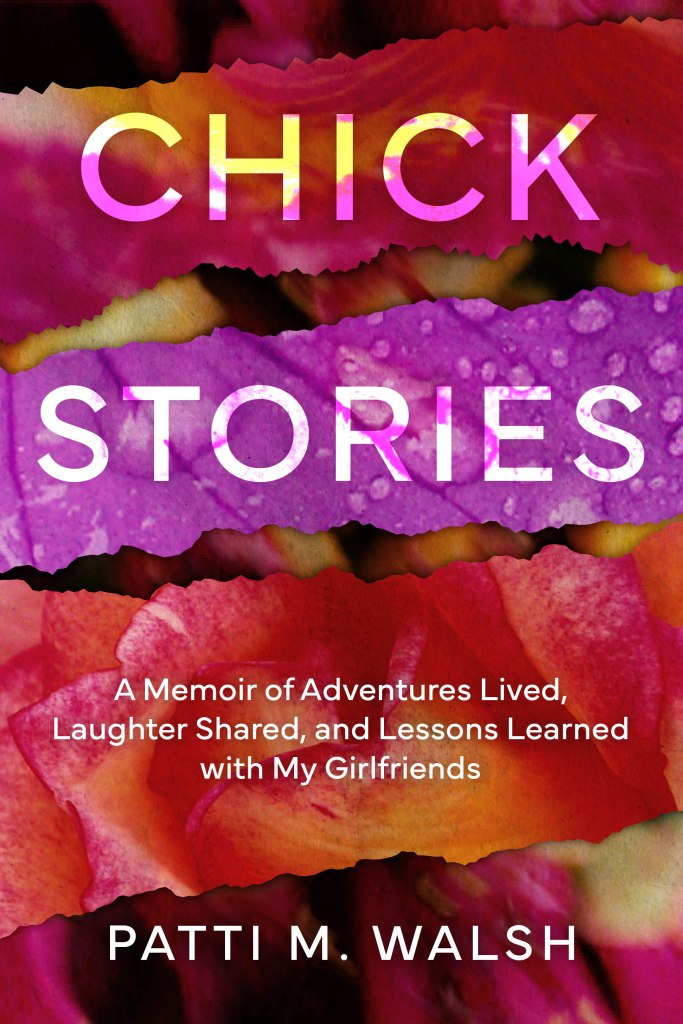
Chick Stories
A memoir of adventures lived, laughter shared, and lessons learned with my girlfriends
Travesties, tragedies, and comical calamities abound in a series of essays rich in historical and cultural context.

The Chick Stories Channel
Share New Adventures Lived, Laughter Shared, and Lessons Learned