She’s Resting on My Laurels

When I received notice on August 1 that my middle-grade novel Ghost Girl is a semifinalist in the 2021 Royal Palm Literary Awards competition, I immediately added the honor to my resume and the badge to my digital accounts. Sponsored by the Florida Writers Association, the annual awards recognize “extraordinary writing” in about 30 genres.

Acting on FWA’s motto of “Writers Helping Writers,” multiple anonymous judges use rubrics to score and provide feedback on each entry. Having volunteered this year as a judge and knowing how rigorous the assessment process is, I am delighted with the news.

Before submitting Ghost Girl to the RPLA competition, I had queried about a hundred literary agents and publishers. Although I had a few nibbles of interest, there were no offers of representation. So when I entered the competition, I hit pause, pending the outcome. If my entry flopped—which I didn’t think it would—then I would start all over again, using the judges’ critiques as guidance.

I will still use the critiques when I receive them, but the news reaffirmed my commitment to publish this contemporary novel infused with magical realism and Celtic mythology.

In it, a spunky biracial 12-year-old girl is haunted by questions about her identity and her mother’s death. With the help of a dog, bats, ghosts, and a magic shillelagh, she overcomes obstacles and assumes her rightful role in the family.

Far from resting on my laurels, I shared the news with friends and colleagues, then dusted off the manuscript to begin another round of submissions.

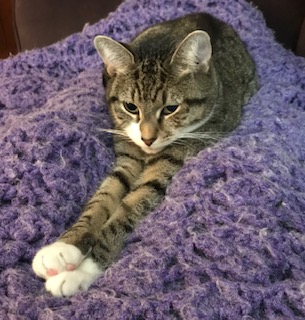
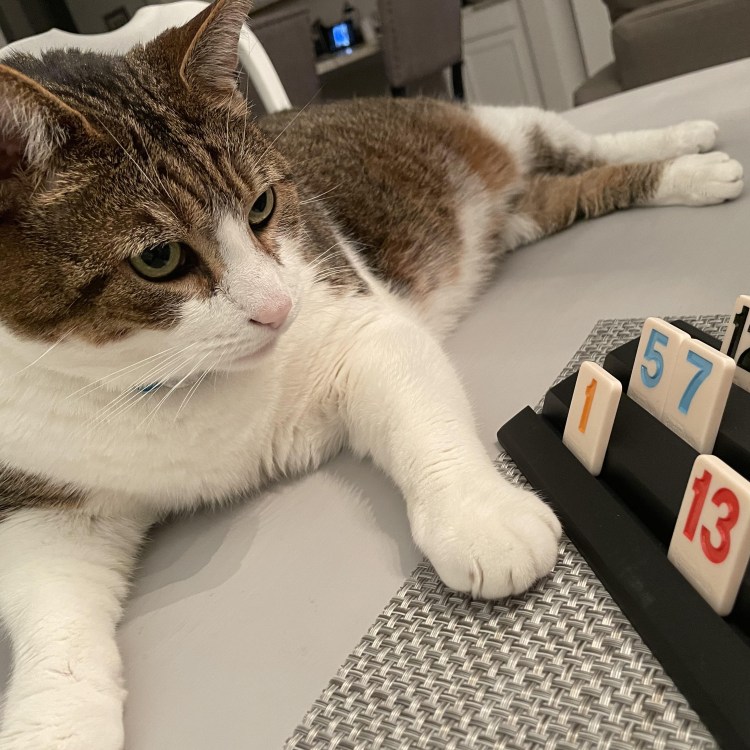
Nina, on the other hand, decided that my badge of recognition was worth resting upon.

Here’s the first chapter of Ghost Girl, which I’m proud and humbled to share with you.

Ghost Girl
Chapter 1
Mirror, Mirror

Puffs of forced air exploded in my face with each exhaled breath. I wanted everyone to think I was cold, not anxious, so I spewed a few more. Fingering the wristband that identified me as an unaccompanied minor, I waited and waited and waited in the bleak misery of a blustery train station. After nearly an hour of signing papers and answering questions, it was finally time to leave on my first solo trip anywhere. I blew again and shook off my hoodie. Dad replaced it.

“We don’t need to send you off with a cold, Bonnie.” He pecked me on the forehead, knocking my glasses askew.

Scrunching my face to match my insides, I huffed a deliberately huge vapor cloud, as if it could erase my stepmother and half-brother behind my father. The effort shook free my hoodie yet again. And yet again, he replaced it with a Hollywood smile that could seal deals and steal hearts. That’s my Dad, marketing magnet and social superstar. Tickling the tip of my nose, he squeezed my shoulders. Despite myself, I yielded to a lopsided grin.

“Atta girl,” he declared, his resonant voice muffled by a stiff northerly wind. Closing my eyes, I imagined it was just the two of us. And Mom, of course. She belonged at Dad’s side. And I belonged with them. On the beach, I fancied, squinting into the sun, not squinching vapor clouds into a bleak January morning, or tracking the steel rails that prowled their way upstate.

Mom. Stuffing tears deep inside, where no one or nothing could reach them, I tried to conjure up her image. I didn’t remember much, except her laugh, her eyes, and her hair. Thick auburn hair. It was the last thing I saw when a truck hit our car, killing her instantly. I was five. That was seven long years ago.

“You’ll have to live with your father,” everyone said. That wasn’t a problem—I had seesawed between my parents since their divorce two years before the accident. Besides, Dad’s condo was only a few blocks away from our little house, so I still had my school and friends. But the new arrangement wasn’t for a weekend or holiday. It was forever, and I first became a speed bump and then a roadblock in Dad’s methodical life. So he found a nanny, which turned into a series of nannies. No one was good enough for me, he said. Not until he met and married Deborrah.

She pronounced her name Deb-ORR-ah. I called her Deb-Horror. With her, everything had to be so, so perfect. And I sure wasn’t. Not only did she find fault with me from Day One, but she canceled my life and replaced it with If-ville.  If Mom hadn’t died, I wouldn’t have to live with her. If she hadn’t insisted on a new house, I wouldn’t have had to go to a new school. And if I hadn’t had problems at the new school, I wouldn’t be pacing this platform, banished to live in the mountains with an aunt and uncle I hardly knew.

With cold resolve and even colder hands crammed into pockets, I glared at my stepmother, stabbing icicles into her soul as she snuggled my half-brother into a warmth that eluded me. It was as obvious as the skinny little nose on her copper-skinned face that she wouldn’t miss me any more than I would miss her.

“Train 233 to Albany, Saratoga Springs, New Grange, and Montreal arriving on Track One.” An invisible voice screeched my destiny like fingernails on a blackboard. New Grange. Anam and Nog would meet me there and bring me to their place in Tory Island. The boonies. For nine months. More jitters, more clouds.

As the train rounded the curve from the south and whistled its approach, Dad yanked Deb-Horror forward. Wigwagging her hand, she stretched the word byeee into three syllables as thin as her personality. “You be good now. Mind your aunt and uncle,” she chided, as if I had already done something wrong. I slipped a thumbnail to my mouth, a habit that she swatted away.

You mind your aunt and uncle,” I mumbled, jerking aside. With my back turned, I mimicked her tepid farewell and stuck out my tongue with a defiant head shake. The jiggling teased a corkscrew from the ponytail tucked inside my hoodie. Jeez. I whooshed it away as the train crept to a stop.

 “Call me when you get there,” Dad commanded. He glanced at the train, his watch, and me—his speed bump—in that order. The train was two minutes late, and Dad did not tolerate late. “We’ll be up, hopefully for your birthday.” He pulled me into a quick but firm hug. “Depends on my schedule.” Of course it did. Everything did.

“Yup.” Short answers magnified my practiced apathy. Besides, it was easier to agree with my father than challenge him. We’d been over this a hundred times. I was sure they wouldn’t come.

“All aboard,” a trainman bellowed, hopping onto the platform. He talked to Dad, scanned my wristband, and grabbed my backpack. I slung the matching tote over my shoulder, noting that the rest of the ensemble was being hauled toward the rear of the train as freight. Climbing onto a sleek car, I turned into the spotlight of a weak sunbeam. I felt like I was on stage, so I took a bow and bid my so-called family good riddance.

“Love you, Missy Mope.” Dad winked at me. That’s what he called me when I was stuck doing what I didn’t want to do.. Like now. Make me, my long face would dare. Beyond the reach of one final hug, I broke character and winked back. He blew a kiss.

“She’s in good hands, sir,” the conductor called over his shoulder, nudging me into the car and hefting my backpack onto the overhead rack. “Name’s Porter,” he nodded to me and scanned my ticket. His body looked muscular beneath his uniform, probably from lifting all that luggage. With a thrust of his jaw, he directed me to an open seat on the left by the window. “I like that side. Nice views. And you can see your folks as we pull out.” Yanking off my parka, I threw myself into the plush seat he suggested. “New Grange’s the ninth stop, a little over four hours. I’ll be by to see if you need anything.”

Heaving a long crrreeeeaaakkk, the train pulsed away. My stomach flinched and my throat seized. I had already lost Mom. Now I was leaving Dad. But, I gasped, I was also leaving Deb-Horror and Benjy, the crybaby from hell. I shook off my hoodie, freed my wild hair, and giggled. Four hours. On my own! A broad smile accompanied my final wave as the train curved into a tunnel, instantly erasing both my family and my bravado, for in that moment of immediate darkness, the window morphed into a mirror, reflecting a girl whose smile puckered into a scowl.

“Who are you?” I asked the twelve-year-old girl who looked back at me. We simultaneously removed our glasses. With locked eyes and grimaced face, the girl in the mirror bit her lip, which told me that she was scared. She gnawed on her thumb, which told me she was anxious. She blinked away tears that told me she was alone—and nothing like the people who had just disappeared on the platform. For starters, they all had similar skin colors. Dad liked to joke about that, saying, “I ordered café au lait, with extra cream and brown sugar sprinkles.” That was how he described my lighter and freckled version of his rich caramel skin. “And I got Bonnie.” I wasn’t as dark as Dad, and not as light as Mom. She was pinkish, with freckles that marched across her button nose. I touched my own, which matched hers, freckles and all. Calling them fairy dust and me Bonnie Baby, she would tickle me with kisses. I would give anything for one last fleck of a fairy kiss.

My parents were a striking couple—tall and athletic. Yet the girl in the mirror was short and skinny. Then there was the hair. Mine was a longer, tangled version of Dad’s close-cropped cinnamon nap. Mom’s was silky auburn. Dad’s face was chiseled with a square jaw, tight mouth, and dimpled chin. Mom’s was oval with a full mouth and soft chin. Mine was round and buckled with braces. But I had Mom’s eyes. Green eyes that blinked back tears. I resembled both parents, but looked like neither.

“You don’t belong,” I told my perplexed self, covering my eyes with long elegant fingers—Mom’s fingers—as if they could erase the last seven years as gently as they had wiped away tears before that. Shielding my eyes from myself, I thought about the avalanche of events that got me here.

When Dad married Deb-Horror, he said I needed a mother. I didn’t need a mother—he did. Before long, she needed a house—the condo wasn’t big enough and the neighborhood wasn’t good enough. Then she needed a baby. “I got me a built-in babysitter,” Deb-Horror boasted to her friends, emphasizing each word with a shoulder thrust. Nobody bothered to ask what I needed.

As if I could erase those disasters, I closed my eyes and circled my fingertips from them to my brow and across to my temples. Resting my palms together below my chin and fanning my fingers across my cheeks, I opened my eyes. In that instant, the train cleared the tunnel. Watching my reflection dissolve into a rolling countryside, my hands sprung outward.

“I’m free,” I announced aloud. I liked the way that sounded. Bobbling my curls, I repeated it. I bit my lip. Until I got to New Grange. Then what? Before I could kick that scenario around, the train slackened its pace across an intersection. A pack of teenagers in a pick-up truck waved, and I waved back. To them, I was an adventurer. They didn’t know I was a loser.

I wasn’t always one, I sighed, remembering the world where I had had a real family and real friends, like Jenny, Sara, and Erin. Erin and I grew up next door to each other and stayed close even after Mom died. Even though we didn’t look anything alike—she had straight blonde hair, brown eyes, and a big toothy grin—we called ourselves twins. We’d wear matching t-shirts and hair ribbons. We even dressed our dolls alike. When we met Jenny and Sara on the first day of kindergarten, we instantly became the Fab Four—inseparable superheroes on escapades, or princesses on quests. Over the next five years, we traded Curious George for Harry Potter, Muppets for boy bands, and dolls for nail polish, pretending ourselves into the real-life women we might someday become. We were cool. We were Girls Who Code and budding filmmakers with the videography club. But Deb-Horror shredded that life like cheese. My new school didn’t have those clubs and I didn’t have any friends.

I pulled out my phone to text Erin, my BFF. Humph. Used to be. What happened to the forever part? I stared at my phone as if it were a crystal ball. It told me that I couldn’t remember the last time we’d been in touch. After I moved away, Erin and I talked, texted, had a few sleepovers, played some games online, but that all got old. Or maybe we did. Did she ghost me? Did I ghost her? If she wasn’t my best friend, was she still my friend? Friends were people who understood you, or at least tried. As each day, month, and year went by, no one seemed to understand me. While everything was the same for Erin, Jenny, and Sara, all I had was replacement feelings, a replacement family, and a replacement life.

I hated my new school. The only kids who acknowledged me were the other misfits. For them, breaking rules was chill, like skipping school to hang out at the mall. Of course, the one day I went along, we got caught. Dad gave me a pass, saying that he played hooky as a kid. He told me not to do it again. But not Deb-Horror. Although she kept repeating that she was “disappointed,” she was forced to go along with Dad since she wasn’t my real parent.

But she sure acted like she was, especially when it came to clothes. She didn’t let me dress like the other girls. They wore rad clothes, henna tattoos, even goth makeup. In my attempt to imitate them I came off as a wannabe. Deb-Horror pitched a fit one morning when I tried to sneak out wearing a borrowed lace-up vest and short skirt. I responded by kicking a hole in my bedroom wall with my platform boots. I didn’t understand why that was such a big deal—I didn’t hurt anyone. Besides, she and Dad had knocked a hole in my life. A counselor suggested that I had something called an “antisocial personality disorder.” That was harsh. I didn’t have a disorder, it was my life that was disordered.

Next, there was the Juul incident. I didn’t like vaping, but I liked hanging around with kids who did. When I got home one afternoon, Dad questioned the mango smell, made me empty my backpack, and threw away my pod. After a lame “father-daughter talk,” we coasted for a few weeks. Then it was Game Over, big time, when nosy Deb-Horror checked my Instagram. She discovered the picture I had posted of a slap game we played on a new girl. It was just a prank—I didn’t even take the picture—but Dad called it bullying.

So besides taking away my phone and tablet, he grounded me, which I hate to admit was a good thing because I wasn’t with my homies when they got caught shoplifting a few days later. Looking back, some of those kids may have had that disorder thing. Even though they weren’t real friends, they were somebodies. Looking at my phone again, I realized I missed having somebodies, anybodies.

That’s how I ended up on this train, deported to a place I’d never been, to do who knew what, with people who were little more than strangers. Sure, Anam and Nog were my aunt and uncle, but I hadn’t seen them in over three years. That’s when they moved to Tory Island, where they were opening a bed and breakfast.

Nog called me every few weeks. He was Mom’s big brother, which is funny because he was way shorter. He would go on and on about his old house and his old dog. I never liked old stuff. Or old dogs. I did perk up, though, when he mentioned horses. I laughed at the thought of Anam with horses. The only ones I could imagine her with were statues at the museum where she used to work. With her hair in a bun and her body swathed in too many clothes, she was as prim as Nog was gabby. Round and smiley, his hands and mouth moved constantly as he spewed his Nogisms. That’s what everyone called his silly stories and daft expressions. Except Dad, who didn’t abide silly and didn’t like Nog. The feeling was mutual. I think Nog blamed Dad for my parents’ divorce. But they pretended to get along for my sake.

When I told Nog about my troubles at school, he and Anam hatched a scheme. “Get her away from that crowd,” he suggested to Dad. “Keep her too busy to get in trouble. She can take the train here—she’ll love that. You can all come up this summer and we’ll spend a week together.” Deb-Horror frowned at that. So did I. But Nog persisted, referring to the inn as the family homestead where he and Mom—her name was Maura—spent their summers as kids. Finally, he sealed the deal. “She can even finish the school year with me. I am a teacher, you know.” Dad and Deb-Horror agreed—maybe too quickly. Again, no one bothered to ask me. Sure, I thought, just rent me out like a servant.

I thought again about Erin. I wanted to tell her everything. But where would I start? Admitting that I became a loser? Maybe I could invite her to visit, but I didn’t know if I wanted to visit If-ville. What if I didn’t like my aunt and uncle. What if they didn’t like me. I didn’t like me. Maybe this was all a big mistake. I realized I was still staring at my phone. At least Dad returned my screens as a condition of this arrangement.

I shook my head. With nothing to share, I shoved the phone back into my tote. It was part of a totally awesome ensemble that Deb-Horror bought for this trip. Of course, I faked not liking it. That made me smile. Instantly, my mood changed.

Burrowing into my seat, I dug out the snack that she had made—something else she got right—a peanut butter sandwich and a box of chocolate milk. Placing the sandwich aside for later, I slugged some milk and pulled out my tablet. But I didn’t feel like reading, playing a game, listening to music, or watching a movie. Maybe I could post a picture to my Facebook page, or do a video blog on this trip. No, that only reminded me of how things had changed.

Bored, I put the tablet down and watched the misty scenery. I picked the tablet up again to take a few pictures. But all I saw was blurred factories and trees. Ugly warehouses and trucks. Disjointed people and cars. Again I put it down. I was tired from not having slept much the night before. I had been too nervous.

The train’s rocking lulled me into a half sleep. I tried to picture Mom, but I only recognized her absence. Sometimes whole days went by when I didn’t think of her. I felt guilty about that, like I didn’t love her anymore, which wasn’t true. After seven years, though, I was still wracked by the unfairness of it all. If she were here, none of this would have happened. Why did she have to die? She was smiling and happy one minute, gone the next. I didn’t understand it then, and I certainly did not understand it now. I never told anyone this, but I wanted to kill the truck driver who killed her.

Tears scraped my heart, burning it like a skinned knee. I stared out the window until the train stopped at a dingy station, where a handful of people got on. As we pulled away, Porter appeared at my side and startled me out of my funk.

“How’s it going, young lady?” He looked like somebody’s grandfather with his graying hair and ample smile. “There’s a dining car toward the back. Want me to take you there?”

“No, I’m fine, thank you.” I put on my glasses and my grownup face. “I have snacks with me,” I held up my uneaten sandwich. “I just, well, you see, I just never went anywhere all by myself before.” Now why did I go and tell him that?

“Ah, I see. I remember my first trip alone. Out West. First day on the job. Left my family behind. I was older than you are now, but it don’t make no difference. Whenever I got homesick, I pulled out a pocket watch my grandfather—my Pops—gave me just before he died.” With that, he fished in his pocket and pulled out a gold timepiece. “Still works. Reminds me that the past is history, the future’s a mystery, and the present is, well, a present. Do you have something like that?”

I glanced at the bag that Porter had placed on the luggage rack. As if I had x-ray vision, I could see Mom’s emerald ring tucked in my treasure box. I deliberately put it in my daypack and not my luggage, so that I could keep it close. Dad gave it to me the night before he married Deb-Horror.

“This was your Mom’s engagement ring,” he had said. “Now it’s yours. Because I love you.” Of course he had to spoil the moment by adding, “Don’t lose it.” So I never wore it, except to try it on from time to time, pretending to be a beautiful woman. In that instant I longed to unpack it, slip it on, and press it to my heart. Maybe it would soothe the ache. I closed my eyes and pictured the green stone set within a gold Celtic knot. It did remind me of the past, the present, and the future. I found Porter’s eyes.

“Yes I do. Thank you.”

“That’s good, young lady. Always good to know who you are and where you’re coming from, especially when you’re going someplace new.”

“It’s my mother’s ring. She died.” I couldn’t believe I told him that, too. But his kind eyes didn’t even blink.

“Well, I’m sorry for your loss.” He bowed his head momentarily before stepping uninvited into my soul. “But my Pops also told me that in order to understand life, you gotta first understand death. See, where there is no death—where past, present, and future are one—you have freedom to live. That’s a big lesson, but you’ll figure it out.” With that, he edged away and paced through the car checking tickets and answering questions.

Instead of pulling out the ring, I pulled up pictures on my tablet. Mom, Dad, and me, back when Dad lived with us, when we were a real family. Pictures of Mom and Nog when they were kids, and another of them laughing in a restaurant shortly before she died. Mom and Anam as young girls wearing funny hats and another as grown women on vacation. There was one of Anam holding me as a newborn. I studied her picture. She always looked like an old painting. We had nothing in common. I scrutinized those images for a sense of my family—past and future. And the present, well, the present was very confusing.

Outside, patches of scenery appeared and disappeared dreamlike in the mist and fog. Small towns and regal estates flickered by. Perhaps the inn would be like one of them. We zipped by railroad crossings. We stopped. We moved. People got off. People got on. Scenery appeared. Towns disappeared. We stopped. We moved. Stations loomed and tracks retreated. People got off. People got on. I lost track of the world as the train pulsed through the mist. Dad and Deb-Horror blended into Nog and Anam. Mom combed her long auburn hair, her ring visible with each stroke. “Young lady,” she called me. “Young lady.” Not Bonnie Baby. I reached out to hold her.

“Young lady.”

But it wasn’t her voice. It was a man’s. Where was Mom? Jolted awake, I blinked. Where was I? I blinked again. Porter was leaning into my seat. I blinked yet again. It took a few seconds to realize where I was.

“Wake up, young lady,” he repeated quietly. “This is your stop.” To the entire car he boomed, “New Grange. Next station.” Next station? How long had I been asleep?

I stuffed my tablet into my tote and wiggled into my coat as the train creaked to a stop.

The Pink Slippers

“The Pink Slippers,” by Patti M. Walsh, will be published in “Footprints,” the Florida Writers Association’s collection book, in October 2021.

“Cathie?”

Surprised that my neighbor had hailed me by name on such a cold evening, I pivoted toward his raspy voice, then hesitated. Mindful of the thin layer of ice beneath my feet, I checked my footing before completing the turn. Much to my amusement, my boots had etched a tight circle of chubby exclamation points when I reacted to his call. I giggled at the footprints despite the chill that seeped through thin soles. I raised my head in a grin.

“Hi, Gus.” Addressing him by name was odd. I knew nothing about my elderly neighbor, except that he wasn’t prone to chatting, especially on dank nights. Although we had introduced ourselves when I moved in last year, we never spoke, settling instead for spartan smiles and wanton waves.

“Got a minute?”

“Sure.” Although I dreaded another frigid minute outside, I nonetheless obliged the old man’s unusual bidding and carefully stepped toward his porch, incising a few more exclamation points along the way. Illuminated by a pale light, Gus appeared cheerful, though significantly older and more frail than I remembered. Picking up a plastic bag, he unfolded his rangy frame and bounced a package to his chest with a Parkinsonian tremor.

“I hope you don’t mind, but I have something for you.” His voice faltered, belying an otherwise perky demeanor.

“For me?” Thinking the offer more than a bit odd, I reacted with raised eyebrows and forced smile.

“Yes. These were Josie’s.”

Josie? I’d lived here for nearly a year and had never heard the name Josie. Was she a wife, or perhaps a daughter?

“She was the love of my life,” he responded with a gentle smile to my unasked question. “Died two years ago. Cancer. I could never bring myself to get rid of her things, but now it’s time. I’m moving to assisted living. Goodwill came earlier today for everything else, but… I couldn’t part with these.” He cast his eyes downward for a few long seconds and then directed a steady gaze at me. “They’re slippers. The last gift I gave her. She told me the morning she died that she’d always wanted pink slippers. Imagine that. After fifty-six years of marriage, I never knew. She wore them only once. I’d like to give them to someone special. You.”

“Me?” I added to that question a chubby exclamation point.

“I’m sorry.” Gus’s voice now matched the tremble in his hands. “Perhaps this is too presumptuous, but you remind me of her. When she was young.” He glanced down at my feet. “She even wore high-heeled boots. I often think how much she would have liked you.”

Realizing how difficult this must have been for Gus, I composed myself quickly.

“I’d be honored,” I managed to utter as I ascended his porch. He handed me a light package. A dead woman’s slippers. How creepy. “Thank you.”

“No, thank you.” His emphasis was warm, unlike the icy swirl of wind that gusted from the nearby beach. He tugged a cap snuggly around his bald head. “It’s a bit nippy, so I must go inside.” We bid each other a good night. How sad, I thought as I retraced my footprints home.

Dropping the package inside the door, I wiggled out of my coat and went about my evening routine. I fired up the wood stove, put on PJs, and ate leftovers while watching the news. Although I liked my little blue bungalow across from a spit of the Gulf, it was drafty when the wind picked up. So before snuggling in with a good book, I made a cup of tea and stoked the fire. In the midst of wrapping myself in an afghan, I spotted the parcel. Curious, I retrieved it and carried it back to the sofa.

Tissue paper cradled two pale pink slippers that still had tags on them. Scrunching the paper into a ball and dropping it mindlessly to the floor, I scrutinized the curious hand-me-down. I’d never had pink slippers. Mules, I corrected myself as I admired their plush and backless profile. I slid one foot and then the other into them.

“Thanks, Gus,” I shrugged and plunged my feet into a softness that filled an emptiness in my soul, one I didn’t know existed until that moment. “Thanks, Josie.” With my feet comfy and cradled, I burrowed into my leather sofa for a quiet evening and a good read. But I never got beyond the first few pages.

A deep sleep of flowered meadows and puffy skies overcame me. The world was new, as if I were a baby. A soft woman—perhaps a mother—enveloped me with laughter and lavender. Braids flying, I gathered flowers and jumped ropes. When I awoke at dawn, the fire had died out and my book was on the floor. Strange, I thought, I had never fallen asleep on my sofa. And awakened so refreshed. With vivid memories of sun-filled dreams, I got ready for work and didn’t give my fanciful night another thought. Until I got home.

When I rounded the corner, I noticed that Gus was gone; his house was dark. I couldn’t thank him for his gift, this time sincerely. A vague sense of regret dissipated as I went about my evening. Skipping the pretense of reading, I donned pajamas and Josie’s mules. Fluffy and springy, they were like marshmallow clouds, I thought, as I wrapped myself in the afghan, and fell asleep.

Against those marshmallow clouds and with aging hands, the same soft woman braided my long hair, then twisted and curled it through schoolgirl angst, college confidence, and budding womanhood. She lovingly ceded the brush to a tall man with a sparkling smile. Caressing my tresses, he brushed and brushed them. All night. Until my scalp tingled. He then massaged it with strong fingers. Like the residue of spilled honey, the stimulation clung to my own short-bobbed head all day.

I rushed home. Cuddled anew in pink slippers and afghan, the man of my dreams materialized. Elegant. Extravagant. Kiss. Snowflakes. Bliss. Sunny mists. Marriage gifts. Soft woman old. Soft woman gone. Child unborn. Anguish borne. Acceptance found. Silky gowns. Plumes of herons and feathers of down. Satin shoes. High-heeled boots. Passion erotic. Travels exotic. Secluded sands and seas of foam. Salty air. Cozy home. Speeding years. Fading years. Graying hair. Then no hair. Never a care.  

“Thanks, Gus,” I said in the morning as I traded slippers for boots.

“Hi, Josie,” I said in the evening, trading boots for slippers and fanciful repose.

But long before dawn, I awoke distraught. My head ached, pain consumed my innards. I wasn’t sick, yet something was wrong. Very wrong. The dreams had turned. The fire had died. I got up and stirred the embers to life. I brewed chamomile tea. But nothing would soothe me.

Sinking back into the sofa, my eyelids shuttered me into the nightmare of a dark room. No, I told the gentle man who no longer smiled. He cried. I cried. Not tonight, Gus. No meds tonight. No meds this morning, no meds tonight, I moaned over and over. Then the room got brighter. Pink. Slippers. Tonight, Gus. I’ll take my meds tonight. All my meds tonight. All tonight. I smiled at my pink-cloud feet. He kissed my hands. Consent. Morphine. Bliss.

I bolted awake and stared at the slippers—intimate footprints of a woman I had never known. Footprints that flashed before her dying eyes. Footprints that were her birthright and now my legacy.

“Josie,” I whispered. Crisscrossing my arms, I wrapped my hands around my shoulders, I hugged the woman as if she were my own self. “Josie, Josie, Josie.” I removed the slippers and cradled them in the tissue paper that lingered still against the sofa. Yearning for my own pink slippers when my life would flash before me, I pressed Gus’s gift to my heart. Closing my eyes, I watched chubby footprints merge with soft pink ones on one path. I opened my eyes and nodded.

Barefooted, I walked across the room and knelt before the fire. I opened the stove door, placed the package inside, and quickly latched it. “Rest in peace, Josie. Rest in peace, Gus.” Rising, I blessed myself, something I had only seen, nothing I had ever done, wondering if I did it right. “Rest in peace, Cathie.”

As I climbed into my own bed for the first time in nearly a week, I wondered if the smoke from the chimney turned white like when a pope is elected.

Gobsmacked by Guernica

I belong to the Pelican Pens Writers’ Club, which offers its members a weekly prompt to spur our imaginations and hone the craft. Last week, it was suggested that we write a story or poem about a famous painting. Pablo Picasso’s Guernica came to mind. While I did a little research, Nina did, too.

My consciousness of the painting was born in my college days, but my grasp of it arrived in 2011 when my husband, Bob, and I coursed through the galleries of the Virginia Museum of Fine Arts (VMFA) to absorb Picasso’s glorious complexities.

The VMFA had scrambled to host the only East Coast stop on a seven-city international tour of 176 works that Picasso had curated to shape his legacy. Interest was high, and tickets were limited.

Although I was hobbled at the time by a broken shoulder, I was not going to miss this opportunity to see, in person, what I had studied in college. I not only admired Picasso’s creativity but also his productivity marked by a modus operandi to, “Only put off until tomorrow what you are willing to die having left undone.”

We had trekked more than a hundred miles to spend an afternoon with the cubist. His explosive and multi-faceted depictions of humanity, cultivated during the 1910s and 1920s, spoke anew to college students in the early- to mid-1970s. They reflected the fractured ethos of a generation. 

While I stood in awe in the first gallery to absorb the overall magnificence of the exhibit, Bob stepped as close as possible to one painting to call attention to the visible fine lines of the master’s paintbrush. It was as if Picasso himself had entered the room to demonstrate his prowess. Each of these masterpieces was inspired by creative genius and executed with the fundamental effort of putting paint on canvas one single brush stroke at a time.

In this fashion—macro- and micro-focused—we wandered through the Blue and Rose Periods; cubism, classicism, and surrealism; prints, drawings, and photographs. At the entrance to Gallery 8, I halted and inhaled sharply.

Gobsmacked by Guernica, I was.

Nearly 12 feet high and 26 across, the mural depicts the April 26, 1937, bombing of Guernica, a Basque town on the inland port of Suso on the Urdaibai estuary. Established in 1366, it is reputed to be the first Basque town to recognize democracy under the Tree of Guernica. By ancient tradition, Basques assembled under an oak to discuss community matters. Around the tree grew a marketplace for Guernica’s people, who were engaged in agriculture, crafts, and trade. Monday was—and still is—Market Day.

On Monday, April 26, 1937, the marketplace swarmed with thousands of women and children from Guernica and the surrounding villages—the men were off fighting against General Francisco Franco’s Nationalists. After all means of egress were destroyed, Franco authorized a three-hour air attack by Nazi Germany and Fascist Italy. Although Guernica was behind the battle front, Franco used it as a means of intimidating his foes; Adolf Hitler used it as an opportunity to test his weapons and tactics.

Triggered by the horror he learned about in newspapers, Picasso went from sketches to finished masterpiece in less than two months. I stood agog at the result.

Arguably the most moving and powerful anti-war painting in history, it struck a note with a generation trying to make sense of Vietnam. According to Pierre Daix, in his book Picasso, the work is “the first historical picture painted for men consciously in the act of making their own history. It is the mirror image of a world of atrocity and bestiality from which it is man’s duty to emerge.”

Although I had studied Guernica in college, nothing prepared me for the impact of its heart-stopping mammoth and monochromatic sweep of gray, black, and white. I approached with reverence the chaotic scene I had known only in textbooks—flames falling from an artificially lit sky, an intact bull and a gored horse, dismembered bodies, screaming women, and a dead child.

 Adopting Bob’s fascination with minute details, I nosed as close as the guards would allow, my slinged arm ironically integrating me into the landscape. I needed to smell the oil and varnish, redolent of war; to feel the bombs; to hear the wails. But it was what I saw that stunned me—the fine texture of a single brushstroke, a colorless score by a master who never put off anything he wasn’t willing to leave undone.

Guernica, Pablo Picasso, 1937, oil on canvas

Endnote

Although the 2011 exhibit was unique, Guernica’s appearance in the United States was not. After General Francisco Franco’s victory in Spain, Guernica was sent to the U.S. to raise funds and support for Spanish refugees. It was displayed first in San Francisco and then in New York.

Fearing Franco’s government and the Nazi occupation of France, Picasso was adamant that Guernica remain in the U.S. until Spain re-established a democratic republic. Guernica toured the U.S. and elsewhere until 1981.

After Picasso’s death in 1973 and Franco’s in 1975, Spanish negotiators brought the mural to Spain. It resides today at Museo Nacional Centro de Arte Reina Sofía, in Madrid, in defiance of Picasso’s expressed wish to have the painting placed among the great pieces of Madrid’s Prado Museum.

Reading Rummikub—Like a Cat

When Bob and I visited our friends Vince and Nancy for an evening of Rummikub, we got sidetracked from the rules that Nancy was patiently laying out. She told us that there are 106 tiles in the game—104 numbered ones in four different colors, and two jokers. The goal is to meld tiles into groups or runs, using game pieces that are either drawn or that have already been played. It’s a constant play of rearranging and adding tiles to the table. The first player to go out, i.e., use all his or her tiles, is the winner. Simple.

But Beamer had a different take on the game. As a feline, he prefers to to read his surroundings, the facial expressions of others, and things—rather than words. Rummikub is so easy, he told us with a long blink of his magnetic green eyes, that you don’t need to read any rules. It merely requires your full attention.

Like any cat, he enjoys the sly art of strategy. Focus, he purred, is the name of the game. The cat’s pajamas, so to speak.

Strategy also defines the history of Rummikub. Ephraim Hertzano, a Romanian Jew, made his living in the 1940s as a toothbrush and cosmetics salesman. When the Romanian People’s Republic came into existence in 1947, the embryonic Marxist-Leninist state banned card games. This is common in communist-totalitarian states based on the portrayal of royalty; the inherent “threat” of gambling; and to “purify social conduct,” as officials in China’s Jiangxi province justified it when they outlawed mah-jongg parlors in October 2019.

Faced with arrest, imprisonment, or even death, Ephraim, like any good entrepreneur, envisioned a solution to the restrictions on leisure-time activity. He dusted off the game he and his wife Hanna had first conceived in the early 1930s that combined elements of rummy, dominoes, mah-jongg, and chess. Since it could be played with no ties to age, language, or religion, it would bring people together.

Although plastic was expensive and scarce, he discovered a shop that recycled plastic from Perspex (plexiglass) airplane cockpit canopies. Originally used to make toothbrushes, it would make ideal tiles for his game, Ephraim concluded. So he traded plastic toothbrushes for plastic blocks.

He called it Rummikub.

He also moved his family to Israel.

There, in the 1950s, he continued to develop the game in his backyard in Bat Yam. According to Micha Hertzano, Ephraim’s son, his father hand-carved two sets of tiles, and his sister Mariana hand-painted them. Times were tough. People had little money for bread, let alone games. But Ephraim never gave up. Eventually, one store owner agreed to take a single game on consignment.

When no one bought it, however, Ephraim’s ingenuity kicked in. He invited the store owner and his wife to come to his home and play the game with his family. They had so much fun that the store owner began to play it with friends, who immediately purchased the game from him. The game grew in popularity and spread by word of mouth. Ephraim hired a small plastic manufacturer to make the tiles and an assistant to help paint them.

 Ephraim evolved into a professional game developer, as did his children. Eventually, the family licensed Rummikub to other countries, leading to its position as Israel’s bestselling export game.

Rummikub arrived in America in 1964 when his son Micha entered business school in the United States. It became the bestselling game in the U.S. shortly after Don Rickles appeared on the Tonight Show with Johnny Carson in 1977 and casually mentioned having played the Israeli game.

In creating Lemada Light Industries in 1978, the Hertzanos turned the game into a phenomenon. Not only is Rummikub sold in 48 countries in 24 languages, but it also has become the third most popular game played by families in the world—behind Monopoly and Scrabble.

Micha holds several patents that legally protect the game. The family continues to manufacture all aspects of Rummikub in a factory in Arad, a small desert town in Israel, as well as two other factories in India and Brazil. Working three shifts a day, factories churn out a game every six seconds.

The World Rummikub Championship occurs every three years in a different major location, such as the Eiffel Tower in Paris; Hamleys toy store in London; a bullfighting arena in Spain; and the DZ Bank, designed by Frank Gehry, in Berlin.

Done with his history lesson, Beamer then flipped his tail and the conversation to mah-jongg, another tile-based game that was developed in 19th century China. It, too, is a game of skill, strategy, and luck, Beamer meowed. Originally, it was called 麻雀, meaning sparrow, based on the clacking sound of tiles during shuffling.

Beamer likes the sound of sparrows. They evoke his hunter spirit, reminding him that if you cunningly focus on what’s in front of you, slyly plan your next move, and stealthily track your target, then there’s a good chance of winning.

Shuffle those tiles, he chattered to us. We took turns shaking randomness into them and then lined them up like sparrows on their racks. Following his laser-like focus, we let our individual strategies begin.

Galloping Across America

The other day I spotted Nina perusing my photo album of the early 1970s. I had  been doing some research before getting together with two friends I’ve known for 50-plus years. The reunion was at Disney World, which we had visited as 21 year olds. A year and a half later, we galloped across America on a whirlwind road trip.

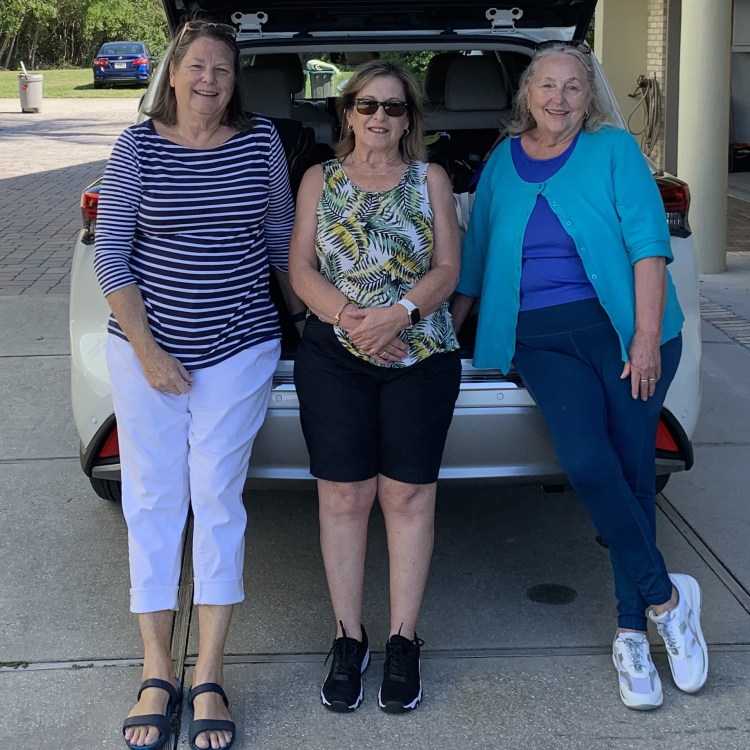
Nina was trying to comprehend how the three women on the left were the same ones on the right. She doesn’t understand things like the passage of time and how people can change so much and still remain the same. Frankly, I told her, neither do I. So I told her the story of our cross-country trip on a horse I now call Corolla.

In 1973, we posed on the Golden Gate Bridge in San Francisco, halfway through our cross-country road trip. I’m on the left, Mary is in the Middle, and Sue is on the right. In 2021, we headed to Disney World for a reunion. Mary is again in the middle with Sue this time on the left. We took more baggage for a three-day trip than a three-week one. Seriously.

A Horse Named Corolla

Six thousand miles, five visits, a four-speed Toyota Corolla, three weeks, two small bags apiece, and one argument. It was August 1973 when Sue, Mary, and I packed every square inch of Sue’s Corolla with carefully allotted square inches of clothes and provisions for a road trip across America. We were ready with everything from casual wear and cold weather gear to a spare tire and formal attire (for a show in Vegas, of course).

Born in 1950, we were boomers, true mid-century women who were destined to go places. We’d driven to Florida on spring break the year before, and, prior to that, Mary and I had been to Nantucket, Virginia Beach, and Europe. So this certainly wasn’t our first rodeo, but it was different. There was something epic about the clarion call to Go West.

We played off each other like cowgirls in a rodeo. Sue, the most practical, would be the tie-down roper whose horse sense demonstrated itself with a keen knowledge of her strengths, skills, equipment, logistics, and, of course, her ride. Mary, the self-reliant adventurer, would be the bull rider who could nimbly maintain balance astride a bucking brute with one elegant arm held aloft for balance. And I, the hippie, would be the bareback rider, practicing yoga while teetering between horse and sky, realism and idealism, mundane and spiritual.

Thus we saddled up, tied down, and drove off, eschewing hotels in favor of stays we had arranged with my brother in California and everywhere else with Sue’s wide-flung network of kith and kin.

 “I’m just along for the ride,” Mary would quip when asked if we were visiting anyone she knew. Never needing an intermediary to have a good time, she was our ringleader, our touch point. She and I had met in college; she and Sue at work. Sue may have lived around the world growing up, but Mary had the initiative to get us there. She would start an adventure with, “Hey, let’s go to…” She’d fill in the blanks and we’d pack our bags.

So across Interstate 80, the 88-horsepower Corolla sprinted. Paralleling the historic Lincoln Highway, which was built in 1913 as the first coast-to-coast road, I-80 passes by or through Cleveland, South Bend, Chicago, Des Moines, Omaha, Cheyenne, Salt Lake City, Reno, and San Francisco. We did the same (though we skipped Cheyenne), switching drivers every two or three hours, usually while gassing up—we’d each contribute one dollar to fill the tank—or driving through a McDonald’s or Taco Bell—Mary loved meat, I shunned it, and Sue would eat anything Mexican.

We pushed our limits—especially those pertaining to speed—from Connecticut, the first state to enact a speed limit; to the plains, where maximums rose incrementally; and astonishingly into Nevada, where the official welcoming sign cautioned visitors to drive safely. No limits.

No air conditioning, either. Just fresh breezes that floated long hair out fully opened windows. Nor GPS. Just paper maps folded and refolded into hand-fans, if needed. And certainly no CDs, eight-tracks, or even FM options. Just an AM radio that for three weeks incessantly played, “Horse with No Name.”

Hit the road in the morning, “Horse with No Name.” Drive for four hours with no radio reception, and when it crackles into tune, “Horse with No Name.” Stop for gas and lunch at a truck stop and, if we were lucky, “Rocky Mountain High.” Or when we came upon a couple who hade veered off the road with belongings strewn everywhere, there may have been random chords of Neil Young’s, “Heart of Gold.” But when we’d pull in at night to a town with no name, it was “Horse with No Name.” And when we’d hit the road in the morning, you guessed it.

The chart-topper written by Dewey Bunnell and recorded by America clip-clopped its way into the soundtrack of our adventure, so I’ve had to give that danged horse a name. Corolla, Sue’s car. And on that horse thus named, our journey weirdly followed the lyrics of the song.

Like, on the first part of our journey, we really were looking at all the life. It  teemed across the Ohio River Valley and the Midwest’s breadbasket. We were also looking at our lives. I had finished my first year teaching while Mary and Sue were climbing the corporate ladder at an upscale department store. I wanted to be a writer. Mary, a business executive. And Sue, we later learned, was quietly planning to marry CB.

We got along well—still do. Though there was that one argument. Having spent the previous year as housemates sharing a bungalow on the shores of Candlewood Lake, we had learned to budget expenses, share chores, and, of course, entertain guests. When we got back, we would be renting a flat in Danbury.

For two days, we oohed and aahed at boundless raw spaces that confounded our senses at dawn, drenched our eyes at noon, and set our mood at night. Lavender and clover drifted through amber waves of grain in their promises of purple-mountained majesties.

At one point, the trusty AM radio announced that visibility was more than five miles. I looked around. In all directions. On the horizon, I saw a lone tree. Its sole purpose it seemed, was to punctuate the vastness of that 360-degree sphere within which were all the plants and birds and rocks and things that Bunnell wrote about.

Somewhere east of where the West begins, we ditched I-80 and reined Corolla toward Boulder, Colorado. As we drew closer, clouds along the horizon confused themselves with snowcapped mountain peaks.

We stayed with friends of Sue’s, who treated us to real Mexican food and a daytrip to a ghost town in the foothills. There the magic of mountains seized my sensibilities. Or maybe it was the ghosts. Or the lack of oxygen. I don’t know, but for the first time, and certainly not the last, I was mesmerized.

No matter how high you go in the mountains, no matter how many rocks you examine, no matter how many different ways you photograph every last peak, against blazingly clear or torturously steel-clad skies, you can never get close enough to touch a mountain. I tried, I really did, first when Sue’s friends toured us through the foothills and then when we crossed the Continental Divide in Rocky Mountain National Park a few days later. All the way across the Great Basin, northern California, the western and southwestern deserts I tried. But to no avail. Massive and mountable, they remain mysteriously intangible.

From the Rockies, we headed toward Utah on U.S. Highway 40, which historians have dubbed the Main Street of America. Somewhere between the arid sprawl of Dinosaur, Colorado, and Vernal, Utah, lies Dinosaur National Monument. Although fascinated by the fossils discovered in 1909, I’m a Main Street gal, so I looked for the people. Although not as old as the dinosaurs, they are rare and far between. It was hard to believe that indigenous people had lived in these remote reaches of dazzling bluffs for at least 12,000 years.

They also lived in what’s now Salt Lake City. Founded in 1847 by Mormon pioneers led by Brigham Young, the city—in the early seventies anyway— maintained a Mormon ethos. That meant we could neither tour the Mormon Temple nor imbibe alcohol. But somehow, we finagled an invite to a private club for a few drinks during our one night there.

We hopped back on I-80, and rode past the Bonneville Salt Flats of the Great Salt Lake and across the Great Basin into Nevada, the state of no limits. In Reno, I won $12 in a slot machine—enough to pay for a Paul Revere and the Raiders show—or was it Mitch Rider and the Detroit Wheels?—then cantered to a stop in Sacramento to visit my brother Jim.

From his home base, Jim took us on a few day trips to see northern California. His car broke down on the Golden Gate Bridge, forcing us all—including my pregnant sister-in-law Nancy—to admire the view for an hour. Imagine such a travesty. Afterwards, we sampled chocolate at Ghirardelli Square, touched the redwoods of Muir Woods, and peeked at nude sunbathers on Stinson Beach.

Before commencing our loop toward home, I insisted on a detour to visit my boyfriend Krishna at Yogaville West. We were students of Swami Satchidananda, whose western ashram was tucked into the serpentine northern stretches of the Napa Valley. It was, after all, only about a hundred miles from Sacramento, and we were out to see America, right? Getting there, however, taunted our nerves and tested our friendship.

I don’t know how we found the place. For more than two hours, Sue clenched the steering wheel as she guided us up and down the tortuously steep grades, narrow roads, and twisty switchbacks—no changing drivers on this stretch. Mary, riding shotgun, grew queasier and queasier with each plummeting hairpin turn that scratched along chaparral-covered gorges that plunged into woodland, savanna, and grassland. I, on the other hand, careened between my friends’ growing angst; the breathtaking abysses; and longing for a little time with Krishna.

By the time we got to the ashram, Sue and Mary were apoplectic. While I basked in the glory of spirituality and love, they gawked at yogis silently tending to austere chambers and dusty gardens. After about an hour, my travel mates prodded me to leave—we needed to make it to Bakersfield by nightfall; Krishna prodded me to take his hiking boots—he would be hitchhiking home. They were an encumbrance for him and collateral for me. So I agreed, without consulting Sue. Thus ensued the argument.

She didn’t want the damned boots in the boot. A blight they were on an otherwise organized trunk. We traded glares and reached a silent truce in the serene shadows of Yogaville when I found a few crevices between our suitcases, provisions, and the furnishings she had bought in Boulder. Somebody else’s boots were my souvenir. Nothing more was said, but the unspoken detente tiptoed to the surface on every stop that required packing or repacking the trunk. Which was like every day.

Bakersfield was a six-hour haul. There we hydrated Corolla at dawn and filled lots of containers with water. Heading into the desert, we saw cars outfitted with water bags—a novel sight and an appendage we didn’t need. Slung across the hoods of cars, trucks, and farm vehicles, they kept water cool enough to drink while providing backup water for car radiators.

Just like the bad lyrics of our theme song, the heat really was hot (remember, no AC), the ground was dry (this was August), under a sky (in Nevada) with no clouds. By early afternoon, we pulled into Las Vegas in all its tacky glory.

Into our rationed trunk space we had packed formal attire for a night on the town. We gambled on and in our gowns, saw a show, and hit the road at daybreak. What happened in Vegas really did stay there—not one of us can remember anything else.

And then, hot damn, we headed to a dam called Hoover. Then the coolest of all cool stuff emerged from the sleepy town of Flagstaff, Arizona.

The. Grand. Canyon. Each word as supercharged as the other two. The sum of each syllable was amplified by the phrase in its totality. Just as mountains had blown my sensibilities, the erosive sway of water and the sculpting clout of wind stupefied my soul. We teetered on the edge of awesome as long as we could.

Then, tearing ourselves away, we clopped toward the Painted Desert and Petrified Forest, where our skin really did begin to turn red, like the song says. Only it was from eating lots of chili and hanging appendages out the wide-open windows. 

After three days in the desert fun (or are the lyrics dessert sun?), we crossed a river bed—the Rio Grande—then galloped on I-40 through Gallup, Albuquerque, and Amarillo, and clear across Texas. Ignoring Dallas, we dove headlong into the Deep South and landed in Texarkana, Arkansas. Named by some railroad guy for its proximity to the intersection of Texas, Arkansas, and Louisiana, the combined municipality is unique in name and idiosyncratic ambiance.

For in that quaint city tucked between the Cowhorn and Swampdoodle Creeks, dwelled Maw Maw and Paw Paw. Proper and genteel, they were lovely people who served us the tangiest taste of America of anywhere on our trip. And I’m not talking about the grits and greens at Bryce’s cafeteria. No, after a four-o’clock dinner there, we settled ourselves in for a nice evening in a lace-dollied parlor with Aunt Alice. From Dallas. She was on the loveseat (or was it a settee?) under the west-facing window framed with lace curtains. Maw Maw and Paw Paw sat to my left on either side of a Queen Anne table topped with a fringed lamp. Mary and I shared the sofa (or was it a divan?) across from Alice. Sue to the far right, closed the circle in a jacquard (or was it matelassé?) easy chair. I think we were drinking lemonade. Maybe iced tea. Certainly not mint juleps.

The family news that dominated the conversation was that cousin Herman was getting married. To a Catholic, or as Maw Maw said, “a Catlick.”

Maw Maw shook her bespectacled head slowly. It would be difficult enough accepting someone of a different religion into the family, but a Catick! Well, she just didn’t know.

“Maw Maw,” Aunt Alice slyly broke into the staid old woman’s lament. “You have two Catlicks sitting right here in your living room.” Despite her effort to maintain perfect composure, Maw Maw’s jaw dropped and her gaze settled on each of us in turn. “One’s I-talian,” Alice continued, “and the other’s Irish.” Mary and I exchanged sidelong glances and later pulled Sue aside to suggest we leave this stagecoach stop in the morning.

We did. Scrapping our original plan to swelter our way to New Orleans, we opted instead to swing north. Our first stop was Murray, Kentucky, where Sue was born. There we stayed a night with friends of Sue’s family, and then headed to KenTuck Lake on the Tennessee border for the vacation of our vacation.

Created by the Tennessee Valley Authority in 1944, it is the largest artificial lake east of the Mississippi River. Surrounded by lush green trees and refreshing blue waters, we cooled off, water skied, and ate lots of good southern food—thanks again to the hospitality of Sue’s kith and kin. And in another eye-popping taste of the South, the maid laundered our dirty clothes before we swung on home.

Each time we packed the car anew, however, that one argument flickered in the trunk. “Damned boots,” Sue would swear under her breath. I should have left my souvenir behind, I smile now in retrospect, for I gave their wearer the boot a few years later.

Cancel Patrick?

While the world at large plans to turn itself green on the 17th in honor of Saint Patrick, Nina focused on a different perspective of Ireland’s patron saint. I caught her perusing Wakes Rites, The Ancient Irish Rituals of Finnegans Wake, by George Cinclair Gibson. (Don’t go adding an apostrophe to Finnegans—more on that in a minute.)

For the record, George is a friend of mine. He thanked me in the preface of his book for having patiently acted as his foil—listening to, questioning, and evaluating each section of his work before it was written. I’d like to say that having abided George’s multi-year ramblings on language and lore, I now understand Joyce’s enigmatic tome. I don’t. I tried, but I just couldn’t plow through it. But I do understand George’s take on James Joyce and his final work.

Born into a country renowned for its literary genius, Joyce (1882–1941) is arguably Ireland’s greatest writer, perhaps even the most influential and important English-language writer of the 20th century. His other milestone works are the short-story collection The Dubliners, A Portrait of the Artist as a Young Man, and Ulysses. I have read them; although difficult, they are reasonably accessible.

Finnegans Wake, however, stymies most readers and confounds the critics because of a style that incorporates modern English, ancient languages, multilingual puns, double (and triple) entendres, portmanteaus, run-on sentences, onomatopoeias, and frankly—for lack of a fancy linguistic term—made-up words. It has been called a dreamlike stream-of-consciousness narrative, the postmodern poster child of deconstructivism, even a hoax. 

George will have none of that. In Wake Rites, he fervently and painstakingly delineates that the structure of Finnegans Wake is the Teamhur Feis (the Rites of Tara), Irish paganism’s most important and sacred event. He believes that the most significant performance of this historic spectacle occurred on March 25, 433 A.D., when Saint Patrick arrived at Tara just as the Rites were reaching their climax.

The event was widely attended and featured druidic and mystical rites, as well as historical reenactments. This pivotal celebration, George argues, provides the structure that clarifies much of the Weakean chaos and darkness. “For Joyce,” he writes, “the most crucial moment in all of Irish history and the climactic and talismanic point in his own magnum opus are one and the same: the momentous confrontation at Tara between Saint Patrick and the Archdruid of Ireland.”

Gibson refers to Patrick as a colonizer, invader, and usurper of pagan rites. “In the Wakean version of Irish history,” he writes, “the victory of Saint Patrick at the Teamhur Feis is hardly a cause for Irish celebration. At Tara, Patrick and his modus operandi suggest more the machinations of a manipulator and usurper than they do the work of a spiritual missionary for the dissemination of an enlightened religion.”

Joyce himself had likened Patrick to a con artist working the old shell game, calling him “pea trick” and his iconic shamrock a “shamwork.” In the current cancel-cultural vocabulary, Patrick appropriated words, ritual, and icons from a pre-Christian culture. To the ancient Irish, then, perhaps he was no saint.

Now the missing apostrophe makes sense. Given the book’s rich linguistics, historical context, and Joyce’s jaded view of Patrick, “Finnegans” can be understood not as one man, but as the collective Irish people. “Wake” can be an awakening, rather than a funeral. If so, then the book does not pertain to one man’s death, but to a cultural awakening from Patrick’s con game, in which he buried an entire people’s history in the guise of Catholicism.

“In this current World of Woke,” Nina asked me, “why is Patrick considered a saint? Perhaps he should be cancelled as just another old white guy who usurped an indigenous culture.”

Prato Pistoia Mardi Gras Parade

The Krewe of Prato Pistoia rolled through the neighborhood on Mardi Gras, February 16, 2021, with 34 carts, 3 bicycles, several dogs, and 1 community patrol officer to the delight of hundreds of revelers at driveway gatherings.

King (Cake) for a Day

Even though there are no Mardi Gras parades in New Orleans this year, there is one in our neighborhood. So Nina decked herself out in beads and did a little research. She’ll tell you that if you want to know anything about Mardi Gras, there is no better source than the Arthur Hardy Mardi Gras Guide, the World’s Foremost Authority on Mardi Gras. Hardy, a New Orleans native and former high school marching bands musician, has been publishing the guide with his wife since 1977.

With or without parades, you can’t have Mardi Gras without king cake. Frosted in purple (representing justice), green (faith), and gold (power), we got one filled with pecan praline—and, of course—a plastic baby. Which leads us to the question of the day. Why the plastic baby?

Let’s go back a few thousand years to the pagan customs of Western Europe. Lupercalia, an ancient Roman fertility festival, honored the agrarian god Lupercus. Some anthropologists believe that during this time, men randomly chose women to be coupled with for the duration of the festival; others, that naked men ran around frivolously whipping woman, who welcomed the lashes and even bared their skin to receive the fertility rite. Go figure.

This practice was all based on the bean, the humble plant that is often the first to emerge from the earth after winter. It represents rebirth and a successful harvest. During Lupercalia, which was based on even earlier pagan rituals, a chosen man would be treated like a king. To select him, a bean was placed in a cake, and whoever got the bean got the honors. Worshipped like a king, the chosen one would enjoy sex, drugs, and rock-and-roll (so to speak) while the peasants imbued in him all their failures and shortcomings. Then he would be sacrificed to atone for their sins, and his blood returned to the soil to ensure that the harvest would be successful.

Perhaps the Romans got the idea from the Celts. The druids would sacrifice animals and people to ensure prosperity. The greatest of all sacrifices, of course,  would be the king. Since nary a king would opt for that, the druids came up with a king’s substitute, who would eat, drink, fornicate, and make merry. And then be sacrificed.

Either way, the Romans took over the Celts, and the Christians took over the Romans. Deciding it would be prudent to absorb pagan rituals rather than abolish them, the church established carnival as a period of merriment that preceded Lent, a period of penitence that commenced on Ash Wednesday and ended on Easter. During this time, participants ate, drank, and indulged in voluntary madness by donning masks and costumes.

So what does this have to do with a plastic baby?

While many people associate the baby in the king cake with the baby Jesus, it is his death that is pivotal to Mardi Gras. It is commonly believed that Jesus, mocked by the Romans as the “King of the Jews,” was sacrificed to atone for the sins of man (does this sound familiar?) on what has become known as Good Friday. Two days later, he rose from the dead on Easter Sunday.

Easter is a moveable feast. Modeled on the Celtic holiday Ostara, it is always the first Sunday after the first full moon that occurs after the vernal equinox (the beginning of spring), which can be anywhere from March 23 to April 25. It follows then, that Mardi Gras is also a moveable feast. It is the day before Ash Wednesday, the first day of the 40-day fasting period known to Christians as Lent. But just to complicate things, the early church forbade fasting on Sundays. Therefore, in order to have a full 40 days of fasting before Easter, Ash Wednesday (i.e., the day after Mardi Gras) falls 46 days before Easter.

Back to the baby. Jesus had to be born before he could die. Although historians he was born in the late summer or early fall, early Christians moved it to mid-winter to coincide with the Celtic winter solstice, a festival that coincided with  the ancient Roman fertility festival Saturnalia. Like Lupercalia, Saturnalia involved choosing a substitute king by placing a bean in a cake. Since Christians abhorred human sacrifice, the king cake evolved into a celebration of the three kings (the Magi) visiting baby Jesus twelve days after Christmas. January 6 is now called the Feast of Epiphany.

It is on January 6 that the official Mardi Gras—and King Cake—season begins. One of New Orleans’ oldest Carnival organizations, the Twelfth Night Revelers, in 1870 inserted a gold painted bean into the cake they served to the young women of their court. The girl who got the gold bean reigned as queen for the season. Another tradition began on January 6, 1878, when the Phunny Phorty Phellows rode the Saint Charles Avenue streetcar to announce the beginning of Carnival season.

Meanwhile in France, little charms called feves (i.e., fava beans), were baked into the French version of the king cake.  Germany mass produced tons of these elaborate porcelain figures from 1850 to about 1920. They made their way to New Orleans and in particular to McKenzie’s Bakery, where they were stuffed into king cakes. The bean became a baby in the 1950s when the bakery made a deal with a local supplier for cheaper plastic trinkets.

Thus, the humble bean became a painted bean, which became a porcelain figurine, and then a plastic baby.

Today, the Krewe of Prato (the name of our neighborhood), will kick off with a king cake party. Unlike the contemporary grand parades of New Orleans, ours will feature golf carts and walkers rather than floats. But it will be similar to the first New Orleans parade that had no floats and no marchers—just people in costumes walking to a masked ball. It was a parade of masks.

“So, let them eat king cake!” Nina exclaimed. “Laissez les bons temps rouler!”

The Assignment and the Fetish

Nina was beyond confusion.

She had just read my story “The Fetish,” and demanded to know what on earth do a voodoo priestess and a missing man have in common with Uncle Tom’s Cabin?

I could have told her that many American slaves were influenced by the Caribbean practices known as voodoo that date back four centuries and encompass Catholicism and African spiritualism. Think Marie Laveau, the Voodoo Queen of New Orleans whose 19th-century followers included slaves. Or the original Doctor John. Born in Senegal and enslaved before becoming a prominent voodoo king and healer, also in late 19th-century New Orleans, he is credited with reanimation, leading to the myth of zombies.

But the truth is more mundane. I belong to the Pelican Pens Writing Group. Each week, we write a thousand words or so on a random topic. Last week, we were joined by author Diana Wagman, who also teaches fiction in Los Angeles. Her assignment: Go to your bookshelf or Kindle, pick the third book from the end, turn to page 22 and write a story using the 13th sentence of the book page as the starting sentence of your story. 

For me, that was Uncle Tom’s Cabin, by Harriet Beecher Stowe, p. 22, sentence 13:  “All this may happen to him yet.” My story is “The Fetish.”

The Fetish

“All this may happen to him—yet,” the priestess whispered, her voice as thick as the patchouli-infused room in which I hunkered. Surrounded by tattered arras, the creased woman slouched over a stubby candle divining disembodied souls and hideous beasts from strew gris-gris. . “But because you have sought my help, your lover may be spared.” In a chant to Damballa, we prayed for answers. I prayed for answers, anyway—I don’t know what the hell Zingara prayed for.

I needed to know what had happened to my husband. Ganon had disappeared seven years ago on a trek through the slot canyons of Utah. An experienced solo hiker, he planned to be gone three days. We needed a little time apart, he said. Our lives had taken divergent paths. He wanted adventure. I wanted a family. But we still loved each other, didn’t we? Now I had the option to declare him dead, but how could I do that without answers.

“Pay attention,” Zingara hissed me back to the present. Or maybe it was the caged snake in the corner. What was I doing here? I wanted to blame this ghoulish scenario on my best friend. A fortuneteller was her idea. But I willingly went along.

Sofia and I met in college. She was a New Yorker with a penchant for the occult; I, a high-desert realist. But we understood each other as if we lived in the other’s skin. When she suggested a girls’ weekend in New Orleans to help me make a decision, I readily agreed. But ubiquitous signs for fortune tellers and one too many Sazaracs landed me at the claw-like hands of Zingara.

 “Damballa,” she intoned. A soft whistle crept up my spine until my already spikey hair stood on end. “Stave off the horrors that may happen to an unfound man. Find him. Send her a sign.”

Yes. Please, I wanted answers, but a sign would do. Years had passed with no trace of Ganon. Park rangers said he never checked in, and no bodies were washed out by a flash flood. No car was abandoned. Finding no evidence of foul play, the sheriff intimated that Ganon had planned his own disappearance. Did he? Was there an accident? Murder? Or even, for God’s sake, an alien abduction?

Squirreling around in her billowing scarves, Zingara produced a small coarse object. A stale garlicky breath separated us as she leaned forward and placed it in my reluctant palms.

“Into a wilderness where the silenced night is light and gentle, you must go,” she instructed. “And at the foot of a lone mountain, plant this raccoon paw.”

Raccoon paw!

“Zingara, please…” I sought answers, not a mummified appendage.

Glaring away my attempt to speak, she stood up. “You came to me and to me you shall return. When your man responds—in spirit or flesh—return to thank Damballa.” She gestured toward the snake. “Now go.”

Needing no further encouragement, I scurried into the moist cobblestone streets of Faubourg Marigny, five blocks and a few dimensions downriver from the French Quarter. Jazzy notes from Frenchman Street clung to my pores, wisps of stale beer swirled at my feet, and a raccoon’s paw hung in my pocket. For this experience, I guffawed, I paid twenty bucks. At least it would make a good story.

Sofia waited in our rental car.

“Tell me, Abby!” My friend’s black hair slicked blue in the iridescence of  the streetlight, her eyes agog. “What happened?” I fished out the fetish and handed it to her. “What the…”

“It’s a freakin’ raccoon paw. I’m supposed to plant it at the foot of a lone mountain in a wilderness where the silenced night is light and gentle.” We laughed at the absurdity of it all. “Let’s get outta here.”

That night, foregoing sleep wracked by discombobulated bodies, serpents, and animal paws, I read and reread the legal documents concerning Ganon’s death. I didn’t need life insurance. I needed closure. What a dumb concept, I used to say. But now I needed something to help me accept what happened, even if I didn’t like it or didn’t know what it was.

Needing a mood change, I suggested over morning coffee that we head up river. After a full day of touring plantations, we ended up at a little eatery on Manchac Pass. Full of fried catfish and too lazy to head back to the city, we settled on a little bench to soak in the gentle bayou breeze and watch the sunset. A lone cypress atop a small hillock, silhouetted against a deep orange and purple sky, begged a picture. I reached into my pocket for my phone but instead pulled out the damned paw.

“Holy shit,” I muttered, ping-ponging my eyes from paw to tree. “I wouldn’t call that mound of dirt a mountain, but it’s higher than anything around here.”

“And I’d say the silenced night is light and gentle,” Sofia added.

I dug a little hole for the fetish with my hands. Wiping them on my jeans, I felt lighter. “Can you imagine explaining that to airport security!” Then we noticed a raccoon stalking the car.

“Maybe he’s looking for his paw,” Sofia laughed. But he looked right at me, convulsed, and dropped to the ground.

“He’s dead,” I said. Then after a long moment, I whispered, “He’s dead, Sofia. Ganon’s dead.”

Maybe I just wished it so. Maybe a rabid animal was a coincidence. But maybe, maybe, Damballa had found Ganon and through the raccoon, Ganon had found me. Maybe I was crazy, but maybe this was my answer.

“Let’s head over to Zingara’s,” I said, getting into the car. “I need to settle up with Damballa.”

2020 Hindsight

“Good riddance,” I quipped when Bob replaced a 2020 calendar with a 2021 version.  Before I could shred the old one, though, I stopped to marvel at the quiet beauty of the marshlands it depicted. Stunning landscapes and exquisite characters. Sunrises, sunsets. Spoonbills, panthers, tiger swallowtails.

That’s when Nina stepped in, quite literally stopping my intentions with a gentle paw resting on a marsh scene that could easily be across the street. Was the year so bad, she seemed to ask with a drawn-out meow. Did 2020 not arrest as many moments of beauty as it did monumental crud? Despite the anxiety, isolation, and anger that tempted me and others to focus on the worst, Nina suggested it wasn’t all that bad. And she should know.

She—and we—lost our 18-year friend, Ron. But he exuded a lifetime of comfort and joy until he died painlessly in his sleep, cuddled into his favorite chair. Before that, we met an expert, compassionate vet who eased us through the farewell process and helped us find a good primary care vet for Nina. Oh, and we also found some good doctors for ourselves, too.

Yes, it was a year of change, that’s for sure. And change is good, I always say. After all—actually before all else—Bob successfully underwent a procedure that not only corrected a cardiac problem but is likely to extend his life and quality of life. I healed completely from a broken wrist. We both sighed relief when a friend recovered from COVID. And friends welcomed grandchildren.

Although we regret that we couldn’t bid a proper goodbye to our friends in Virginia, we nonetheless fulfilled the dream of building a new house and moving into a warm, active, and supportive community where we engage in driveway socials, ride around in golf carts, and try new adventures like putt-putt golf. The extremely active tropical storm season bypassed us. I took up water volleyball, discovered the magic of chalk paint, and rediscovered crochet. We zoom.

My writing has expanded and improved. After learning WordPress, I started this blog, finished a novel, had two poems published, and embarked on short fiction. I joined a new writers’ group as well as a couple of professional associations. An 80-year-old writer of historic romance lives around the corner. She reminds me that I’m still young and encourages me to keep writing. Daily.

My world’s orbit shrank—in a good way. I reunited with my two first roomies and travel mates after nearly 50 years of prowling unparallel paths thousands of miles apart. One now dwells a mere two hours north and the other retreats to a snowbird condo 40 minutes south. Then former neighbors announced that they are building a house an hour and a half from here; others settled three hours away. A high school friend also lives three hours away; a cousin, four hours; and one of Bob’s old friend, about five. Not exactly around the corner, but not that far, either, especially when the interstates act like expressways and not parking lots. I don’t feel isolated.

I recently told a niece that I couldn’t wait to wave 2020 good-bye. She suggested that a hand signal involving only one finger might be more appropriate. But this morning, Nina prompted yet another gesture—a better one—as she lifted a white paw from the calendar to her pink tongue. She eyed me slyly. Gratitude comes on little cat feet, to paraphrase Carl Sandburg. With palms together, head bowed, and fingertips to lips, I gave thanks.

Then I took a deep breath and bid good riddance to the detritus.