Reading and Relaxing at Cattyshack

Photo by Bob Markle

While June is National Adopt a Cat Month, sometimes, all you need is a quick kitty fix.

My husband Bob Markle and I get ours at the Cattyshack Café, where you can sip your favorite beverage, read a book or digital messages, and play with cats.

Lee County, Florida, is home to more than 250,000 feral cats, many of whom end up at the overcrowded Gulf Coast Humane Society. With such an endless supply of rescue and homeless cats from GCHS and kill lists at other shelters, Cattyshack has arranged the adoption of more than 2,000 cats since it opened in June 2020.

Although the first cat café, Cat Flower Garden, opened in 1998 in Taipei, Taiwan, Japan popularized the concept. Europe’s first cat cafe, Cafe Neko in Vienna, opened in 2012. With stricter zoning and foodservice rules, North America followed in 2014 when Cat Town opened in Oakland, California.

According to That Cat Life, as of May 2024, there are now more than 220 cat cafés in the United States.

Located in the Gulf Coast Town Center in Estero, Cattyshack Café takes in about 20 cats at a time. Before arrival, they are spayed/neutered, vaccinated, micro-chipped, and issued a clean bill of health.

Keeping with the golfing theme, the café gives them a mulligan, a second chance. And for $15, cat lovers get a 50-minute session in the Mulligan Room, where humans, cats, and kittens roam free, socialize, and express their unique cat-onalities.

The entry fee covers the expenses associated with providing a luxurious foster home, which includes but is not limited to A/C, lights, food, water, litter, toys, and comfortable furniture for climbing and sleeping.

Some patrons simply enjoy an unhurried kitty fix while others prefer getting to know a cat before offering it a fur-ever home. Adoption processing fees range from $70 to $150, which goes entirely to GCHS.

In addition to feline fun time, the café offers beer, wine, and a full espresso bar with kitty au lait, catpurrccino, and catte, as well as original concoctions like the Cat Nap, Cheshire Cat Lemonade, and Pink Panther Refresher, and snacks with names like ma-cat-roons. The café also sells merchandise like T-shirts, mugs, and soap.

With well over 200 cat cafes in the country, June is a good time to spend an hour in Purradise or to take the first step in providing a fur-ever home to a favorite feline.

What the Ek? Prey-ing for Birds

Photo by Kathleen Yengst

Jinx Yengst likes to read about the cardinals, finches, and other birds in his dog- (eh, cat-) eared Golden Guide: Birds.

Not only does he like to learn about them as he watches from his favorite cat seat, but he also likes to chirp—or is it chatter? chitter? trill? Or is he reading aloud to his fine feathered friends?

Not according to Jackson Galaxy, the cat behaviorist, author, and media presence, who also goes by Cat Daddy.

Of all the unconventional behaviors cats exhibit, Galaxy says this phenomenon is one of the most curious.

While his Cat Daddy Dictionary series covers a multitude of feline behaviors, the entry on Chattering is a solid yet humorous examination of this uniquely feline comportment. If nothing else, the illustrative videos that Galaxy includes in his lexicon are worth the 18-minute, 24-second watch.

According to Galaxy, all cats—big and small—are first and foremost predators. He attributes what he calls ek-ek-ek-ek-ing to three aspects of the feline hunting strategy, all related to the killer instinct.

They are:

Excitement. Having located potential prey, the adrenalin rush cannot be contained. In what is known as Pavlovian Conditioning Response—like our mouths watering when we see something delicious—chattering teeth may be the closest the cat can get to catching prey and vicariously snapping its neck.

Frustration. Unable to reach its quarry, a cat may chatter in defeat. But this seems unlikely, since most hunts are unsuccessful. It is more likely that the behavior is initiating a prey sequence. Because the most exciting part of the hunt is the chase, the chirping may activate the feline brain’s reward circuitry. 

Mimicry. Imitating the sound of a bird, squirrel, or chipmunk may lure the prey closer. Researchers in the Amazon have found that the margay cat successfully mimics tamarind monkeys to achieve its hunt. The sound may also mask the predator’s movement.

They may be predators, but cats have also been entertainers at our house. We call the ek-ek-ek-ek phenomenon Cat-holio, in honor of The Great Cornholio, a Beavis and Butthead episode that first aired on MTV in Season 4 (1994).

Having devoured 27 candy bars and drunk a six-pack of root beer, Beavis chatters nonsensically like a prey-watching cat, hikes his shirt hiked over his head, and shouts, “I am the great Cornholio!”

No, Jinx doesn’t do Cat-holio. He doesn’t yank anything over his already furry head or read anything aloud. Nor does it matter what his guide to the birds might say.

On the contrary, he’s simply prey-ing.


What is your cat reading?

Send book reviews, feline adventures, and cute pictures to Pat@PattiMWalsh.com

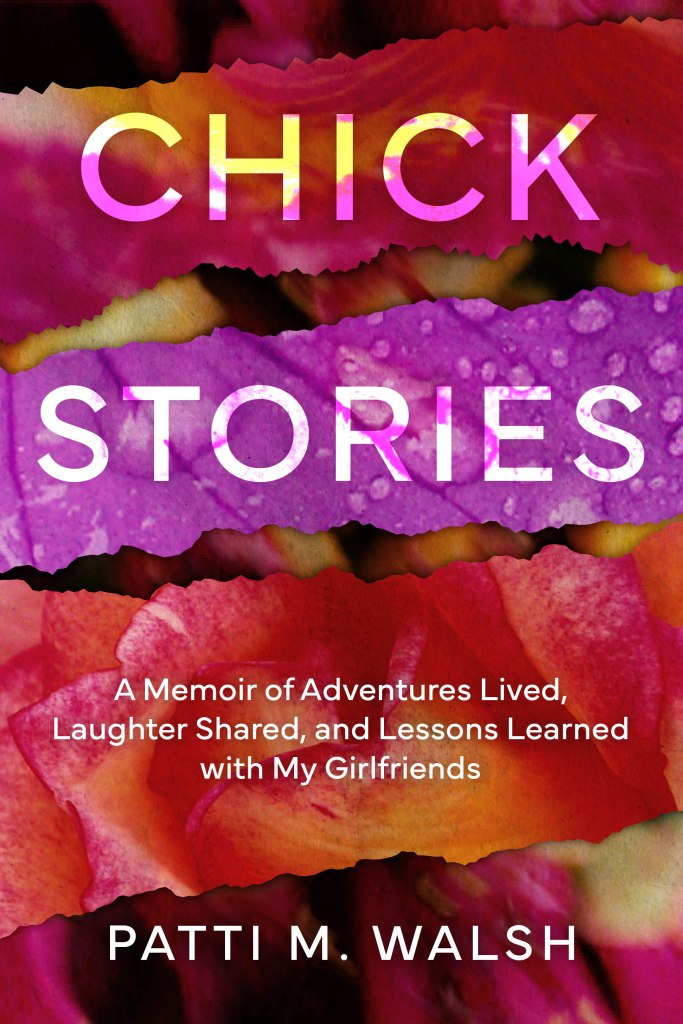
Chick Stories

A memoir of adventures lived, laughter shared, and lessons learned with my girlfriends

Travesties, tragedies, and comical calamities abound
in a series of essays rich with historical and cultural context.

Learn More.

Buy Now.


Newsletter:
Come to Think of It

Stories are meant to be shared. So are fleeting thoughts, poetic musings, humorous anecdotes, and existential questions.

Come to Think of It is a forum to engage, inspire, and challenge. To gather with friends. Come to Think of It.

Subscribe at PattiMWalsh.com/newsletter.

Contact Us

Go back

Your message has been sent

Warning
Warning
Warning
Warning
Warning.

Puzzling the Pieces

Beamer Baclawski, by Nancy Baclawski

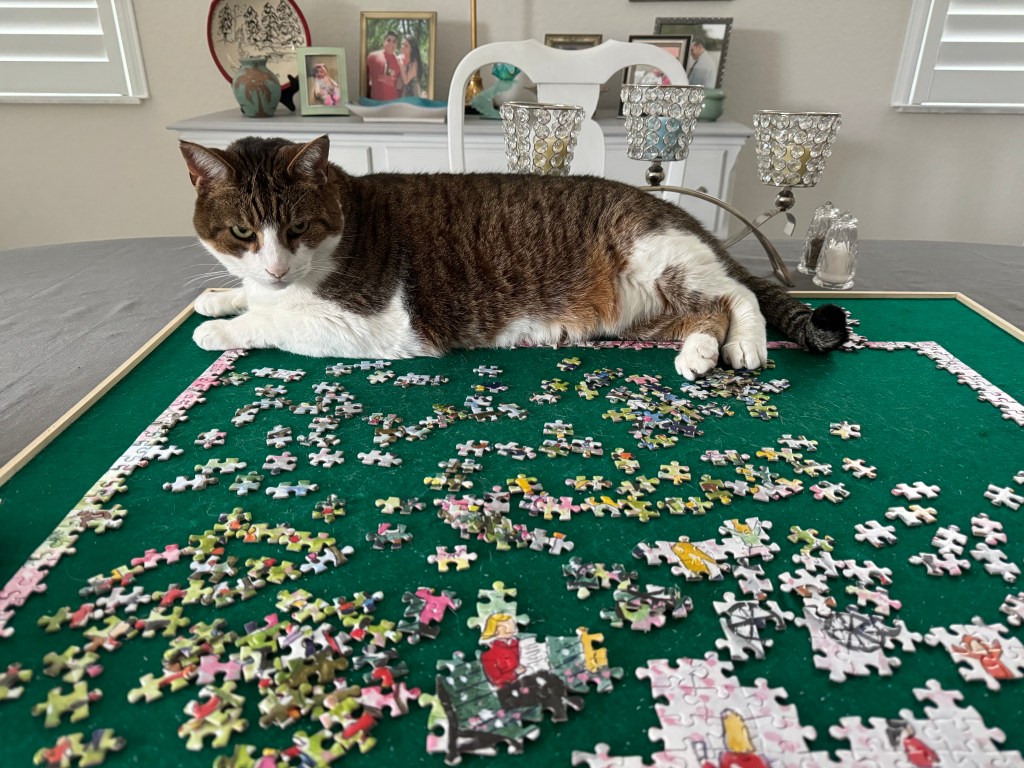
Like many puzzle aficionados, Beamer Baclawski spent January 29, National Puzzle Day, working on a jigsaw puzzle.

“Why would anyone cut up a perfectly good picture only to reassemble it?” he asked, though he didn’t pause his nifty paws work to puzzle an answer.

Anyone familiar with jigsaws would recognize the enigma of the puzzle—it is both frustrating and satisfying, depending on how the pieces fit together.

Although Beamer separates pieces by color and painstakingly finds all of the edge pieces first, he dreads misplacing a piece that almost fits into the wrong place so that the last piece doesn’t fit anywhere. Or worse—the bane of all puzzlers—a missing piece.

On the one paw, he agrees with Deepak Chopra, alternative medicine advocate, who believes, “There are no extra pieces in the universe. Everyone is here because he or she has a place to fill, and every piece must fit itself into the big jigsaw puzzle.”

On the other paw, he throws in with the approach taken by American author Virginia Wolff: “Arrange whatever pieces come your way.”

A Puzzling Word

The word’s etymology is nearly as puzzling as assembling a thousand pieces into a picture.

While the word puzzle is likely derived from the French word pusle, its original meaning is, “to perplex, puzzle, interrogate.” The alternative spelling, puzzel, however, means “harlot,” while pucelle means “a virgin.” And just to make the word even more puzzling, the English word pizzle meant “penis.”

That’s too contradictory for Beamer. He likes his words straightforward.

Nevertheless, Robert Dudley is credited with first using the word to describe a confusing problem that needed to be solved. In The Voyage of Robert Dudley, afterwards styled Earl of Warwick and Leicester and Duke of Northumberland, to the West Indies, 1594-1595, he, Abram Kendall, and Captain Wyatt recorded the earliest English attempt to occupy Trinidad and navigate the Orinoco, one of the longest rivers in South America.

Dudley, himself, was a puzzle, as was his tangled history with Queen Elizabeth I. Handsome and ambitious, the self-styled earl and duke may have failed to win the Queen’s hand, but not her affections. With a storied history of wives and lovers, he was suspected of murdering his wife to marry the queen. He ended up a failed political and military leader who died of a strange illness. Some historians suggest it was Elizabeth’s doing.

Gaining Popularity

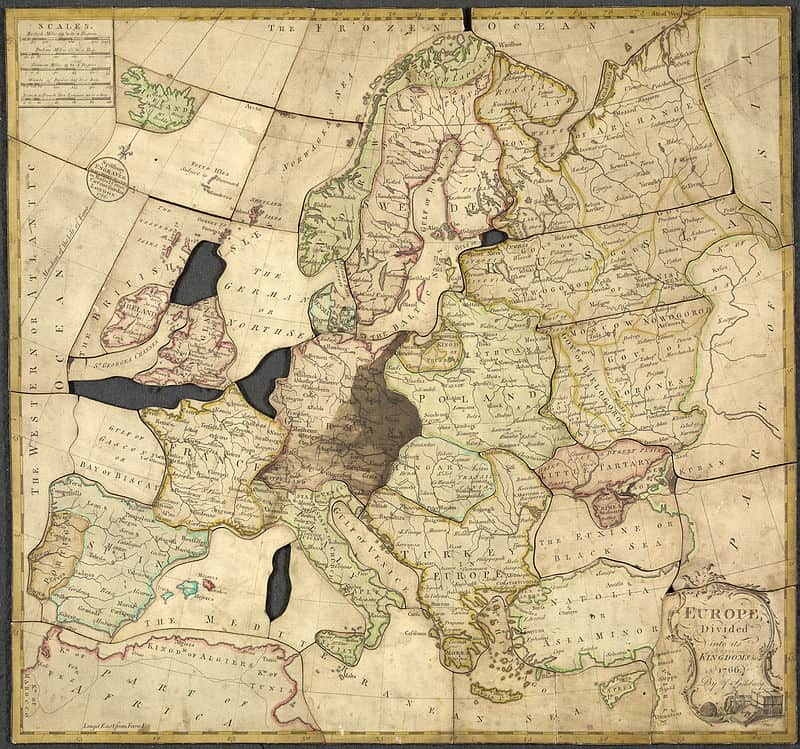
According to Wentworth Wooden Jigsaw Company, map engraver John Spilsbury created the first jigsaw puzzle a couple of centuries later. In 1762, he mounted one of his maps onto wood and then cut around the countries to help school children learn geography. 

Spilsbury’s dissected map, courtesy of the Geneva (New York) Historical Society

Called dissected maps, the concept caught on with historical, religious, and landscape themes.

With the dawn of the 20th century, jigsaw puzzles experienced rapid growth because of:

  1. Lithographic printing techniques that allowed higher quality printing;
  2. Plywood, which made it easier and more affordable to cut puzzle pictures into intricate shapes; and
  3. The invention of the treadle jigsaw, which not only enabled puzzle makers to create intricate shapes, but also gave the trend its name.

Millie Jackson of Mrs. Blackwell’s Village Bookshop, wrote on her blog that the trend “menaced the city’s sanity,” at least according to a May 1908 New York Times headline.

Despite the sensational headline, puzzles were mainly for the wealthy, since they cost around $4 each, and the average laborer earned $12 per week.

In the 1920s, travel companies used puzzles to market their businesses. GWR with Chad Valley produced puzzles of their steam engines and destinations, while Cunard produced a large puzzle of the Queen Mary, even before it sailed.

In the midst of the Great Depression of the 1930s, puzzles dropped in price, giving the masses something to forget their hardships.

Similarly, interest in jigsaw puzzles resurged during the mandatory covid lockdowns of the early 2020s.

Today, in North America alone, an estimated 100 million people—and felines—enjoy jigsaw puzzles, and about 50 million American adults spend an average of three and a half hours a week on them.

Competitive jigsaw puzzling has also grown, with the establishment of the Annual World Jigsaw Puzzle Championships in 2019.

New Puzzles to Solve

In addition to traditional flat puzzles, puzzlers now enjoy 3D, spherical, and architectural recreations. A booming cottage industry of puzzle accessories offers tables, boards, cases, organizers, and roll-up mats, as well as glue and frames to create art from finished pieces. Also, apps exist to create custom puzzles and engage multiplayers near and far.

While some people do puzzles for socialization, others do them for “me time” or to take a break from the digital lifestyle. Some people also liken the pastime to meditation, because it may create a sense of peace and calm.

They’re even good for your health. Researchers have identified at least three benefits:

  1. By helping you relax, doing puzzles may reduce heart rate, blood pressure, and breathing rate. They can also improve and maintain fine motor skills.
  2. Puzzling can keep your mind sharp and combat cognitive decline because it involves problem-solving, memory, and visual perception skills.
  3. Concentration can ease stress, anxiety, and consequently, makes you feel good. Correctly fitting a puzzle piece may produce the hormone dopamine, which can lead to a feeling of accomplishment and fulfillment.

Jigsaw puzzles are also used to study cognitive and visuospatial abilities in young children.

Beamer wants to know if anyone has used puzzles to study feline cognitive abilities.

After all, he purred, felines have been known to follow the advice of Virginia Wolff, and arrange—or rearrange—whatever pieces come their way.

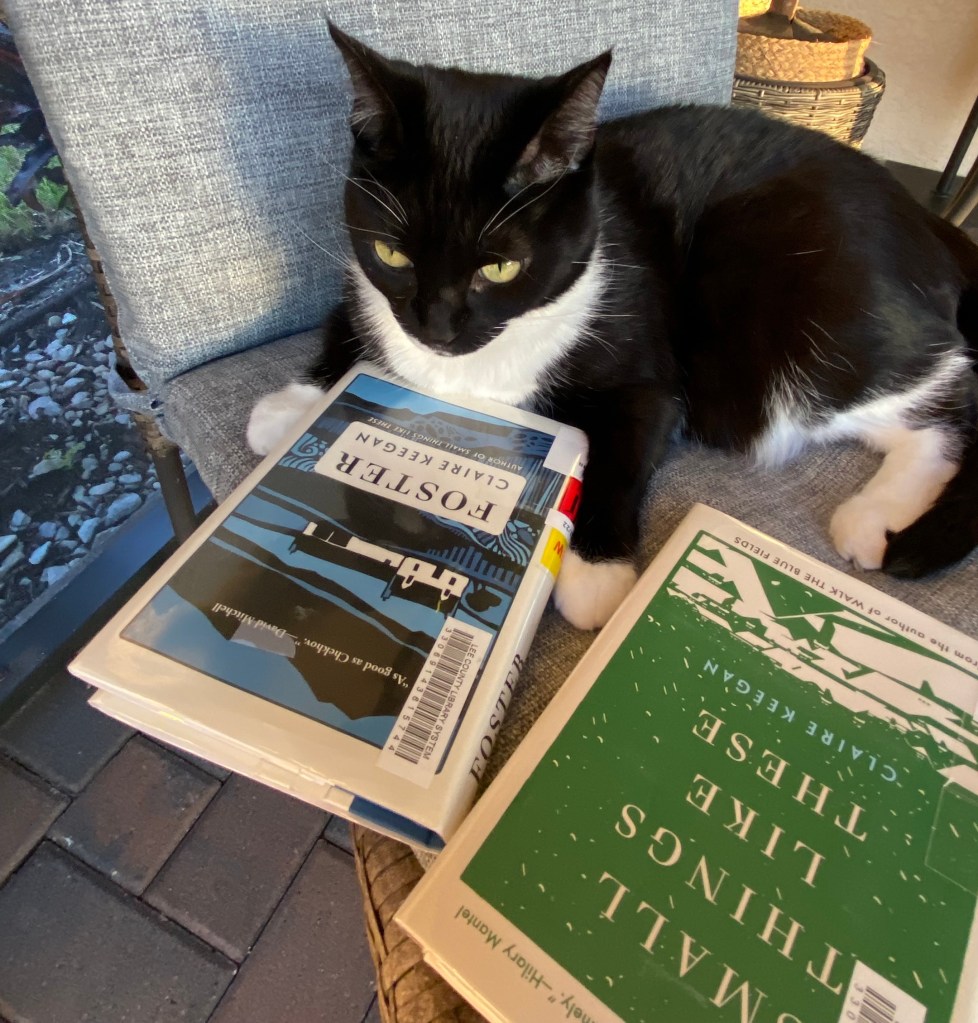
Fostering a New Habit

Photo by Tania Batdorf

Any cat can tell you that a comfortable habit is hard to break.

Miss Kitty, for example, loves to lounge on the lanai with a favorite book.  Not that she has the time to read it, mind you. She’d like to, but life is complicated. There are so many other things to do, you know.

When I saw her with a couple of books written by Claire Keegan, it reminded me of a recent conversation with a friend and fellow writer. As much as she loves the written word, Shelley admitted that she rarely has time to read for pleasure. Three years of law school killed her passion for reading, she said.

“I don’t have time, either,” I said, referring to my own comfortable habits that are hard to break.

Besides a tight schedule of publicizing my first novel, writing my second one, critiquing the work of colleagues, preparing PowerPoints for my series on Celtic lore, posting blogs to this site, publishing a monthly newsletter, and participating in writers’ groups, there’s a house to clean, meals to cook, and, of course, water volleyball to play.

“Try to make a little time to read Claire Keegan,” Shelley suggested, having followed the advice of yet another writer who also didn’t have time to read. Praising Keegan’s clarity, brevity, and veracity, she concluded, “She can say so much in just a few words.”

Miss Kitty purred. She likes concise communication.

Before I could procrastinate, I headed to my local library and checked out Foster and Small Things Like These, a couple of novellas that pack more than a couple of literary punches.

First published in 2010 and re-released in 2022, Foster explores the world of rural Ireland in the mid-1980s when a nameless girl is sent to live with relatives for a summer. In stark contrast to her own impoverished home defined by a shiftless father and overwhelmed mother, the summer refuge is childless, tidy, and loving.

Following clues dropped like spilled milk, the reader probes the world of love, loss, and poverty through innocent eyes. Lessons are simple and understated.

The girl learns, for example, that silence is powerful. “Many’s the man lost much,” her uncle says, “Just because he missed a perfect opportunity to say nothing.”

Small Things Like These, published in 2021, is as compelling and concise. It is the story of Bill Furlong, a compassionate coal merchant and devoted family man who finds a girl locked in the fuel shed of a Catholic convent.

The discovery forces him to look at the simple pleasures and complicated history of his own life. In an introspective drift through town in the days before Christmas, he watches a stout-brown river swallow snowflakes—an apt metaphor for a perfunctory society that thrives on complicit silences.

Torn between courses of action, Bill knows his decision will affect many lives.

His decision, like Keegan’s writing style, is simple and graceful.

Keegan points to Anton Chekhov as a guiding force. In a letter he wrote to his brother Alexander about the meaning of grace, Chekhov says that it stems from the ability to complete an action with the fewest number of movements. She applies the same principle to her writing.

“What pleases me,” Keegan says, “is brevity.”

Miss Kitty calls it simplicity. Nothing pleases her like an afternoon on the lanai with a good book. Even if she doesn’t have much time to read it. It’s a comfortable habit that’s hard to break.

Reading Claire Keegan could easily become a comfortable habit that’s hard for me to break.

Hungry for a Good Story

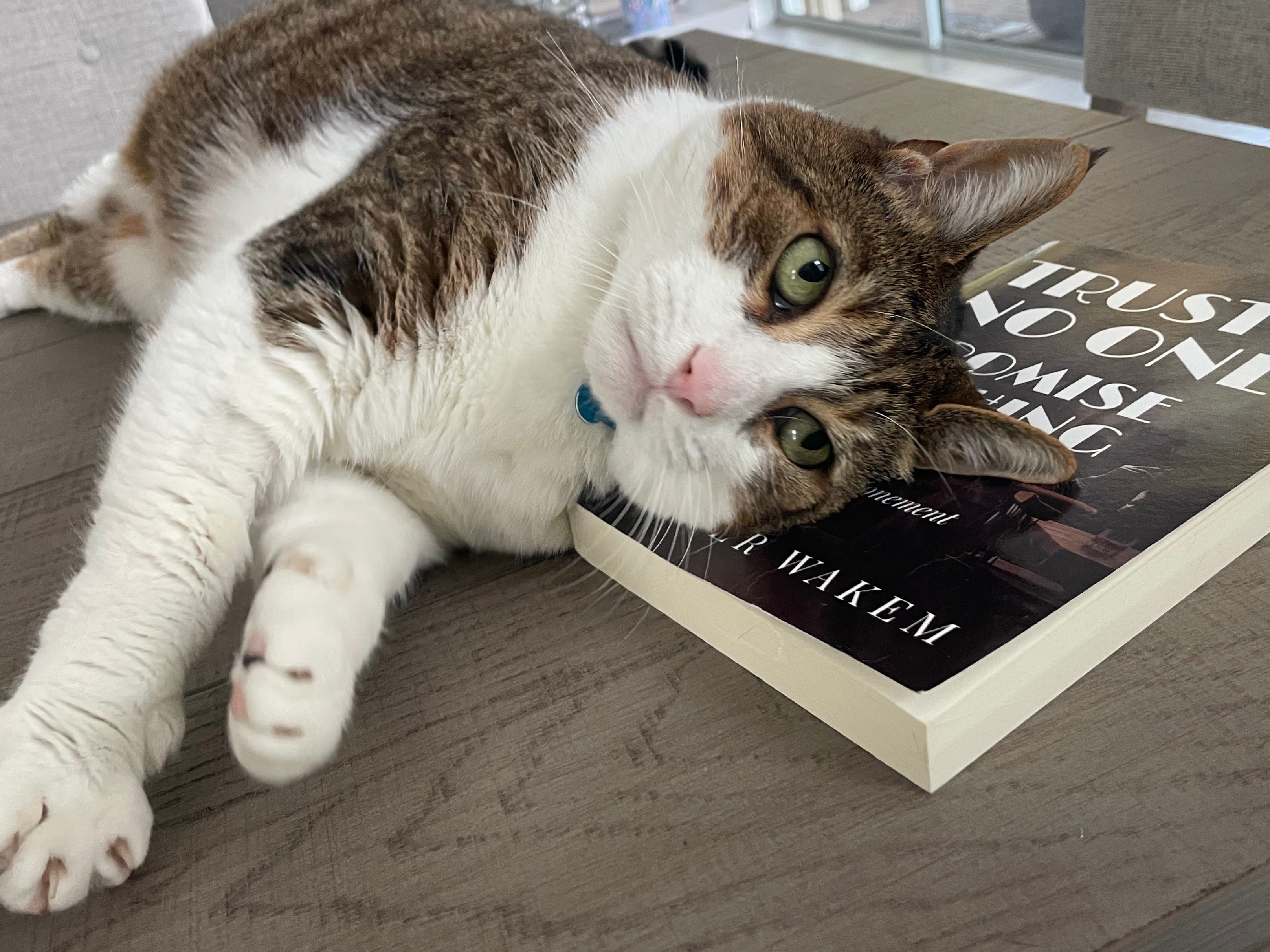
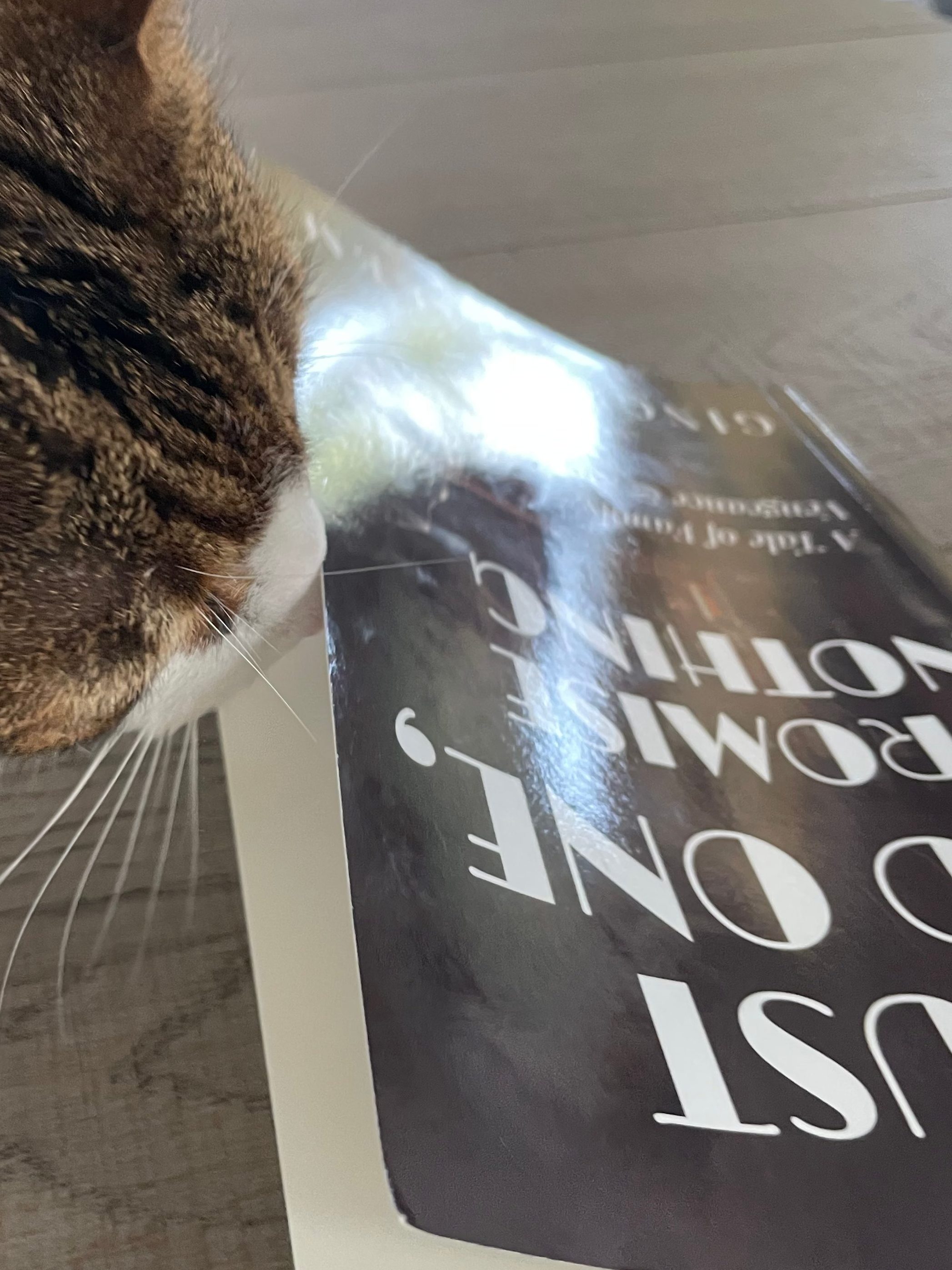
When Mickey Blanchette saw my copy of The Hunger, he misread the title as “I’m Hungry”—an understandable error for a feline with an ample waistline. And while the book features no cats, it does feature Mutt, a family dog. Mickey approved of that.

The Hunger, a fictionalized first-person account of the 14-year-old Philly McCormack, details the horrendous conditions of Ireland’s Great Famine. Better known within Ireland as an Gorta Mór (the Great Hunger), it was a seven-year period of starvation and disease that began in 1845 and ended with more than a million people dead and another million fleeing the country.

Yes, millions!

The story opens in the first year of the blight that destroyed not only the potato crop but ultimately the people who lived in West and Southwest Ireland. Written as a diary, in language that middle-grade students can understand, Philly lays out the political, economic, and social factors that caused and exacerbated the famine.

The McCormacks, a family of eight, are a little better off than many of their neighbors. They grow potatoes and raise chickens and a pig on 16 acres of rented land. An occasional salmon or a generous dollop of buttermilk supplements the family’s diet of potatoes.

To her father’s chagrin and her mother’s anguish, Philly’s older brother Pat has become involved in the outlawed Young Ireland movement and ultimately leaves home. In relating his suspected political activities, the narrator discusses many of the legislative and bureaucratic figures of the day. For example, she delights in calling Sir Robert Peel, the Prime Minister of England and Ireland, “Orange Peel,” a name bestowed on him by Daniel O’Connell, the national hero and acknowledged political leader of Ireland’s Roman Catholic majority at the start of the famine.

Philly writes in her diary that “tons of food are being exported from Ireland for sale abroad…. Ships are leaving from every Irish port laden with food: butter, eggs, oats, wheat, sheep, pigs. All of it for sale abroad.”

As the potato blight destroys the crop, secondary problems set in. Philly’s youngest sister dies of starvation and her mother suffers from Famine Fever, a colloquial name for typhus. Philly is grateful to get a job as a scullerymaid for fourpence a day at Errill Manor, the landlord’s house. There she meets Edward, who provides a delightful romantic thread in what could otherwise be deemed a dreary tale.

The manor also provides a means for Philly to feed and care for Mutt. Mickey really liked that!

When her dying mother asks to see Pat one last time, Philly sets out to find him. In her search, she describes the starving people who scratch an escape through the bleak landscape toward Dublin, where they hope to find work or passage to America, Canada, or other faraway places.

At the Tipperary goal, which she describes as a “moving mass” of horror, Philly finds not Pat, but a friend who will be deported for stealing a candlestick. She also learns Pat’s whereabouts. Wanted for treason, he has made his way, also, to Dublin.

She returns without him to find her home burned to the ground and her family gone. A gardener at the estate tells the devastated girl that the landlord discovered that her father had squirreled away money to feed his family—an offense punishable by eviction.

“A party, including the rent collector, came on horseback soon after dawn,” he tells her. “Your family were told to take any belongings they wished to save, vacate within the hour … never to return.”

Written by English actress and author Carol Drinkwater, who named her protagonist after her Irish mother, The Hunger is a book in the My Story series of historical novels for children published by Scholastic UK. Similar to the Dear America series, each book was written as the diary of a fictional young woman or man living during an important event in history.

Drinkwater’s contributions to the My Story Series include:

  • Suffragette: The Diary of Dollie Baxter, London 1909–1913
  • Twentieth Century Girl: Diary of Flora Bonnington, London 1899–1900
  • Nowhere to Run (The story of a World War II Jewish refugee)
  • Cadogan Square (Compilation of Suffragette and Twentieth-Century Girl)

I picked up this jewel in a tiny bookstore in Limerick. No longer distributed by Scholastic, it is nonetheless available on Amazon.

Although it deals with a tragic chapter in history, The Hunger unfolds with compassion appropriate to readers aged 8 to 12. Well-documented with notes, a timeline, and illustrations, it is also suitable for older readers. The various plots are well integrated with writing that is clear, descriptive, and even witty.

While Mickey was disappointed that The Hunger didn’t sate his appetite, he appreciated that the beloved Mutt was treated—and fed—well, despite harrowing circumstances.

A New View of Old Birds

Photo by Tania Batdorf

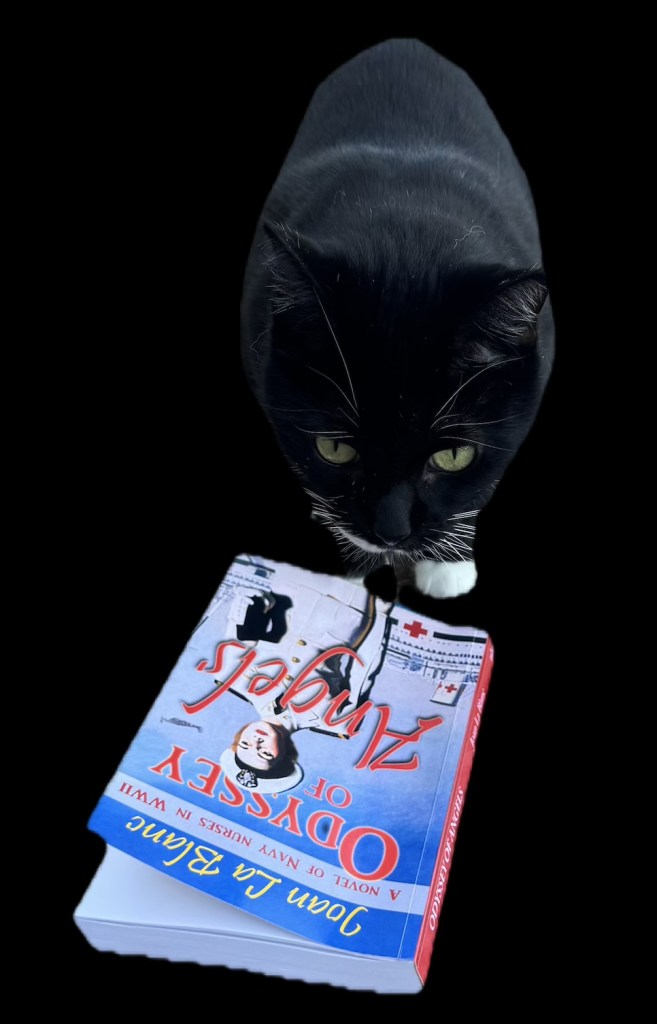
While engaged in her favorite pastime of backyard birdwatching, Miss Kitty found herself distracted by a copy of Anne Lamott’s Bird by Bird that I had left for Tania and Nancy, Kitty’s humans.

Naturally assuming it was a field guide to her fine-feathered friends, Kitty pawed through the pages. Finding neither pictures nor plates, however, she nearly dismissed the book when she noted the subtitle: Some Instructions on Writing and Life.

Ah, a field guide of a different sort.

Well, Kitty purred in characteristic patience and deference, I don’t often write, but who can’t use some instructions on life?

Lamott entwines the two, Kitty soon realized, because good writing is about living a good life, paying attention to detail, caring about other people, and “telling the truth.”

With their magical ability to get inside other people’s minds and skins, writers are like cats—they learn by first paying attention.

 “There’s ecstasy in paying attention,” Lamott preaches. “Anyone who wants to can be surprised by the beauty or pain of the natural world, of the human mind and heart, and can try to capture just that—the details, the nuance, what is. If you start to look around, you will start to see.”

Well, hello, thought Kitty. This is the life of a cat. For what does a cat do better than pay attention? So, she snuggled in for a good read.

Photo by Tania Batdorf

The title derives from a kitchen-table anecdote from the author’s childhood. Her brother, then 10 years old, was stymied to tears over a report on birds due the next day. He had procrastinated for months because he didn’t know how to start. Their father put his arm around the boy and said, “Bird by bird, Buddy, just take it bird by bird.”

The first step, then, is to start. When you give yourself permission to start writing, Lamott says, “You start thinking like a writer.”

Kitty began substituting the word cat for writer, and everything began to make sense.

“Learn to be more compassionate company,” Lamott says, “As if you were somebody you are fond of and wish to encourage.”

Being compassionate company is the very essence of being feline.

Like in the evening, when Tania sings a few bars of “Happy Birthday,” Kitty obliges Tania’s need to snuggle and brush her. Everybody is happy because Kitty is somebody she herself is fond of.

Compassion starts with getting inside other people’s minds and skins. Thinking like a writer means understanding the characters you create. You have to live with them. There’s magic to that. Kitty understood that, too.

For example, when she came to live with Tania and Nancy, they all had to be honest about each other’s needs. The humans established:

  • Consistent definitions (No means No);
  • Dedicated turf (no lounging on the dining room table, no scratching furniture);
  • And a firm schedule (time to eat, sleep, and play).

Yes, getting inside one another’s skins keeps everyone happy, especially at 5 a.m.

Nothing, Lamott says, gets you inside other people’s minds and skins faster than understanding their suffering—physical, emotional, and spiritual.

But suffering alone does not make great literature. Lamott looks to the late Daniel Hillel, an Israeli-American agronomist and author for inspiration. Despite his astute research and profound findings on agriculture, Hillel is perhaps most famous for saying, “I get up. I walk. I fall down. Meanwhile, I keep dancing.”

Lamott emphasizes that the way she dances is by writing. Terrible first efforts (she calls them shitty first drafts) can lead to good things (like number-one bestsellers). The message is to keep moving.

Lamott dances by writing. Kitty dances by, well, dancing.

One of Lamott’s final instructions on writing and life deals with finding an elusive sense of serenity.

“The world can’t give that serenity,” Lamott says in summary. “But the good news is, the world can’t take it away.

Kitty agrees. When she sees Nancy and Tania running around, feels the roofers pounding away, or hears the landscapers buzzing by, she wonders why humans don’t live a more feline lifestyle.

Kitty doesn’t need to write a whole book to express her instructions on life. They’re simple. Sit still. Close your eyes. Open them slowly. Look. Listen. Absorb. Purr. Dance.

Photo by Tania Batdorf

What the Cats Are Singing

The Kiffness (left) and Rufus George
All screenshots are the property of The Kiffness and are used here in admiration of his work.

With no kitties sharing our home these days, my husband and I often revert to vicarious feline-time on YouTube. Bob recently found David Scott, a South African musician, producer, and parody artist who goes by the name of The Kiffness. He is the founder and lead singer for the band of the same name that features Mathew Gold on vocals, Mvelo Shandu on bass, and Raiven Hansmann and Clem Carr on keyboard and sax.

Our fascination with The Kiffness began with Lonely Cat, a bluesy collaboration of cat vocalizations, human voice, strings, horns, keyboards, and percussion in three-four time. After repeatedly noting that sometimes he is alone and sometimes not, George the cat raises his eyes to heaven and punctuates his dilemma with, “Hello?”

Bob and I chuckled. We binged. We danced. We savored endorphin-releasing belly laughs. Soon, though, I pondered Lonely Cat’s heart-wrenching tale. In true blues fashion, he mournfully meows, “Said he’d be back soon, but I guess he just lied…”

Was Lonely Cat really left alone for days, I wondered, or, since some cats can be quite melodramatic, maybe just a few hours?

It doesn’t matter, for that’s the beauty of the blues—the story is in the telling.

And when it comes to stories that animals tell in simple sounds and expressions, no one is more attuned to primal temperaments than The Kiffness.

For example, there’s the casual indifference he attains in Alugalug Cat. When you don’t know what to do, and you don’t know what to say, Alugalug suggests a dismissive hand wave and, “Hey, luga luga luga, please go away.”

Kitty Eilish doing a Billie Eilish “Bad Guy” parody with The Kiffness.

Then there’s disdain. To experience the indignity of being a cat subjected to a bath, check out Bath Cat, featuring Kitty Eilish doing a Billie Eilish “Bad Guy” parody.

Anxiety? Try Hold onto My Fur (I like it when the dog is barking).

Frustrated? Meet Mozart Cat, a reincarnation of the great composer, who, despite finding his way back to a piano, is struggling with the mind of a cat.

Xylophone Cat likes to collaborate at 5 a.m., Mumble Cat likes to scratch and rap, and Numnum enjoys lapping milk to a Balkan melody.

The Kiffness, though, doesn’t limit himself to cats.

Haiku howls an Ancient Husky Melody.

Haiku the Husky pays homage to the lineage of canines who ran wild and free in Ancient Husky Melody. He implores his fellow huskies, “Don’t forget, once upon a time, you were not a pet.”

Losing My Mind features a Lulabelle, a dachshund with a built-in siren, and a nameless twerking chihuahua.

Opera Dog examines his existence in a soprano aria that questions, “Am I a Good Boi?”

And, not to be outdone by any cat or dog, Ginger the Cockatiel offers a magical cure for sadness in “Kookee Kookee

Ginger’s Kookee Kookee restores faith in humanity.

“Is There Any Video This Musician Can’t Remix into Internet Gold?” Beverly L. Jenkins asks in an article published on Inspire More. She answers her own rhetorical question with, “We think not!”

For The Kiffness, apparently, any and every sound can be used to make music. He explains the process quite well in How to Make a Song with Your Neighbor’s Cat.

Going beyond cat jams and dog howls, however, is a talented musician who knows neither artistic nor geographical bounds.

His global reach is evident with remixes like the one with the Jamaican Brushy One String doing Chicken in the Corn; Bilal Göregen performing the Ievan Polkka; and Batzorig Vaanchig, a Mongolian throat singer, yodeling In Praise of Genghis Khan.

His unique sound is an intuitively eclectic mix of South African house music; Zulu-inspired Mbaqanga; Mongolian electronic; Caribbean reggae; American rap; and ballroom classics, like waltzes and cha-chas.

Yes, cha-cha. Watch for the cha-cha cat in It’s a Beautiful Day.  

The Kiffness and Rashawn thank God for sunshine and pain in “A Beautiful Day”

That remix started out when The Kiffness saw a video of then-10-year-old Rushawn Ewears singing a song, in his classroom, by the Jamaican gospel artist Jermaine Edwards. The master of the remix, The Kiffness grabbed a ukulele and the rest made music history.

Rashawn, now 17, has been signed to Sony Music in the UK, alongside Edwards. Thanks to Edwards and The Kiffness, Rashawn receives the royalties he is due on his rendition of the song. In early 2023, “It’s a Beautiful Day” reached number six on the Spotify Viral Chart and has had over six million YouTube views.

Attributing the success of this remix to his fan base, The Kiffness said his fans sent him “this particular video at least 1,000 times. My initial thought was that I liked Rushawn’s delivery and I really enjoyed the message.”

The message: Whatever happens, I thank the Lord for this day.

The Kiffness doesn’t preach, but he does exude spirituality.

For example, in the midst of the 2020 shutdown, he and his wife, Jute Scott, created A South African Blessing, based on the “Irish Blessing” by J.E. Moore, as a tribute to healthcare workers.

The Kiffness (David Scott) and Jute Scott

It’s obvious through his videos that The Kiffness loves rugby, hates war, and believes in the energy of music to help and heal.

Since 2021, when he dropped the Cat Jams EP, he pledged 50% of its streaming revenue to his local SPCA. That donation has now exceeded $7,000.

His song, Oy U Luzi Chervona Kalyna with Andriy Khlyvnyuk of Boombox, raised over $100,000 for Humanitarian Aid in Ukraine

And in 2021, he created a parody of Miriam Makeba’s The Click Song to help people pronounce the names of newly changed locations.

But parodies got him in trouble, too.

Like his take on the South African anthem for a song Nkosazan’ Dlamini Trafficker. Not everyone laughed. Mayor Mzwandile Masina of Ekurhuleni, a large suburb of Johannesburg, claimed it was racist but backed down after discussing it with The Kiffness.

Lockdown Rhapsody, a lampoon of Queen’s hit is a brilliant take on the COVID lockdown. And in Johnny Depp vs Amber Heard, The Kiffness assumes the persona of Jack Sparrow in a parody of the traditional Sea Shanty, “The Wellerman.”

According to his biography, The Kiffness originally studied medicine at the University of the Witwatersrand. But once he found music, he switched to studying it and philosophy at Rhodes University, while working as a DJ and playing in a jazz band.

I, for one, think his medicine is his music. It heals the soul. And with all those endorphins coursing through your neurosystem, maybe the body, too.

Give him a listen. You may find yourself ditching your favorite book and dancing instead to what the cats are singing.

The Declaration of Independence

Back by Popular Demand!
Originally posted July 4, 2022

IN CONGRESS, July 4, 1776.

The unanimous Declaration of the Thirteen United States of America,

Mickey Blanchett

WHEN, in the course of human events, it becomes necessary for one people to dissolve the political bands which have connected them with another, and to assume, among the powers of the earth, the separate and equal station to which the laws of nature and of nature’s God entitle them, a decent respect to the opinions of mankind requires that they should declare the causes which impel them to the separation.

We hold these truths to be self-evident, that all men are created equal, that they are endowed by their Creator with certain unalienable Rights, that among these are Life, Liberty and the pursuit of Happiness.

That, to secure these rights, governments are instituted among men, deriving their just powers from the consent of the governed.

That, whenever any form of government becomes destructive of these ends, it is the right of the people to alter or to abolish it, and to institute new government, laying its foundation on such principles, and organizing its powers in such form, as to them shall seem most likely to effect their safety and happiness.

Lucky Hanley
(photo by Diane Hanley)

Prudence, indeed, will dictate that governments long established should not be changed for light and transient causes; and, accordingly, all experience has shown, that mankind are more disposed to suffer, while evils are sufferable, than to right themselves by abolishing the forms to which they are accustomed.

But, when a long train of abuses and usurpations, pursuing invariably the same object, evinces a design to reduce them under absolute despotism, it is their right, it is their duty, to throw off such government, and to provide new guards for their future security. Such has been the patient sufferance of these colonies; and such is now the necessity which constrains them to alter their former systems of government. The history of the present King of Great Britain is a history of repeated injuries and usurpations, all having in direct object the establishment of an absolute tyranny over these states.


To prove this, let facts be submitted to a candid world.

Beamer Baclawski

He has refused his assent to laws the most wholesome and necessary for the public good.

He has forbidden his governors to pass laws of immediate and pressing importance, unless suspended in their operation till his assent should be obtained; and when so suspended, he has utterly neglected to attend to them.

He has refused to pass other laws for the accommodation of large districts of people, unless those people would relinquish the right of representation in the legislature; a right inestimable to them and formidable to tyrants only.

He has called together legislative bodies at places unusual, uncomfortable, and distant from the depository of their public records, for the sole purpose of fatiguing them into compliance with his measures.

He has dissolved representative houses repeatedly, for opposing, with manly firmness, his invasions on the rights of the people.

He has refused for a long time, after such dissolutions, to cause others to be elected; whereby the legislative powers, incapable of annihilation, have returned to the people at large for their exercise; the state remaining in the meantime exposed to all the dangers of invasion from without, and convulsions within.

CiCi Brannen

He has endeavored to prevent the population of these states; for that purpose obstructing the laws for naturalization of foreigners; refusing to pass others to encourage their migrations hither, and raising the conditions of new appropriations of lands.

He has obstructed the administration of justice, by refusing his assent to laws for establishing judiciary powers.

He has made judges dependent on his will alone, for the tenure of their offices, and the amount and payment of their salaries.

He has erected a multitude of new offices, and sent hither swarms of officers to harass our people, and eat out their substance.

He has kept among us, in times of peace, standing armies, without the consent of our legislatures.

He has affected to render the military independent of and superior to the civil power.

He has combined with others to subject us to a jurisdiction foreign to our constitution, and unacknowledged by our laws; giving his assent to their acts of pretended legislation:

For quartering large bodies of armed troops among us;

For protecting them, by a mock trial, from punishment for any murders which they should commit on the inhabitants of these states;

For cutting off our trade with all parts of the world;

Mister Gray Farrell

For imposing taxes on us without our consent;

For depriving us, in many cases, of the benefits of trial by jury;

For transporting us beyond seas to be tried for pretended offenses;

For abolishing the free system of English laws in a neighboring province, establishing therein an arbitrary government, and enlarging its boundaries, so as to render it at once an example and fit instrument for introducing the same absolute rule into these colonies;

For taking away our charters, abolishing our most valuable laws, and altering fundamentally the forms of our governments;

For suspending our own legislatures, and declaring themselves invested with power to legislate for us in all cases whatsoever.

He has abdicated government here, by declaring us out of his protection, and waging war against us.

He has plundered our seas, ravaged our coasts, burnt our towns, and destroyed the lives of our people.

He is at this time transporting large armies of foreign mercenaries to complete the works of death, desolation, and tyranny, already begun with circumstances of cruelty and perfidy scarcely paralleled in the most barbarous ages, and totally unworthy the head of a civilized nation.

Tank Martino

He has constrained our fellow citizens, taken captive on the high seas, to bear arms against their country, to become the executioners of their friends and brethren, or to fall themselves by their hands.

He has excited domestic insurrections amongst us, and has endeavored to bring on the inhabitants of our frontiers, the merciless Indian savages, whose known rule of warfare is an undistinguished destruction of all ages, sexes, and conditions.


In every stage of these oppressions, we have petitioned for redress, in the most humble terms. Our repeated petitions have been answered only by repeated injury. A prince, whose character is thus marked by every act which may define a tyrant, is unfit to be the ruler of a free people.

Nor have we been wanting in attentions to our British brethren. We have warned them from time to time of attempts by their legislature to extend an unwarrantable jurisdiction over us. We have reminded them of the circumstances of our emigration and settlement here. We have appealed to their native justice and magnanimity, and we have conjured them by the ties of our common kindred, to disavow these usurpations, which would inevitably interrupt our connections and correspondence. They too have been deaf to the voice of justice and of consanguinity. We must, therefore, acquiesce in the necessity, which denounces our separation, and hold them, as we hold the rest of mankind, enemies in war, in peace friends.

We, therefore, the representatives of the United States of America, in General Congress assembled, appealing to the Supreme Judge of the world for the rectitude of our intentions, do, in the name, and by authority of the good people of these colonies, solemnly publish and declare, that these United Colonies are, and of right ought to be free and independent states;

that they are absolved from all allegiance to the British Crown, and that all political connection between them and the state of Great Britain is and ought to be totally dissolved …and that, as free and independent states, they have full power to levy war, conclude peace, contract alliances, establish commerce, and to do all other acts and things which independent states may of right do.

And for the support of this declaration, with a firm reliance on the protection of Divine Providence, we mutually pledge to each other our lives, our fortunes, and our sacred honor.

<Signed>

Rocky Baclawski

New Hampshire:
Josiah Bartlett, William Whipple, Matthew Thornton

Massachusetts:
John Hancock, Samuel Adams,
John Adams, Robert Treat Paine, Elbridge Gerry

Rhode Island:
Stephen Hopkins, William Ellery

Connecticut:
Roger Sherman, Samuel Huntington, William Williams, Oliver Wolcott

New York:
William Floyd, Philip Livingston, Francis Lewis, Lewis Morris

New Jersey:
Richard Stockton, John Witherspoon, Francis Hopkinson, John Hart, Abraham Clark

Pennsylvania:
Robert Morris, Benjamin Rush, Benjamin Franklin, John Morton, George Clymer,
James Smith, George Taylor,
James Wilson, George Ross

Delaware:
Caesar Rodney, George Read,
Thomas McKean

Maryland:
Samuel Chase, William Paca,
Thomas Stone,
Charles Carroll of Carrollton

Virginia:
George Wythe, Richard Henry Lee, Thomas Jefferson, Benjamin Harrison,
Thomas Nelson, Jr.,
Francis Lightfoot Lee, Carter Braxton

North Carolina:
William Hooper, Joseph Hewes,
John Penn

South Carolina:
Edward Rutledge,
Thomas Heyward, Jr.,
Thomas Lynch, Jr., Arthur Middleton

Georgia:
Button Gwinnett, Lyman Hall,
George Walton


What is your cat reading?

Send book reviews, feline adventures, and cute pictures to Pat@PattiMWalsh.com

Chick Stories

A memoir of adventures lived, laughter shared, and lessons learned with my girlfriends

Travesties, tragedies, and comical calamities abound
in a series of essays rich with historical and cultural context.

Learn More.

Buy Now.

Newsletter:
Come to Think of It

Stories are meant to be shared. So are fleeting thoughts, poetic musings, humorous anecdotes, and existential questions.

Come to Think of It is a forum to engage, inspire, and challenge. To gather with friends. Come to Think of It.

Subscribe at PattiMWalsh.com/newsletter.
Crack, Bam, Dot—Creating Chaos Out of Colorful Order

When a neighbor recently invited me to play mah jongg, I balked. Having played once, more than a decade ago with my friend Claire, I didn’t want to appear foolish. So, I sought out Mr. Beamer Baclawski. He’s a fanatic, doesn’t suffer fools quietly, and did teach me to play Rummikub.

Beamer Baclawski prepares to play mah jongg.

I started with the basics. What is the correct spelling of the traditional Chinese game of luck and strategy?

“Mah jongg,” my feline friend trilled. “That’s the way the American Mah Jongg League (NMJL) spells it. And if it’s good enough for them, it’s good enough for me.” But he added that it’s capitalized only when referring to items copyrighted by the NMJL.  

To begin our lesson, Beamer had me dump 152 colorful, domino-like tiles onto the table between us. He carefully pawed through them, creating groups of suits, winds, dragons, flowers, and jokers. He then quoted actress Julia Roberts.

“Mah jongg,” he said, “is creating order out of chaos based on the random drawing of tiles.”

That order, he quickly added, is determined in the U.S. by the official NMJL Hands and Rules Scorecard. Studying it, I suspected more chaos than order.

Creating order out of chaos

Beamer would have none of my cynicism. To illustrate, he culled three suits and divided them into crak (characters), bam (bamboos), and dot (stones), noting that each suit has four sets of nine tiles.

We moved on to winds, flowers, and dragons.

There are four of each wind—east, south, west, and north; and two sets of four flowers—plum, orchid, chrysanthemum, and bamboo. Together, he said, the flowers are known as the Four Gentlemen because they represent traits of a good character. I like that.

I also liked that the dragons represent sincerity, filial piety, and benevolence. There are four sets of three dragons—red (zhong), green (fa), and white (bai). But they don’t look like dragons. For example, a white dragon might be called “soap” because it looks exactly like a fancy bar of soap.  

Add the eight jokers found in the American version, and you get a total of 152 tiles.

He instructed that the goal of mah jongg is to be the first player to form a valid hand by grouping (melding) sets of tiles according to the NMJL scorecard. While that may sound simple, it’s not. NMJL changes the rules every year.

Julia Roberts was right. This was chaos, and we hadn’t even started playing.

The 2023 scoresheet

Under Beamer’s direction, I washed all the tiles, meaning I mixed them, face down, with both hands, churning like a washing machine. Then I built a wall by stacking the tiles face down in two rows, 19 tiles long. The dealer, who is always referred to as East, then distributes tiles in a specific order, taking 14. Everyone else gets 13.

Because this was American mah jongg, we started with “The Charleston,” an elaborate scheme of passing tiles to the right, across, left, and then left again, across, and right. There are also optional passes and blind passes, but Beamer told me not to worry about them for the time being.

East begins by discarding one tile. Moving clockwise, each player takes a tile from the wall and discards one. Other players may steal it to complete a meld.

When I thought I understood all this, Beamer added a caveat—individual groups may add new combinations, eliminate old ones, or otherwise adopt the rules.

“Is all this necessary?” I asked, referring to the washing, stacking, passing, and changing rules.

Beamer pooh-poohed my frustration by explaining that the game was—and in many places, still is—a form of gambling. These rituals evolved to prevent cheating. And as anyone familiar with feline history and philosophy will attest, cats do not abide cheaters.

“Who devised this confusing game?” I asked. “Confucius?”

As a matter of fact, Beamer conceded smugly, the famous Chinese philosopher (c. 551–c. 479 BC) may have invented it, but probably not. Yes, the three dragons parallel his three noble virtues, and the clacking of tiles during shuffling sounds like the chattering of sparrows—and Confucius did love birds.

Chinese Philosopher Confucius (c. 551–c. 479 BC)

As if to prove his superior knowledge of the game’s name, Beamer chattered the game’s Chinese name—麻雀. It means “sparrow.” His pronunciation and enunciation were perfect. You know it as the sound cats make when fixated on, well, sparrows.

Beamer likes to think the game evolved during the Meow Dynasty. But experts have other theories. The most likely is that it developed from several similar games.

All agree, though, that one day in 1860, in Ningbo, China, Chen Yumen was playing Peng He Pai, when the wind blew the sailor’s cards into the sea. That prompted him to carve a deck of playing tiles. An English speaker, he used them to teach the game to Frederick E. Harvey, British Consul to Ningbo, in 1861.

Harvey’s accounts of mah jongg are the earliest chronicles of its history, although the Chinese did not call it mah jongg. That name was not used until 1920 when Joseph Park Babcock introduced it to the United States.

An American executive with Standard Oil in Shanghai, Babcock learned the game along with thousands of Western expatriates, including Russian Jews who had escaped the Bolshevik Revolution in 1917.

Boys Coloring Tiles. Photo by Pung Wo Co., China, c . 1924.
Photo courtesy of the Library of Congress, Prints and Photographs Division

Having witnessed its international appeal, Babcock imported the game. He gave it a name that he could trademark and that sounded Chinese. He wrote it as Mah-Jongg and published a set of rules. Eventually, his heirs allowed the trademark to fall into public domain.

Presumably due to its gambling nature, mah jongg had been popular among Chinese men. But when Babcock introduced his version to New York, the game caught on with women of distinctly different demographics.

World events had forced two disparate groups to converge in New York City—poor Chinese peasants and Jews escaping both Stalin’s antisemitism and the Nazi Holocaust. Many came by way of Shanghai. The refugees lived in crowded and insulated, yet overlapping, communities in the Lower East Side. With a surplus of time and a dearth of money, the Jews adopted mah jongg as easily as their neighbors’ foods.

In 1937, four Jewish women formed the NMJL. Viola Cecil, Dorothy Meyerson, Herma Jacobs, and Hortense Potter took the best of Babcock’s version, simplified scoring, and compiled winning hands.

The Chinese don’t have cards; they have set combinations. In fact, in Amy Tan’s 1989 novel and subsequent movie, The Joy Luck Club, Chinese women make fun of Jewish women who use cards. 

According to Annelise Heinz in ​Mahjong: A Chinese Game and the Making of Modern American Culture, the NMJL wanted the game to become a national phenomenon. Instead, it spread through their networks, cementing it as a symbol of cultural identity and assimilation. Decades later, however, their goal is coming to fruition, as men and women of diverse backgrounds enjoy the game. Heinz contends that mah jongg always has been a way to find community.

Mah-Jong at bathing beach, 1920.
Photo courtesy of the Library of Congress, Prints and Photographs Division

Not so in China, where the story began. An opposite scenario evolved.

There, as popularity soared among the privileged, resources dwindled to make tiles from ivory, bones, and bamboo. In the early 20th century, demand was so high that slaughterhouses in Kansas City and Chicago shipped cow bones to China to keep up with demand.

Yet by the late 1940s, tiles were nearly worthless. In the wake of the Communist takeover of China, Mao Zedong, chairman of the Chinese Communist Party, forbade peasants—but not elite CCP members—from playing mah jongg. The rationale? It was a capitalist game that encouraged gambling and independent thinking, according to The Private Life of Chairman Mao, by Zhisui Li.

Incidentally, although Mao’s prohibition was lifted in 1985, officials in China’s Jiangxi province outlawed unlicensed mah jongg parlors as recently as October 2019.

Neither Confucius, Babcock, nor Mao foresaw the craze that swept the world. The World Mah Jongg Organization estimates more than 600 million people play. NMJL counted more than 350,000 American players in 2019.

I suggest you not mention online mah jongg to Beamer. He hissed it away as simply a matching game that requires no strategy.

“On the advent and spread of the game Mah-Jong,” an article published by The Yale Review of International Studies in January 2019, reports that between 60% and 70% of all American players are Jewish. Thus, they comprise the largest demographic of mah jongg players in the U.S. The authors conclude that this supports the stereotype that mah jongg players are usually Jewish grandmothers.

Beamer deems that a fair conclusion. After all, Jewish grandmothers also carry a reputation for fabulous baked goodies. Incidentally, the four older women in Joy Luck Club—all Chinese immigrants—also met to play and eat.

So, it seems edibles are as integral to mah jongg as the click, click, click of tiles. Many a player will confess to buying and baking elaborate goodies that family members are prohibited from sampling—at least until after the game, when they may get leftovers.

On cue, an eclectic group of Jewish and Gentile grandmothers and non-grandmothers gathered at Beamer’s residence to start their weekly game. With their brightly wrapped cakes and cookies, they instantly generated chaos from the order he had just created, proving Julia Roberts right.

Well, half right.

Mah jongg may create order out of chaos, but mah jongg players proceeded to create chaos out of his colorfully ordered tiles.

Beamer suggests these additional readings:


What Is Your Cat Reading?

Send book reviews, feline adventures, and cute photos to:

Pat@PattiMWalsh.com

Chick Stories

A memoir of adventures lived, laughter shared, and lessons learned with my girlfriends

Travesties, tragedies, and comical calamities abound
in a series of essays rich with historical and cultural context.

Learn More.

Buy Now.

Newsletter:
Come to Think of It

Stories are meant to be shared. So are fleeting thoughts, poetic musings, humorous anecdotes, and existential questions.

Come to Think of It is a forum to engage, inspire, and challenge. To gather with friends. Come to Think of It.

Subscribe at PattiMWalsh.com/newsletter.

Scrubbing for Wildlife

Mickey Blanchett studies the Florida scrub-jay.
Photo by Patti M. Walsh

Mickey Blanchett takes after housemate Rick when it comes to observing birds.

On a recent bus trip organized by the Calusa Nature Center to the Archbold Biological Station in Venus, Florida, Rick spotted horned owls, swallow-tailed kites, and caracara when everyone else saw cows. His wife, Nancy, is accustomed to people gathering around Rick when he has his finger pointed in the air.

“What are we looking at?” Someone will say as a small crowd gathers to follow his gaze. “Chimney swift,” he might say. Or grasshopper sparrow. Or black skimmer. It doesn’t matter. It’s usually something most people have never heard of. And may not even see.

Closer to home, Mickey enjoys the crows, jays, and wrens—even a family of bald eagles—in the nature preserve behind his home. He’d love one day to see a Florida scrub-jay, he thought as he studied a brochure that Nancy brought home. But he’d have to travel about two hours north, and, well, he yawned, that’s not going to happen.

See, the Florida scrub-jay is found nowhere else in the world.

Scrub Jay (Aphelocoma coerulescens)
Courtesy of U.S. Fish & Wildlife Service

I joined Rick and Nancy at Archbold to learn more about the threatened bird and the station that studies it. Once endangered, the jay’s population has doubled since the 1990s, according to the Florida Fish and Wildlife Conservation Commission.

A member of the crow family, the scrub-jay’s name says it all. It lives in the short scrub oaks found in central Florida along the Lake Wales Ridge.  

Sometimes referred to as the Mid-Florida Ridge and visible by satellite, the 100-mile spiny landmass is a relic beach dune, though it’s about 75 miles from the nearest shore. At 312 feet above sea level, the nearby Sugarloaf “Mountain” is the tallest formation in the area and one of the tallest hills in Florida.

Satellite image of the Florida peninsula with yellow arrows indicating the position of the Lake Wales Ridge.
Courtesy of U.S. States Geological Survey

Improbable as it seems, the white sands of central Florida are an extension of the Appalachians. Twenty million years ago (give or take a millennium or two), when tectonic activity lifted the mountains into existence, the same cataclysm heaved fine-grained sediments from the depths of the ocean to the top of the limestone that created the ridge that’s now home to the unique bird.

Beach sand, 75 miles from the nearest shoreline.
Time slips by, like 20-million-year-old sand.
Photos by Patti M. Walsh

A Florida native, Rick likes that about the scrub-jay. Averaging about 10 inches in length and weighing about 3 ounces, it’s an umbrella species. That means conservation efforts to protect it extend to other species that live among the short, scrubby oaks that grow in the sandy soil of the Lake Wales Ridge.

Our tour of the Archbold Biological Station was led by environmental education leader Dustin Angell. We learned that what looks like bare, sandy patches punctuated with scrub oaks, blueberries, and palmettos is really a very healthy habitat for these birds—and the things they eat.

Nancy, Patti, and Rick at Archbold Biological Station
Photo by Rick Blanchett

Their diet consists of caterpillars, insects, small lizards, and rodents. But the staple is scrub-oak acorns. A single scrub-jay can harvest and hide as many as 8,000 acorns a year. Remarkably, each jay remembers where it buried each corn. As an added benefit, acorns that are cached but not eaten become new oaks.

Four species of oak live here—sand live oak, scrub oak, myrtle oak, and Chapman’s oak. Related to mighty oaks that thrive in richer soil elsewhere, they reproduce by acorns as well as by clonal root systems. This backup system facilitates re-emergence after a fire. Controlled burns prevent the proliferation of pine trees that would otherwise turn a scrub habitat into a forest, as well as grasses that would cover the bare sand patches the jays need to hide their acorns.

Saw and scrub palmettos also benefit the jays. They use the scrub palmetto’s fibers to line their nests. Recently completed studies date the saw palmettos to be between 5,000 and 8,000 years old.

Scrub-jays are cooperative breeders. Each nesting territory is occupied by an adult pair and the pair’s offspring from previous years. Not only do the offspring babysit and help feed the nestlings, but they also watch for predators. If necessary, the family forms a mob—attacking the predator until it leaves. Rarely do scrub-jays travel more than two miles from where they hatched.

Environmental education leader Dustin Angell explains the importance of the Florida Wildlife Corridor.
Photo by Patti M. Walsh

Archbold Biological Station is a field station and natural laboratory for visiting biologists and students studying the region’s rare plants and animals. As such, it has played a crucial role in the campaign to conserve the Florida Wildlife Corridor.

Established in 2021 by unanimous, bipartisan support, the Florida Wildlife Corridor Act established a statewide network of nearly 18 million acres of contiguous land crucial to the survival of many of Florida’s 131 imperiled animals. It secures access to habitats for wide-ranging wildlife, including the endangered Florida panther, each of which needs 200 square miles. The black bear, incidentally, needs 60. Roads and other developments restrict the movement of these animals.

Mickey knows that when panthers, bears, and other animals have no access to natural prey, they turn to domesticated herds and human food. He also knows that feral and wild cats are a major threat to scrub-jays.

But he isn’t likely to pounce. He’s a fat cat, an armchair birder, who leaves the hard work to his housemates, Rick and Nancy.

Chick Stories

A memoir of adventures lived, laughter shared, and lessons learned with my girlfriends

Travesties, tragedies, and comical calamities abound
in a series of essays rich with historical and cultural context.

Learn More.

Buy Now.

Newsletter:
Come to Think of It

Stories are meant to be shared. So are fleeting thoughts, poetic musings, humorous anecdotes, and existential questions.

Come to Think of It is a forum to engage, inspire, and challenge. To gather with friends. Come to Think of It.

Subscribe at PattiMWalsh.com/newsletter.