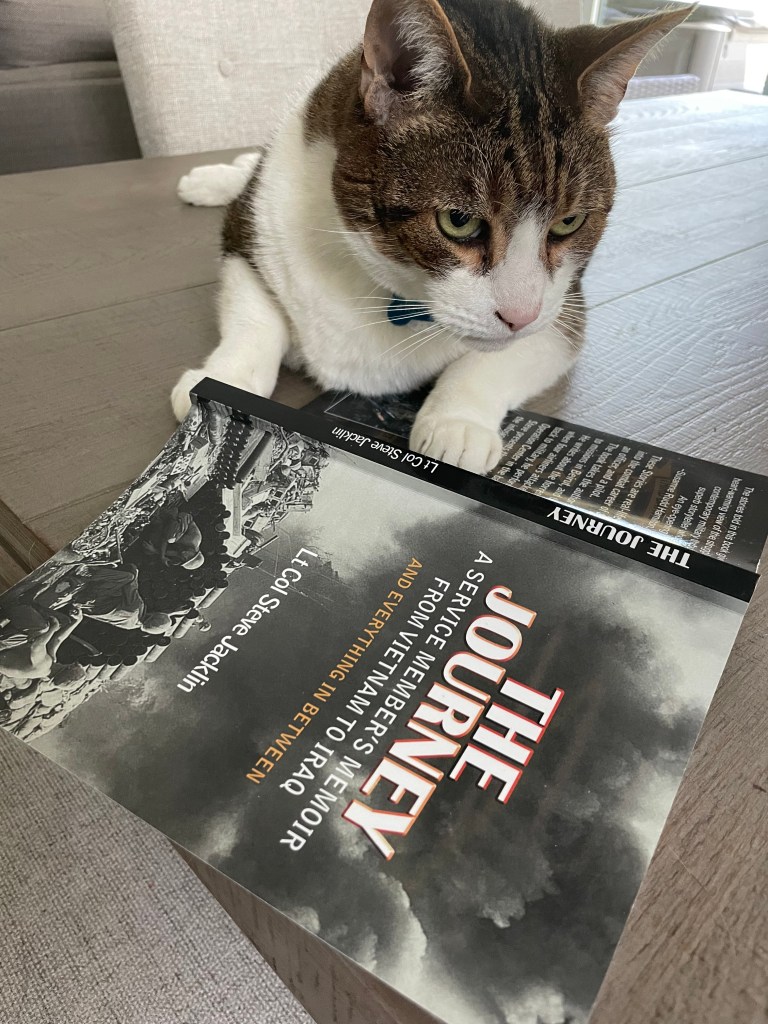
When Beamer Baclawski heard that Steve “Jacko” Jacklin died in June, he pawed through his copy of The Journey, Steve’s memoir, while streaming Steve’s album The Asphalt Still Calls on his iPad. Performed by the Quanah Parker Band, the title song was from Beamer’s favorite Steve Jacklin album.
With tail drooping, the feline sat for a few minutes remembering a human pal he had met through the Pelican Pens writing group.
The son of an Air Force officer, Steve grew up around the world. Describing himself as “a grunt, an officer, and a pilot,” Steve related anecdotes in The Journey that ran from adolescent antics in Libya and Spain to special ops in Vietnam, Beirut, and Grenada. His post-military life included flying Life Flight missions.
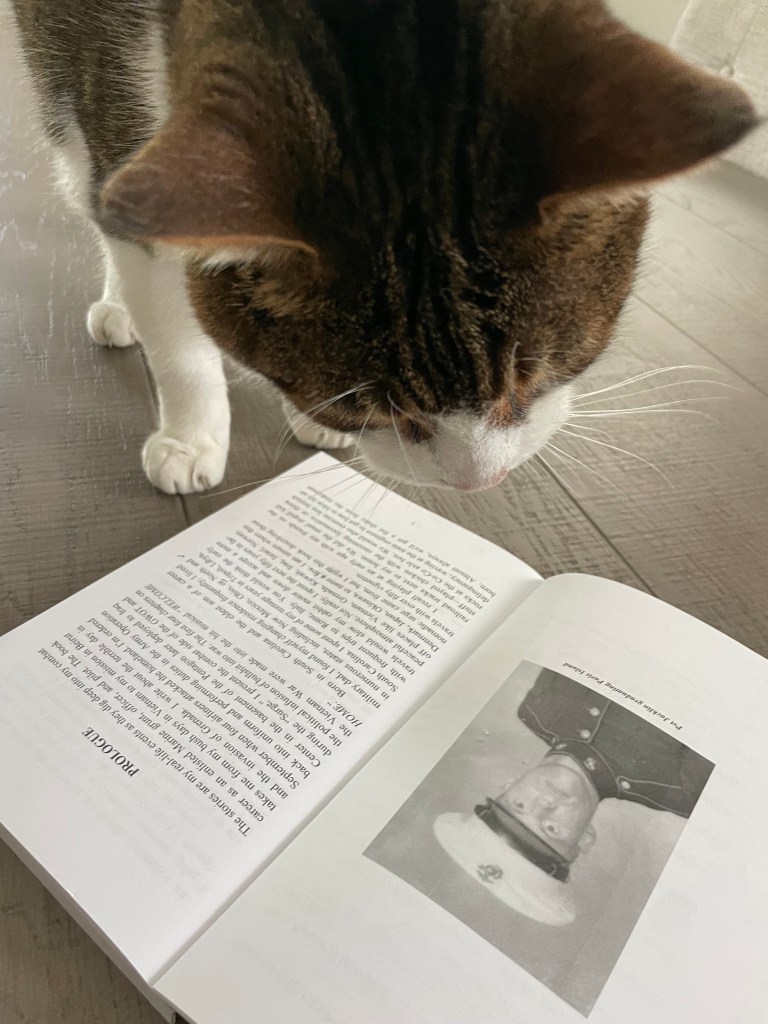
In sharing his anecdotes, Steve often said he didn’t make the rules; he just made the rules work for him. Remembering that, Beamer’s tail and ears perked up. He often applied Steve’s philosophy to his own life, especially when it came to what he chose to eat and where he chose to sleep.
What Beamer liked most about The Journey, however, was not the war stories. It was the narrative style peppered generously with poetry and existential questions of war, humanity, and God. That was the Steve—the self-proclaimed “Baby Boomer Bard”—that Beamer admired. Steve wanted to be remembered as a songwriter, not a grunt.
In that vein, the bard once told the feline, “I don’t just write songs. Every lyric is a character I met or a ghost I’m still talking to.”
Beamer related to that. He often found himself purring affectionate sentiments to Jasper, Rocky, Mack, and other dearly departed housemates. An aspiring writer, Beamer wished he could put those conversations in writing. He looked to Steve for inspiration.
In the studio notes for The Asphalt Still Calls, Steve wrote, “There’s a moment before a record exists—before the chords, before the lyrics, before the studio lights flicker on—when everything is just fragments.”
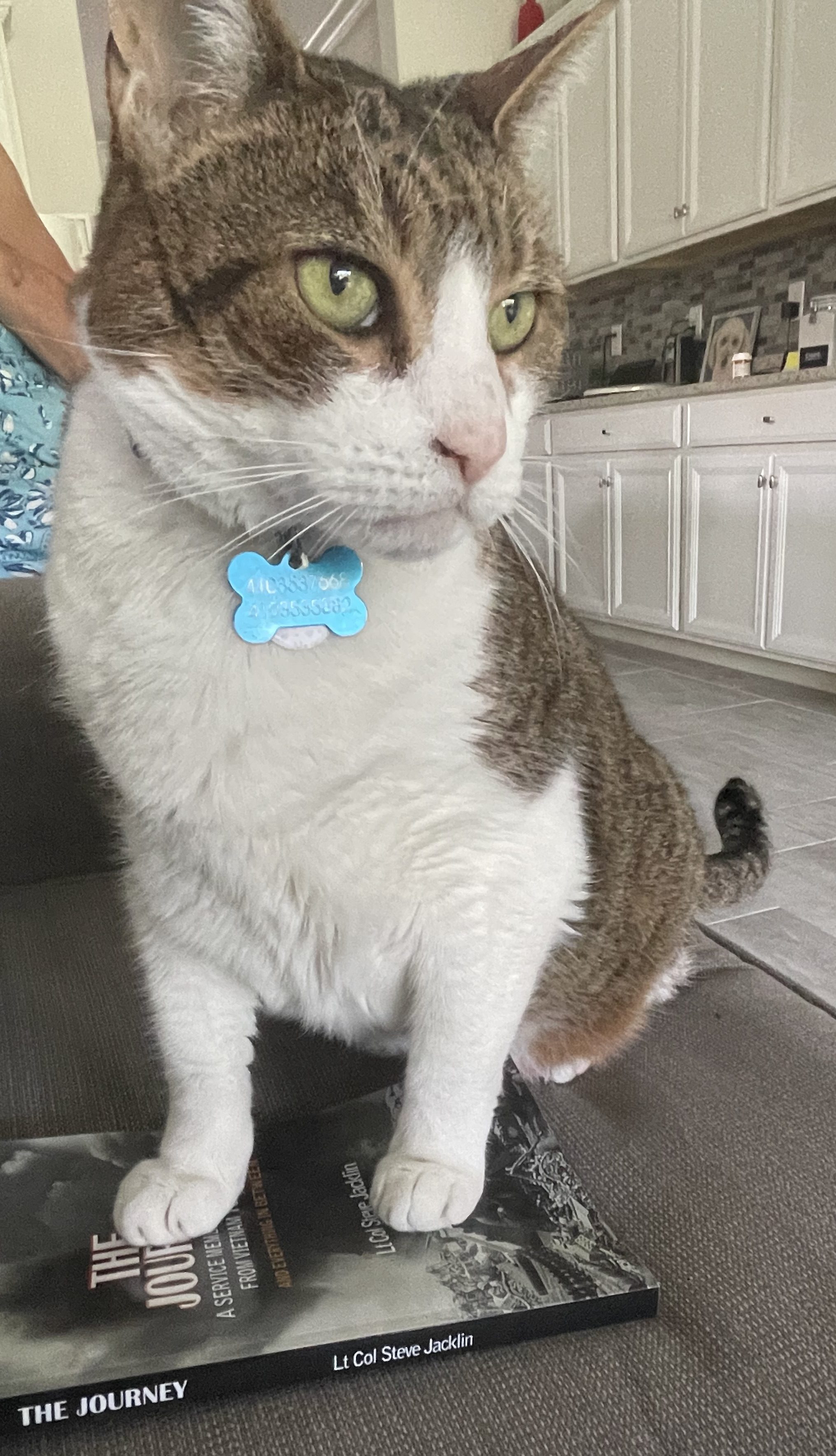
Beamer understood. Cats, after all, exude a life defined by zoomies, pounces, and swats inspired by fragments of fantasy. Sometimes words for the literature he wanted to write came to him, scampering like an anole on the lanai or flittering like a yellow butterfly beyond it. But he could never seem to capture a single one of them.
“Flashes,” is how Steve had described those thoughts. “Not even ideas fully formed. A line scribbled on a napkin. A memory from a highway somewhere between nowhere and somewhere important. A rhythm tapping on a steering wheel. A melody humming itself into existence without asking permission.”
Unlike Steve’s flashes, however, Beamer’s whims remained vague and shapeless. Not one of his inspirations ever made it into a stanza, paragraph, or even a sentence fragment. Yet he aspired to emulate Steve, who said he lived a life in motion. His songwriting blended country, folk, and Americana, which Steve described as music that values story over spectacle, truth over trend, and emotion over perfection.
“In a world increasingly dominated by digital production and polished pop formulas,” he said, “Americana stands firm as a reminder that the most powerful songs are often the simplest—and the most honest. At its core, Americana is about authenticity.”
And, according to Beamer, Steve was nothing if not authentic.
Beamer flipped to the back of The Journey and read Steve’s poem, “The Cosmic Cocktail.” In it, the bard compares life to a cocktail chilled with ice. Heat, the bard observes, is stored inside the cube. As the ice melts, the cocktail is infused with the cube’s energy.
Beamer liked that. Steve’s ice cube may have melted, but that meant that his soul had been absorbed into all the neighborhoods he once called home—including this one in Florida.
With a slow blink and whiskers relaxed, Beamer then toasted his pal.
“Here’s to making the rules work for us,” he trilled. He could see Steve toasting back, sitting right there with Jasper, Rocky, and Mack. Then they all listened to “The Asphalt Still Calls.”

What is your cat reading?
Send book reviews, feline adventures, and cute pictures to Pat@PattiMWalsh.com
2026 Silver Medal, Memoir
Florida Authors & Publishers Assn.
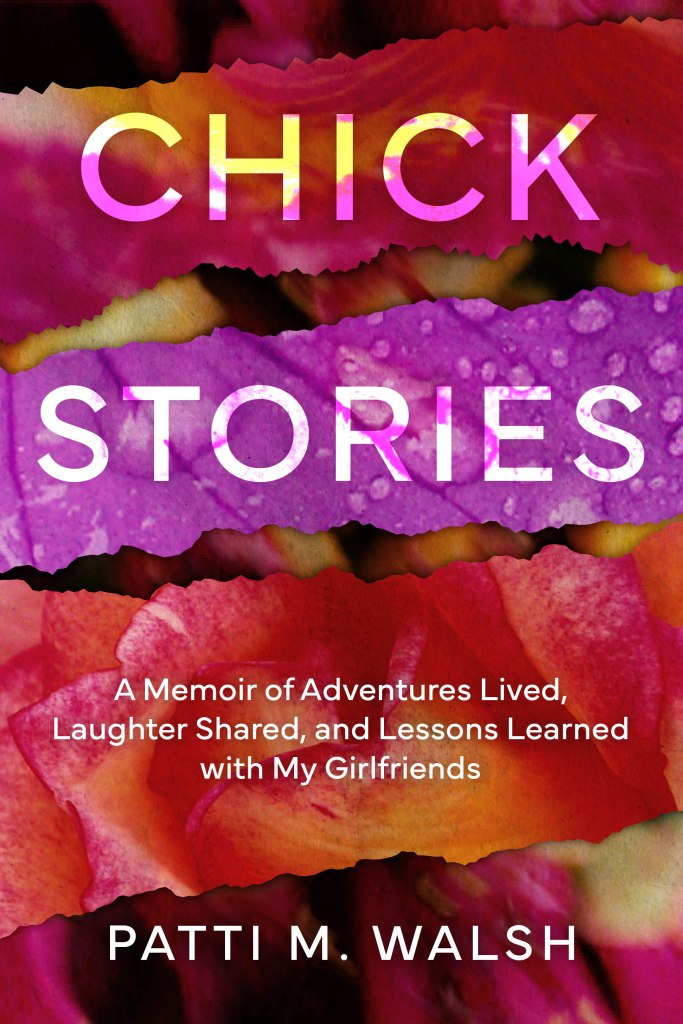
Chick Stories
A memoir of adventures lived, laughter shared, and lessons learned with my girlfriends
Travesties, tragedies, and comical calamities abound in a series of essays rich in historical and cultural context.

The Chick Stories Channel
Share New Adventures Lived, Laughter Shared, and Lessons Learned


Best Children’s Fiction 2023
American Book Fest
Ghost Girl
“Young readers will find Ghost Girl a relevant and positive guide for their own lives. Older readers will find Ghost Girl an attractive introduction to the deep and profound mysteries and spiritual precepts of the Irish Celtic tradition.” –George C Gibson, PhD, Celtic Scholar
Gold Medal Winner
Florida Authors & Publishers Association
2025 Finalist
Florida Writers Association
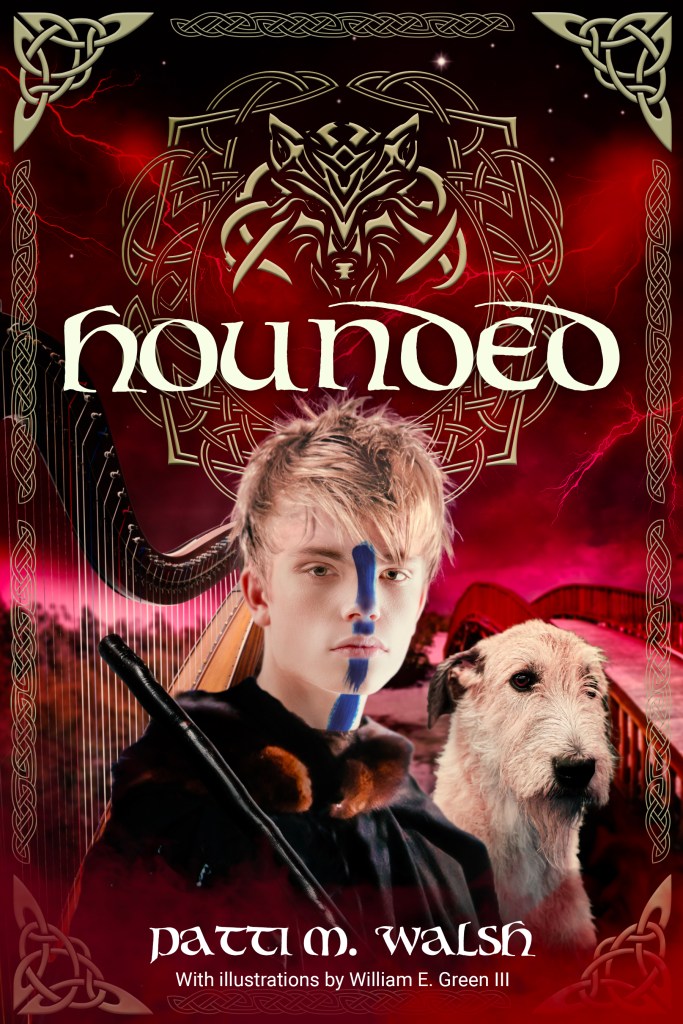
Hounded
Being a Celtic warrior involves more than learning to fight.
Illustrated by William E. Green, Hounded is a contemporary middle-grade novel based on Celtic mythology.


