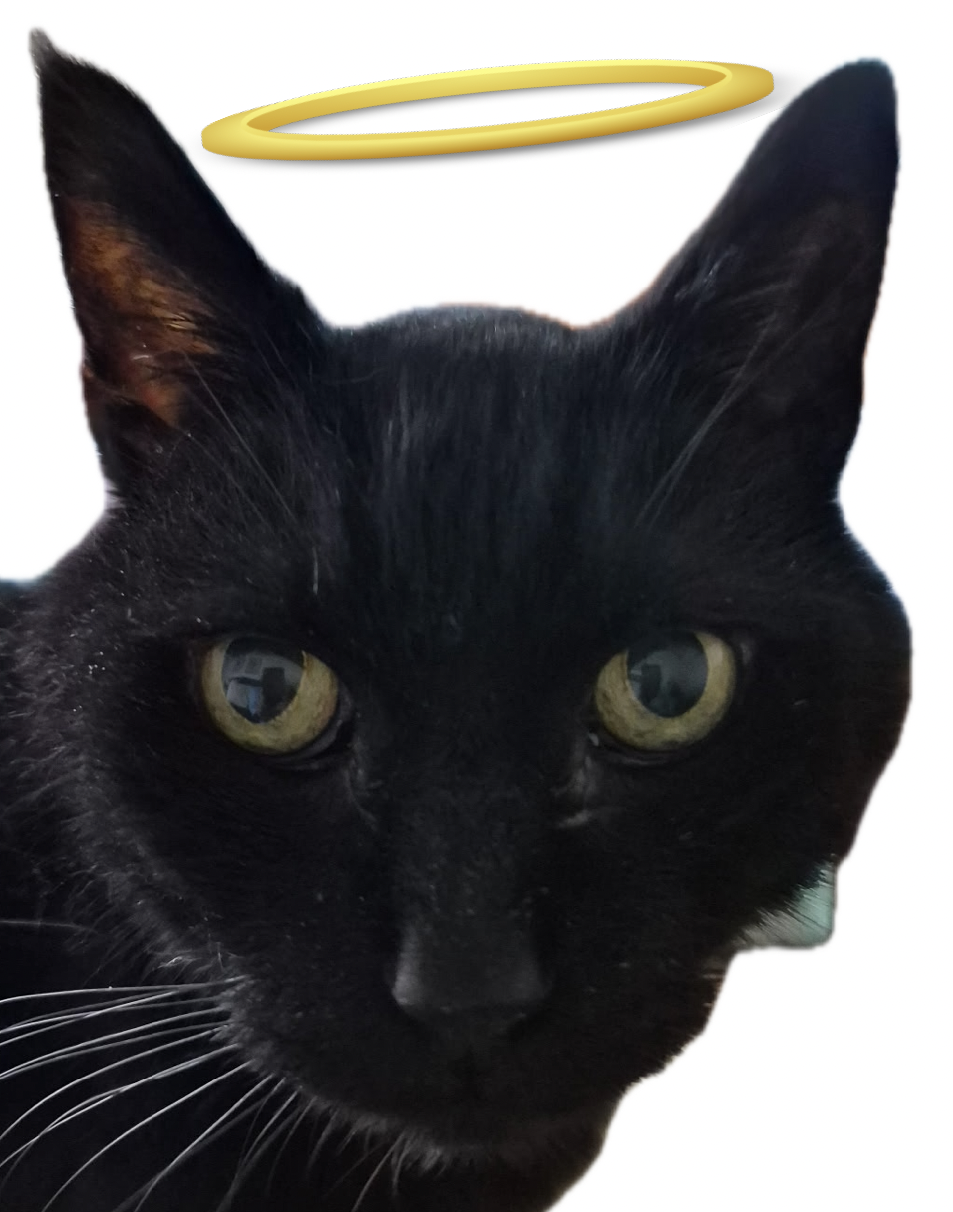
Proud of his reputation as the worst cat ever, the jet-black Onyx scoffed at the idea of reading a book about a saint, let alone one titled The Sculptor and the Saint.
“But I think you’ll like it, Onie,” Lori cajoled, using his nickname. The black cat narrowed his green eyes and squinted at his new companions. Lori and her roommate, Claudia, who had just adopted this 13-year-old cat from Lori’s daughter. His unpredictable antics and unruly behavior had threatened the safety of Lori’s young grandchildren.
“I think you can relate to the characters,” Claudia added. “Both the sculptor and the saint were rebellious. Just like you.”
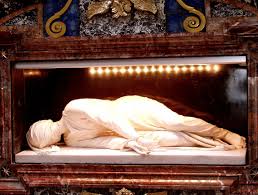
Planting his front paws on the floor in front of him, the inky feline stretched backward before he rested the full length of his fur against the cool tile floor. Lori then showed him the book by Lori Joan Swick. Curious about the book’s cover, which depicted a marble statue of a young woman, Onie blinked a few times. He didn’t understand the odd position of her repose.
Was she dead? There seemed to be a gash in her neck. Onie flattened his ears, pawed at the picture, and sniffed the air around the book. Curiosity killed that cat, he concluded. But information brought him back.
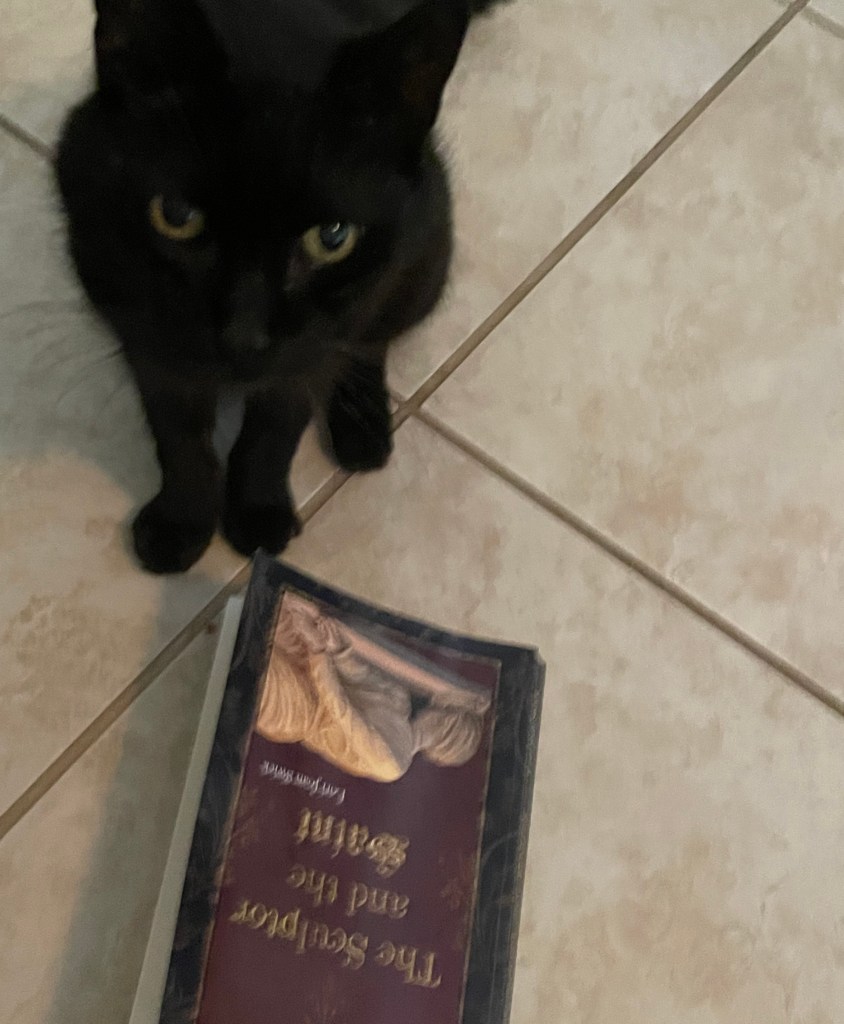
With a curt meow, Onie acquiesced and began to read first about the martyred Saint Cecilia, a girl who had just reached puberty when she fell in love with Sebastian. In the meantime, she was betrothed to an old, rich man. The daughter of a Roman dignitary, she was executed for her conversion to Christianity. So was Sebastian.
In 821 AD, more than 500 years later, Pope Paschal discovered the girl’s undecayed body in the catacombs and had the remains moved to the Basilica of Santa Cecilia in Rome. The body was rediscovered in 1599 by Cardinal Sfondrati. He commissioned the 23-year-old Stefano Maderno to sculpt the image of Saint Cecilia’s corpse—as he found it—for her basilica, where it continues to be displayed.
Cecilia’s story occurred in 287 AD, during the decline of the Roman Empire; Stefano’s, in 1599 AD, during the ascent of the Baroque Period in art. Told in alternating narratives that reflect Stefano’s and Cecelia’s points of view, and spanning 13 centuries, the book evolves as a love story.
“How can that be?” Onie objected, but soon realized the lovers were not united physically, but in what the Greeks called agape love—the selfless, unconditional love for God—and the spiritual search for one’s purpose in life.
Onie flicked his tongue to take in Swick’s precisely described food (he loves to eat) as well as clothing, customs, and other details of Roman life in both periods. Translations of historical documents and archaic vocabulary that precisely describe people, places, and things slowed his reading, yet whetted his appetite for more.
He looked quizzically at Claudia, who knew him well enough to read his mind.
“You want to know how the author knew all this?” she asked.
Onie chirped his response in the affirmative.
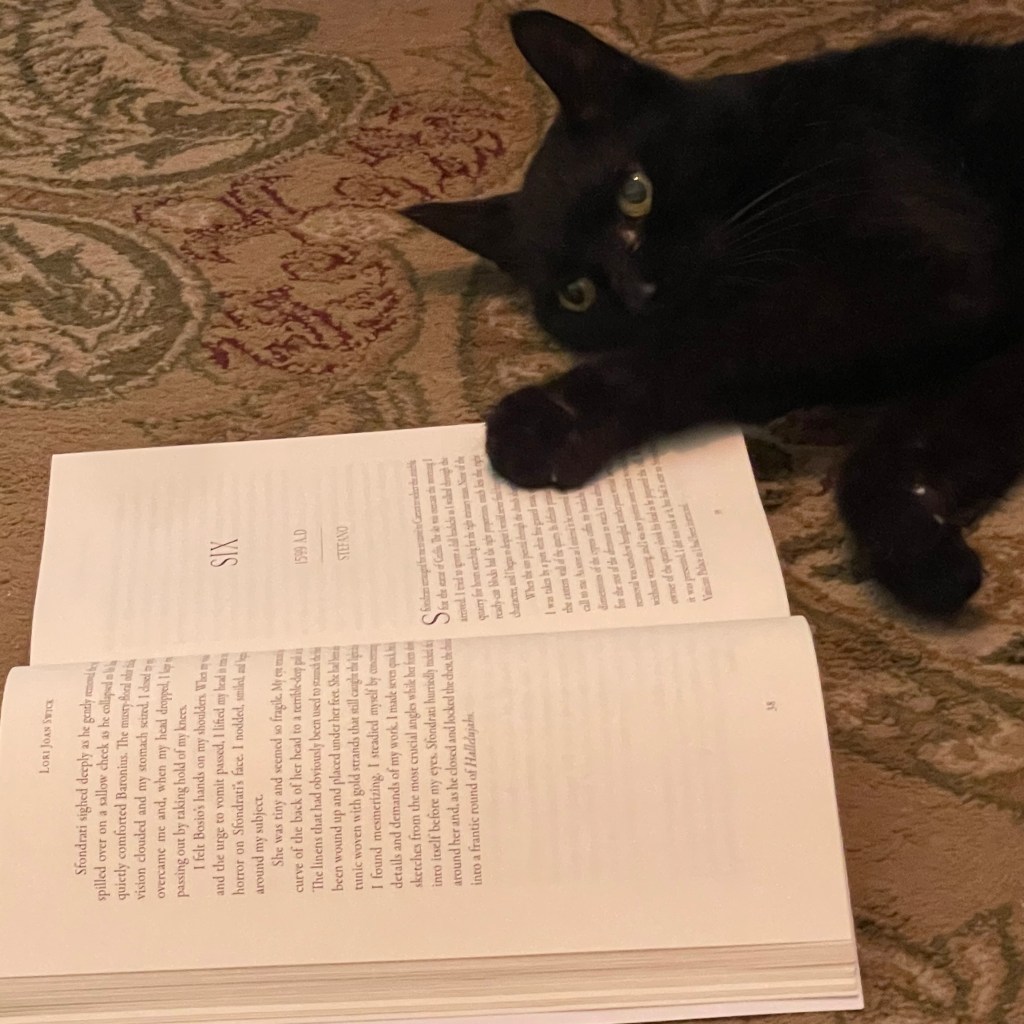
“It’s called historical fiction,” she said. “It blends imaginative storytelling with a real event in the past. Stefano is real, as were his conversations with the pope’s representatives. Cecelia’s martyred body was exumed intact, and the martyr Sebastian was real, though there’s no evidence they ever met. And we don’t know what emotions Stefano felt toward Cecilia. But Swick is such a good writer that we accept her fiction as believable.”
Swick relied on posthumous accounts of Cecelia written by her followers, as well as on Roman customs, to piece together the girl’s story. Stefano read those accounts. But it was Swick who inferred what Stefano gleaned from them, such as when Stefano learned about the early church’s “order of sanctity.” After the apostles, martyrs, confessors, priests, virgins, and widows came the merciful.
“My only chance at redemption,” the sculptor concluded, according to Swick, was to “learn to be merciful.”
Onie pawed through the novel, to where Stefano talks about his parents. After they died of the plague when he was four years old, he was sent to live with his uncle Carlo. Onie understood being re-homed. He liked his new environment. But he missed his original family.
Like Stefano, Lori and Claudia practiced being merciful. They took Onie to the vet, got him on some meds, and provided a calm home for him to settle into. Beneath his obstreperous behavior, Onie wasn’t at all the worst cat ever. Just as Stefano could see Cecelia within the block of marble, Lori and Claudia could envision a calm Onie beneath his black fur.
Claudia recalled that Pope Julius II asked Michelangelo about his artistry, particularly creating the statue of David. Michelangelo allegedly described sculpting as simply removing everything that was not the desired form. It was the same process Stefano employed to chip away, or “waste,” the pieces of marble that weren’t Cecelia.
“It’s like we sculpted you out of a crazy bundle of fur,” Lori said, stroking the cat’s onyx pelt.
When Onie finally closed the cover on The Sculptor and the Saint, the feline pondered the connection between the book’s two main characters. Concluding that he was perhaps a saint, he purred. He preferred that to being the worst cat ever.
With that, he slow-blinked at Lori and Claudia. Then he asked his merciful sculptors for some food.

What is your cat reading?
Send book reviews, feline adventures, and cute pictures to Pat@PattiMWalsh.com
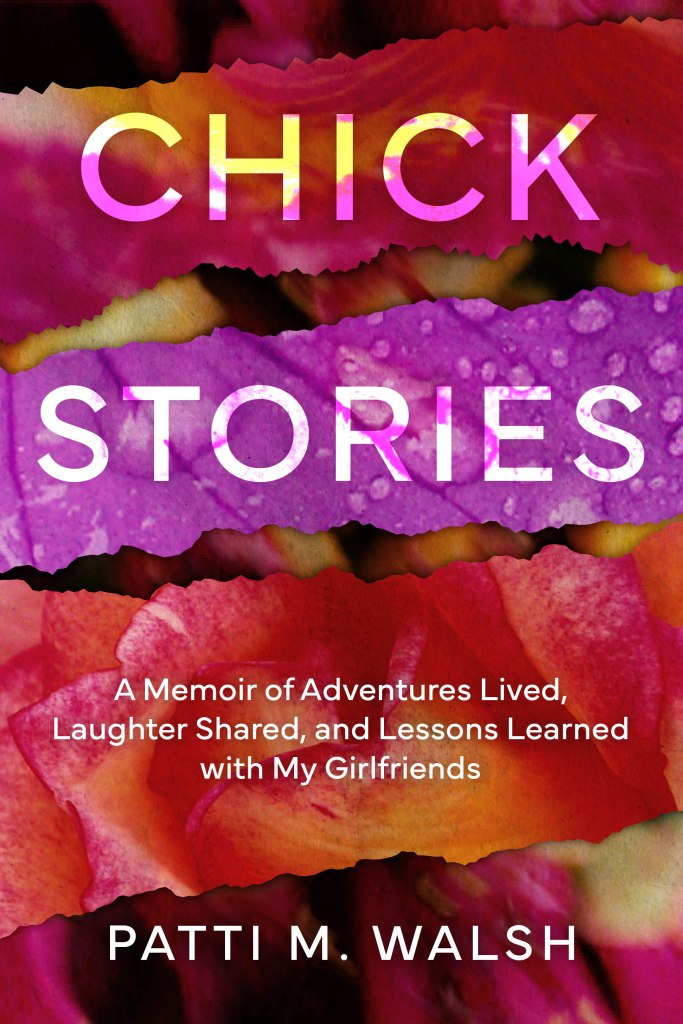
Chick Stories
A memoir of adventures lived, laughter shared, and lessons learned with my girlfriends
Travesties, tragedies, and comical calamities abound
in a series of essays rich with historical and cultural context.

Best Children’s Fiction 2023
American Book Fest
Ghost Girl
“Young readers will find Ghost Girl a relevant and positive guide for their own lives. Older readers will find Ghost Girl an attractive introduction to the deep and profound mysteries and spiritual precepts of the Irish Celtic tradition.” –George C Gibson, PhD, Celtic Scholar
Gold Medal Winner
Florida Authors & Publishers Association
2025 Finalist
Florida Writers Association
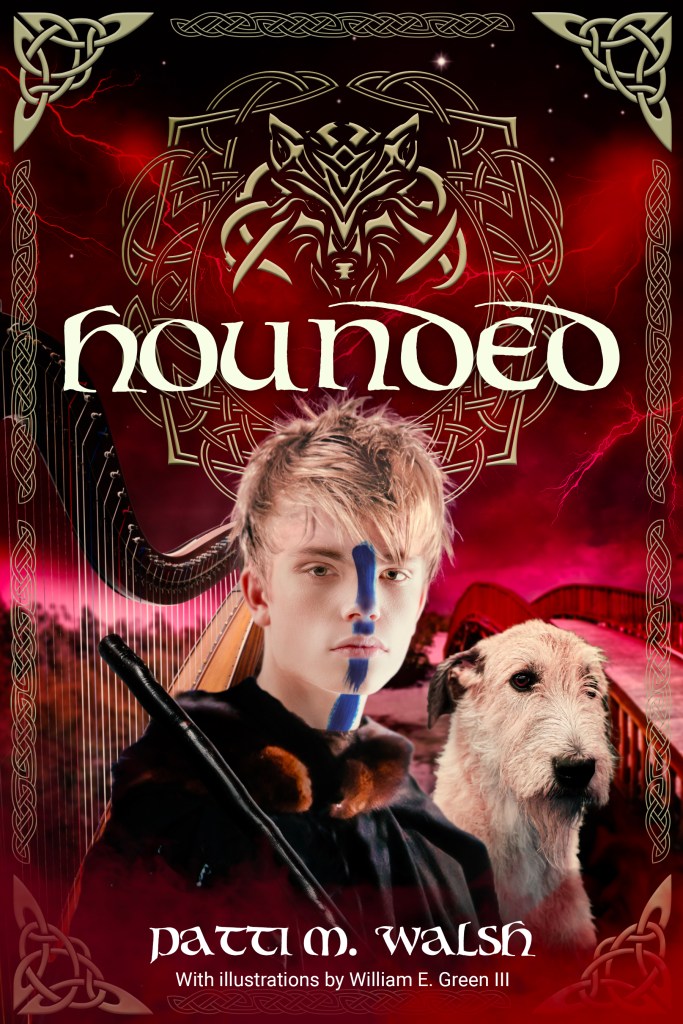
Hounded
Being a Celtic warrior involves more than learning to fight.
Illustrated by William E. Green, Hounded is a contemporary middle-grade novel based on Celtic mythology.

Newsletter:
Come to Think of It
Stories are meant to be shared. So are fleeting thoughts, poetic musings, humorous anecdotes, and existential questions.
Come to Think of It is a forum to engage, inspire, and challenge. To gather with friends. Come to Think of It.
Subscribe at PattiMWalsh.com/newsletter.


 What the Cats Are Reading